More than 1,300 pilgrims die during Hajj pilgrimage – most unauthorized

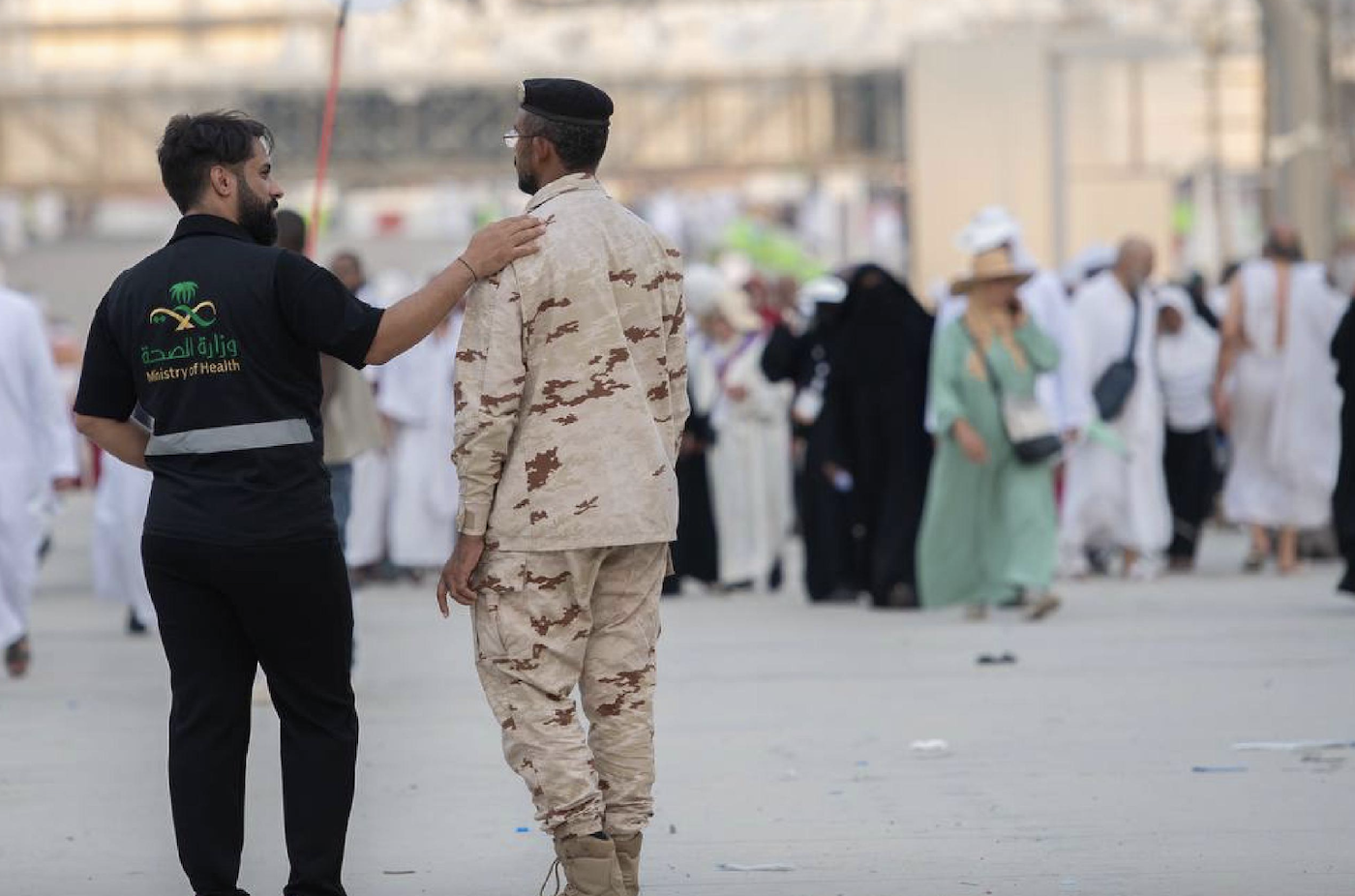
Successful execution of health management efforts was made possible through coordinated efforts of health system and Hajj security forces, Al-Jalajel said. (@SaudiMOH)
Short Url
Updated 24 June 2024
Follow

More than 1,300 pilgrims die during Hajj pilgrimage – most unauthorized

  • Health protocols effectively mitigated heat stress
  • Free health services to pilgrims commenced even before their arrival

RIYADH: More than 1,300 people died while performing Hajj this year, having walked long distances without sufficient protection from the sun – 83 percent unauthorised - Saudi Health Minister Fahd Al-Jalajel said.

Among the deceased were several elderly and chronically ill individuals.
The health minister underscored the significant efforts made by the competent authorities to raise awareness on the dangers of heat stress and the importance of preventive measures.
He added: “Our heartfelt condolences go to their families …. All reports have been compiled, families of the deceased notified, and identification completed, despite the initial lack of personal information or identification documents. Proper processes were followed for identification, burial, and honoring the deceased, with death certificates provided.”

Health workers performed more than 465,000 health procedures, including 141,000 on people who were unauthorized to perform Hajj.

“This achievement was made possible through the coordinated efforts of the health system and the Hajj security forces, with no recorded outbreaks of epidemics or widespread diseases,” the minister said.

“The health system provided more than 465,000 specialized treatment services, including 141,000 services to those who didn’t obtain official authorization to perform Hajj."
But Al-Jalajel said the health of pilgrims during Hajj was good, despite the high temperatures experienced at the holy sites.
He praised the work of the health authorities’ swift response, and the effective support of the Hajj security forces in managing and reducing the effects of heat stress.
The health system treated cases of heat stress this year, with some individuals still under care.

The minister added that the Kingdom’s provision of free health services to pilgrims commenced even before their arrival, with awareness programs at air, sea, and land border crossings. About 1.3 million preventive services were delivered, including early detection, vaccinations, and medical care upon arrival.

The healthcare services offered included open-heart surgerie, cardiac catheterization, dialysis, and emergency care, totaling over 30,000 ambulance services, with 95 air ambulance operations ensuring the delivery of advanced health services in medical cities across the Kingdom.
Additionally, the healthcare system made available nearly 6,500 beds and rooms. Measures to combat heat stress included the development of devices that enable the rapid and effective rescue of affected individuals.


Saudi meteorology center warns of heavy rain across Kingdom, public told to avoid flood-prone areas

Updated 14 December 2025
Follow

Saudi meteorology center warns of heavy rain across Kingdom, public told to avoid flood-prone areas

  • Stay away from valleys and waterways at least until Thursday, Civil Defense cautions
  • National Center for Meteorology center warns of possible thunderstorms and dust storms

RIYADH: Saudi Arabia’s National Center for Meteorology (NCM) has warned of thunderstorms across the Kingdom that could lead to flash floods, and officials cautioned the public against venturing in low-lying places prone to flooding.

In its weather forecast for Sunday, the meteorology center said “moderate to heavy thunderstorms are expected, leading to flash floods, accompanied by hail showers and active winds that will stir up dust and sand” in several provinces of the Kingdom.

These include Riyadh, Qassim, Hail, Madinah, Makkah, Al-Baha, Asir, Jazan and parts of the Eastern Province. Light to moderate storms are expected in parts of the Northern Borders, Al-Jouf and Tabuk, the NCM said.

In a separate advisory, the General Directorate of Civil Defense urged the public to avoid places prone to flash floods and valleys at least until December 18.

 A lake forms in the desert following days of rain in Rafha city in the Northern Borders Province, near the Saudi border with Iraq. (SPA)

Since the past few days, various parts of Saudi Arabia had been blessed with light to moderate rain as full winter weather set in.

In separate reports, the Saudi Press Agency published images of beautiful landscapes that have emerged after being revitalized by rain.

Deserts rejuvenated

Among these are Al-Nafud (The Great Nafud Desert) in the Kingdom’s north, where moderate to heavy rainfall have “transformed the landscape, turning the golden sand dunes into stunning formations,” and also created streams and lakes.

Plants are beginning to sprout in Al-Nafud Desert after getting rain. (SPA)

“The cool weather has since made the Nafud a prime destination for desert and camping enthusiasts from inside and outside (Rafha) governorate,” SPA said.

Rain have also rejuvenated the Imam Turki Bin Abdullah Royal Reserve, the Kingdom’s second-largest nature reserve, spanning parts of the Northern Borders, Hail, Qassim, Al-Jouf and Eastern Province.

In the Northern Borders province, the Wadi Arar has come alive, refilling the province’s 11 operational dams. 

With streams flowing into Wadi Arar, dams in the Northern Borders province are being replenished. (SPA)

“The deserts of Arar City ... have become an enchanting destination for hikers and nature enthusiasts following recent rainfall. The resulting rainfalls have created a stunning scenery, with flowing streams winding through sand dunes and ravines,” SPA said.

Cool, verdant mountains 

In Asir and adjacent provinces in the southwest, fog shrouding mountain peaks and the city of Abha have resulted in beautiful winter sceneries, attracting nature lovers and photography enthusiasts.

Abha city in Asir shrouded with fog as full winter weather sets in. (SPA)

Futher south in Najran province, days of rain have increased vegetation cover and revitalized the valley’s natural streams.

One of the foremost attractions is the Wadi Mughaydid on the slopes of the Sarawat range’s Maghra Mountains in northwest Najran, renowned for its pristine natural beauty.

Stretching 25 kilometers from Bir Askar Park to Shaab Baran, the valley’s unique geography combines verdant plains with towering mountains, making it an ideal destination for hiking and nature enthusiasts, according to SPA.

View of Wadi Mughaydid in Najran coming to life following days of rain. (SPA)