

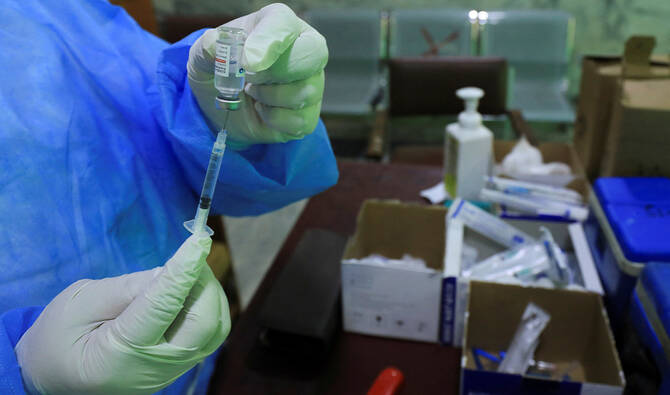

ISLAMABAD: Pakistan is eyeing collaboration with Saudi Arabia, Indonesia and China to produce vaccines locally, Health Minister Syed Mustafa Kamal said on Thursday, adding that Islamabad was exploring both government-to-government and business-to-business opportunities in this regard.
Kamal told Arab News last week that Islamabad was “very close” to an agreement with Saudi Arabia that would enable Pakistan to manufacture vaccines locally. The development took place as a Saudi delegation, led by the Kingdom’s senior adviser to the minister of industry Nizar Al-Hariri, arrived in Pakistan last week and held talks with health officials on a partnership with Pakistan which would enable it to manufacture vaccines locally.
The efforts take place amid Pakistan’s push to strengthen its health security and industrial capacity. The country of more than 240 million currently imports all vaccines used in its national immunization campaigns, relying heavily on international partners to help cover the costs.
“Mustafa Kamal said Pakistan is exploring collaboration with Saudi Arabia, Indonesia and China for local production of these vaccines,” state broadcaster Radio Pakistan reported.
Kamal said the government is working on a “war footing” to ensure the local production of vaccines before 2030.
The health minister reiterated that Pakistan has the potential to locally produce raw materials of the 13 vaccines that it provides free of cost. He added that the government will also export vaccines once it starts producing them at home.
“Mustafa Kamal said the government is exploring both government-to-government and business-to-business collaboration to achieve our objectives in vaccine production,” Radio Pakistan said.
Pakistan’s health ministry has said it imports all 13 vaccines that it provides masses for free at an annual cost of about $400 million.
International partners currently cover 49 percent of these costs, with the remainder borne by the Pakistani government. This external support, Kamal has warned, is expected to end after 2030.


