Beehives of Saudi Arabia’s Maysan believed to be over 1,000 years old

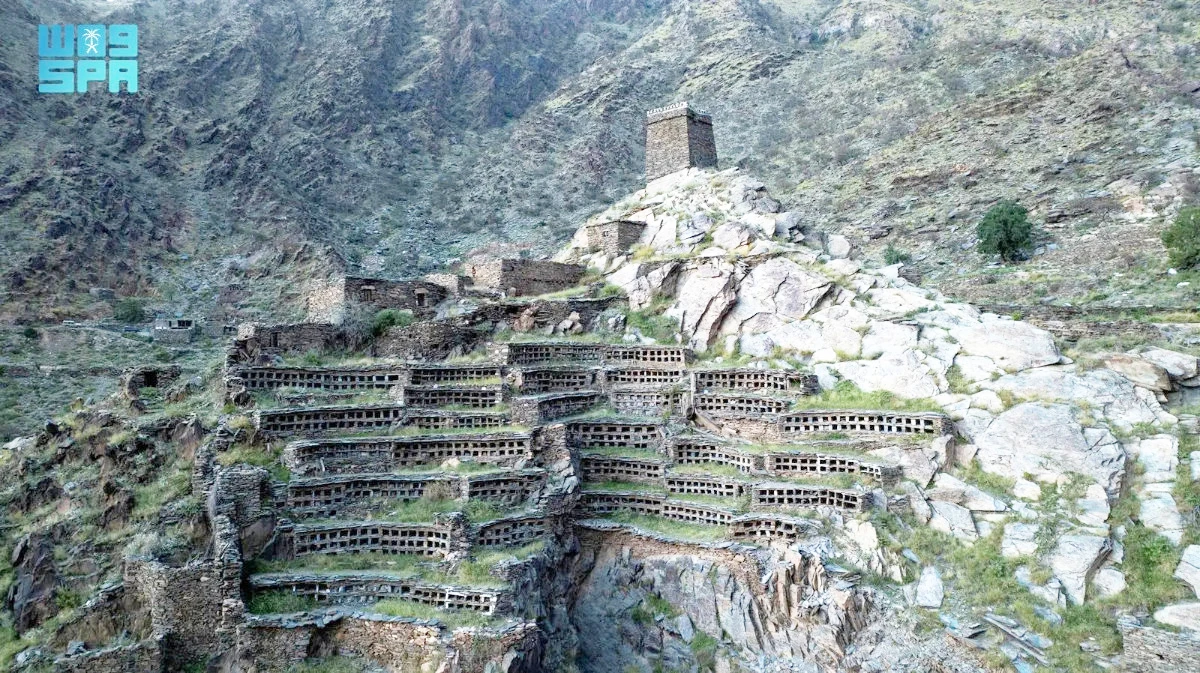
A general view of the apiaries of Maysan governorate feature beautiful engineering with remarkable design specifications for honey production. (SPA)
Short Url
Updated 22 June 2024
Follow

Beehives of Saudi Arabia’s Maysan believed to be over 1,000 years old

  • Located between the Sarawat and Tihamah mountains, the apiaries feature beautiful engineering with remarkable design specifications for honey production

TAIF: Maysan governorate, located in western Saudi Arabia's Sarawat mountain range, showcases stunning archaeological scenes of some of the most important and impressive environmental engineering formations. These include approximately 1,200 beehives that were a major source of daily sustenance for the early inhabitants of the place.

The apiaries in Maysan have become a primary source for the production and sale of Saudi honey, which is deeply embedded in the Kingdom’s culture and trade. These sites date back to ancient history, highlighting the community’s longstanding interest in honey in Maysan.

Abdul Wahab Al-Khudaidi, a history enthusiast, confirmed that the Al-Kharafi apiaries are situated between the Sarawat and Tihamah mountains and are believed to be over 1,000 years old.
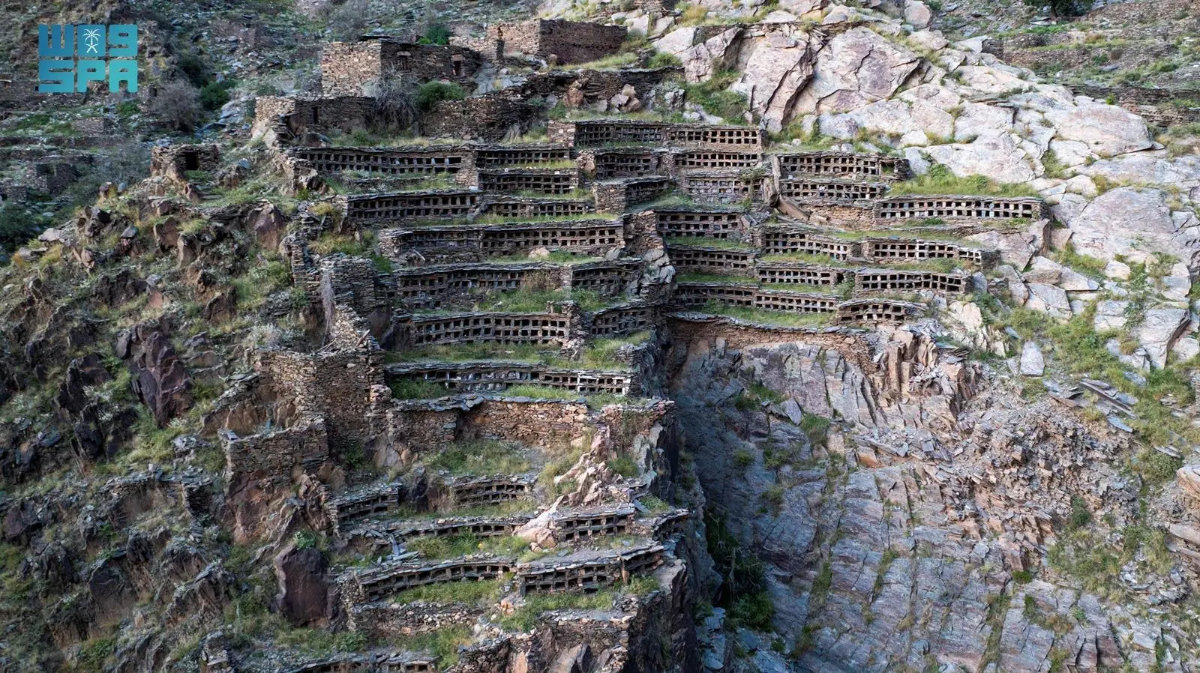


The beehives of Maysan are paved with stones in intricate geometric patterns, spanning up to four levels. (SPA)

These apiaries feature beautiful engineering with remarkable design specifications for honey production. The structures are paved with stones in intricate geometric patterns, spanning up to four levels.

The site is difficult to access, requiring navigation through a designated path by an experienced individual. The honeycombs are reinforced with solid stones and columns to support the floors, which are constructed from large, closely positioned stones in balanced shapes.

Al-Khudaidi noted that the ancient beehives in the villages of Maysan and Bani Al-Harith, which are part of Makkah province, are intricately designed with multiple levels and floors nestled between steep, solid mountains.

The hives, dating back over 10 centuries, serve as evidence of the place’s authenticity and deep-rooted history. The famous mountains are a summer resort for visitors and locals, a historical legacy celebrated in their poems, and home to towering forts and castles that highlight the importance of the villages' history.
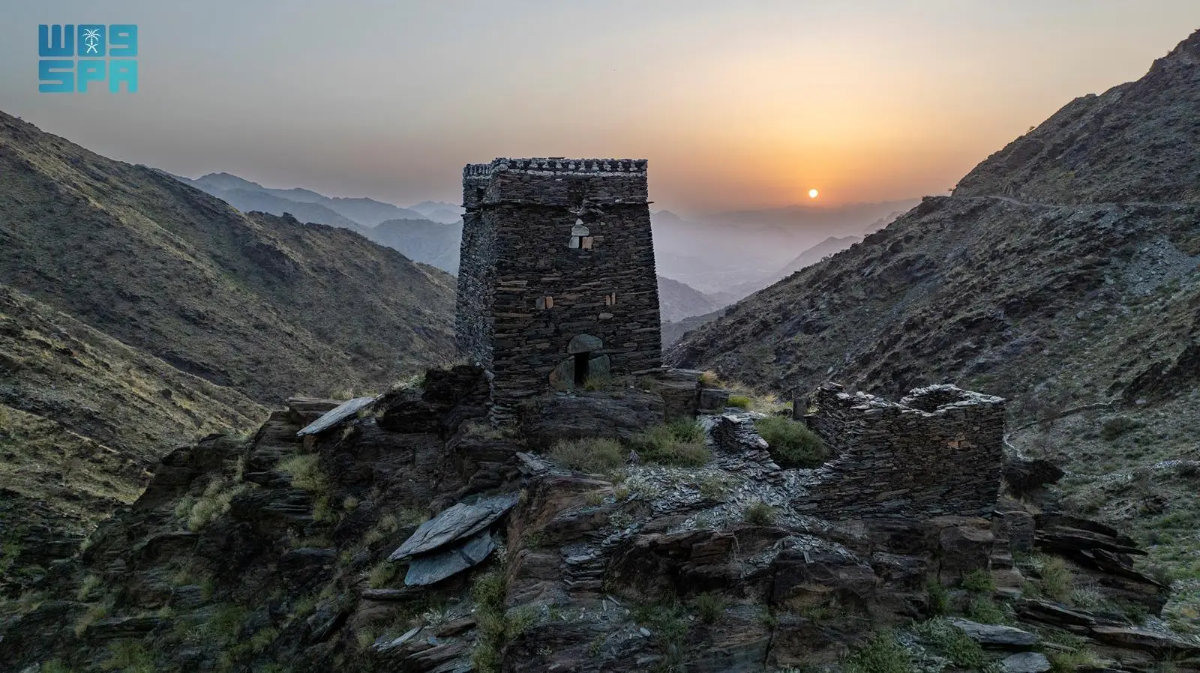


An ancient tower overlooks the Sarawat mountains in Maysan governorate of Makkah province. (SPA)

The structures testify to the rare profession practiced by the ancestors in beekeeping and honey extraction, producing various types of honey such as Acacia, Summer, and Seyal.

Al-Khudaidi pointed out that the initial apiaries were carefully located between mountain peaks to benefit from the diverse array of local aromatic plants.

These mountains host more than 50 species, including Rue, Basil, Marjoram, Lavender, among other wildflowers.



Jeddah Book Fair set to showcase rising Saudi literary scene

The event reinforces Saudi Arabia’s position as a cultural hub attracting major publishers, content creators and investors. (SPA
Updated 09 December 2025
Follow

Jeddah Book Fair set to showcase rising Saudi literary scene

  • This year’s cultural program reflects the Kingdom’s heritage, with over 170 events including lectures, panel discussions and workshops

JEDDAH: Saudi Arabia’s Literature, Publishing and Translation Commission is preparing to host the Jeddah Book Fair from Dec. 11 to 20 at Jeddah Superdome, bringing together more than 1,000 local and international publishing houses and agencies from 24 countries across 400 booths. 

Held under the slogan “Jeddah Reads,” the fair is part of the commission’s “Saudi Reads” campaign, which seeks to strengthen the Saudi literary landscape by encouraging reading and creating meaningful engagement between authors and audiences.  

Jeddah Book Fair’s cultural program reflects the Kingdom’s heritage. (Supplied/@saudibookfairs)

Dr. Abdullatif Al-Wasil, CEO of the commission, said the Jeddah Book Fair reflects the leadership’s continued commitment to cultural development and the rapid growth of the Kingdom’s literature, publishing and translation sector.

He highlighted the fair’s interactive programs for publishers, authors, translators and the public, which are designed to enhance content quality, support creative development and foster knowledge partnerships.

HIGHLIGHTS

• Jeddah Book Fair seeks to strengthen the Saudi literary landscape by encouraging reading and creating meaningful engagement between authors and audiences.  

• It will host prominent writers, thinkers and cultural figures from Saudi Arabia and abroad, offering a 10-day schedule of literary, intellectual and scientific events. 

• The fair will continue to support emerging Saudi voices through the Saudi Authors’ Corner for self-published writers.

The event also reinforces Saudi Arabia’s position as a cultural hub attracting major publishers, content creators and investors.

This year’s cultural program reflects the Kingdom’s heritage, with over 170 events including lectures, panel discussions and workshops. A dedicated children’s zone will feature literary and entertainment activities tailored to young visitors, along with competitions to inspire reading and creativity.

The fair will host prominent writers, thinkers and cultural figures from Saudi Arabia and abroad, offering a 10-day schedule of literary, intellectual and scientific events. 

Book-signing stations will give readers the chance to meet their favorite authors, while cultural organizations, community groups and universities will present their latest publications and initiatives.  

A manga and anime zone will highlight collectibles from the genre, alongside specialized books. A discounted books section will also be available to promote wider access to reading.  

The fair will continue to support emerging Saudi voices through the Saudi Authors’ Corner for self-published writers, where hundreds of titles across literary and cultural fields will be showcased, underscoring the fair’s role in nurturing local talent and enriching the Kingdom’s evolving literary scene.