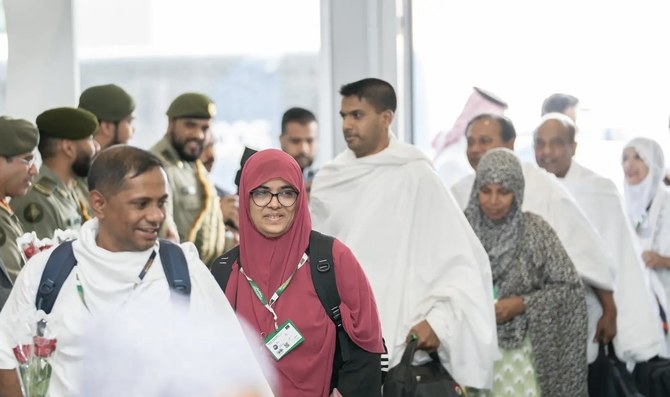
DHAKA: Bangladeshis who took part in this year’s Hajj began to return home on Thursday after completing the final pilgrimage rituals before leaving the holy city of Makkah.
A total of 85,252 Bangladeshi pilgrims were among almost 2 million Muslims who traveled to Makkah and Madinah to take part in the spiritual journey that is one of the five pillars of Islam.
They reached the Kingdom on 218 special flights that began one month ahead of the main rituals.
Most of the flights were facilitated under the Makkah Route initiative — the Kingdom’s flagship program launched in 2019 to streamline immigration procedures, helping pilgrims to meet visa, customs and health requirements at their airport of origin, and save them long hours of waiting before and on arrival in Saudi Arabia.
“The best part of this year’s Hajj management was the operation of Makkah Route facilities at Dhaka. It offered a pleasant journey to the Hajj pilgrims at the outset of their travel. It’s a testimony to Saudi hospitality for the Hajj pilgrims,” Shahadat Hossain Taslim, president of the Hajj Agencies Association of Bangladesh, told Arab News from Makkah as he oversaw preparations for the worshippers’ return.
“Many pilgrims expressed their utmost satisfaction with the management and the operations style of Makkah Route facilities at Dhaka. For the pilgrims, this Makkah Route facility is a privilege.”
Immigration processes have been frequently updated to make the procedures more accessible, particularly for the elderly and those with disabilities, as well as to ensure luggage is delivered straight to their hotels in Makkah and Madinah.
This year, new software and hardware were added at Dhaka airport, making the Makkah Route even faster than in 2023. On arrival in Saudi Arabia, processes have also been easier.
“Saudi authorities have increased the number of people in their Hajj management process. It offered ease to the pilgrims, availing any assistance or help,” Taslim said.
Emergency helplines and call centers were also improved, and ailing pilgrims were taken to “world-class treatment” facilities where they received the best care, he said.
“The Kingdom’s authorities are really successful here. Their hospitals are offering services in a way that whenever they receive patients, immediately the patient starts treatment ... The patient would receive up to tertiary-level care, and everything is free of cost. It’s a great offer in terms of Hajj management.”


![]()

First Bangladeshi pilgrims return home after completing Hajj rituals
Short Url
https://arab.news/vryha
First Bangladeshi pilgrims return home after completing Hajj rituals
- More than 85,000 Bangladeshis perform pilgrimage this year
- Praise for ‘world-class’ treatment offered to ailing worshippers in Saudi Arabia


Latest updates


© 2026 SAUDI RESEARCH & PUBLISHING COMPANY, All Rights Reserved And subject to Terms of Use Agreement.