

Pakistan naval ship Babur visits Jeddah, conducts joint exercise with Saudi Arabia’s Al-Riyadh frigate

In this handout photograph, taken and released by Director General Public Relations Pakistan Navy on June 19, 2024, Pakistan’s commanding officer of PNS Babur (left) meets Deputy Western Fleet Commander, Rear Admiral Yahya Mohammad Majrashi, of the Royal Saudi Navy as Pakistan naval ship Babur visits Jeddah. (Photo courtesy: Pakistan Navy)
Short Url
Updated 19 June 2024
Follow

Pakistan naval ship Babur visits Jeddah, conducts joint exercise with Saudi Arabia’s Al-Riyadh frigate

  • Pakistan, Saudi Arabia enjoy strong defense ties and regularly engage in joint air, ground and sea exercises
  • Apart from defense and security ties, Pakistan enjoys strong economic and trade relations with Saudi Arabia

ISLAMABAD: Pakistan Navy Ship (PNS) Babur has visited the Jeddah port and conducted a joint exercise with Saudi Arabia’s Al-Riyadh frigate to strengthen mutual cooperation between the two countries, the Pakistani military said on Wednesday.
Upon arrival at the Jeddah port, the Pakistani naval ship was received by Pakistani diplomats and officials of the Royal Saudi Navy, according to the Inter-Services Public Relations (ISPR), the Pakistani military’s media wing.
On the occasion, the commanding officer of PNS Babur met with Deputy Western Fleet Commander, Rear Admiral Yahya Mohammad Majrashi, of the Royal Saudi Navy.
“During the meeting, issues of mutual interest, including maritime cooperation between the two countries, were discussed,” the ISPR said in a statement.
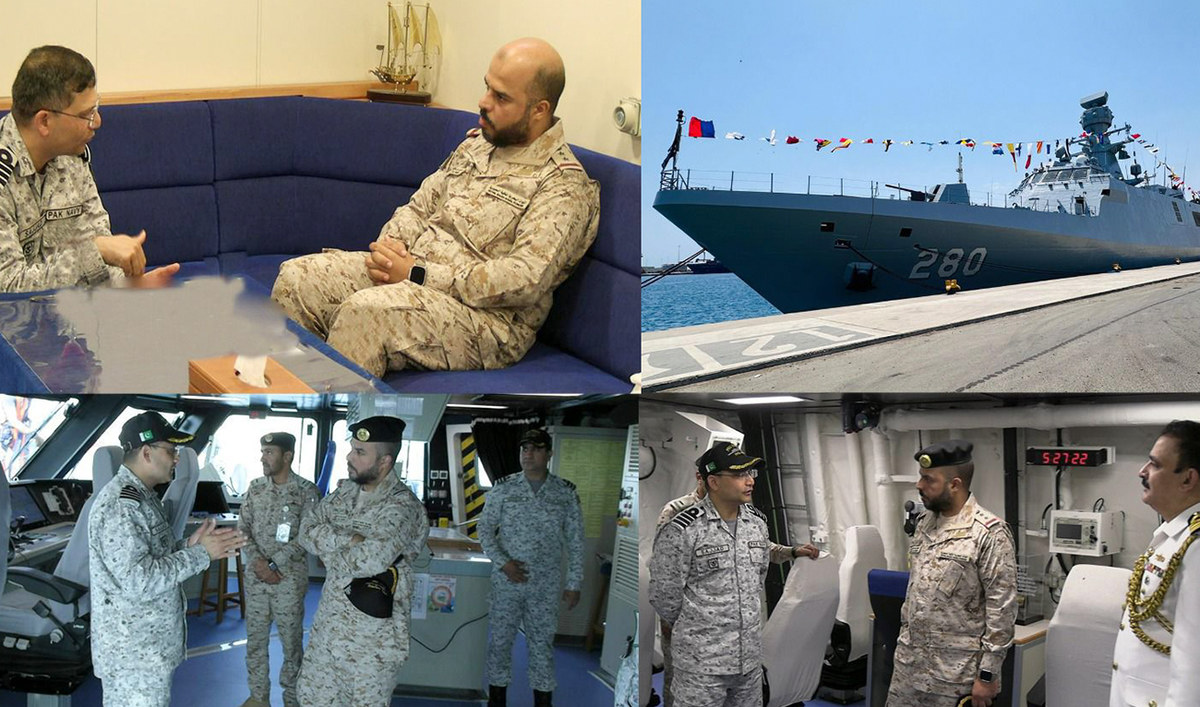


In this handout combination of photographs, taken and released by Director General Public Relations Pakistan Navy on June 19, 2024, Pakistan navy officials brief Royal Saudi Naval Forces personnel onboard PNS Babur in Jeddah. (Pakistan Navy)

“At the end of the visit, PNS Babur participated in a naval exercise with Royal Saudi Naval Forces ship, HMS Al-Riyadh.”
The ISPR said the passage exercise, named PASSEX, was aimed at promoting mutual cooperation and strong friendly relations between the two countries.
Pakistan and Saudi Arabia enjoy strong defense ties and bilateral security cooperation. The two nations regularly engage in joint air, ground, and sea military exercises, while several cadets from the Kingdom, along with counterparts from other Middle Eastern nations, annually visit Pakistan to undergo specialized military training.
Apart from defense and security ties, Pakistan enjoys strong economic and trade relations with Saudi Arabia. The Kingdom is home to over 2.7 million Pakistani expatriates, serving as the top source of remittances for the cash-strapped South Asian country.
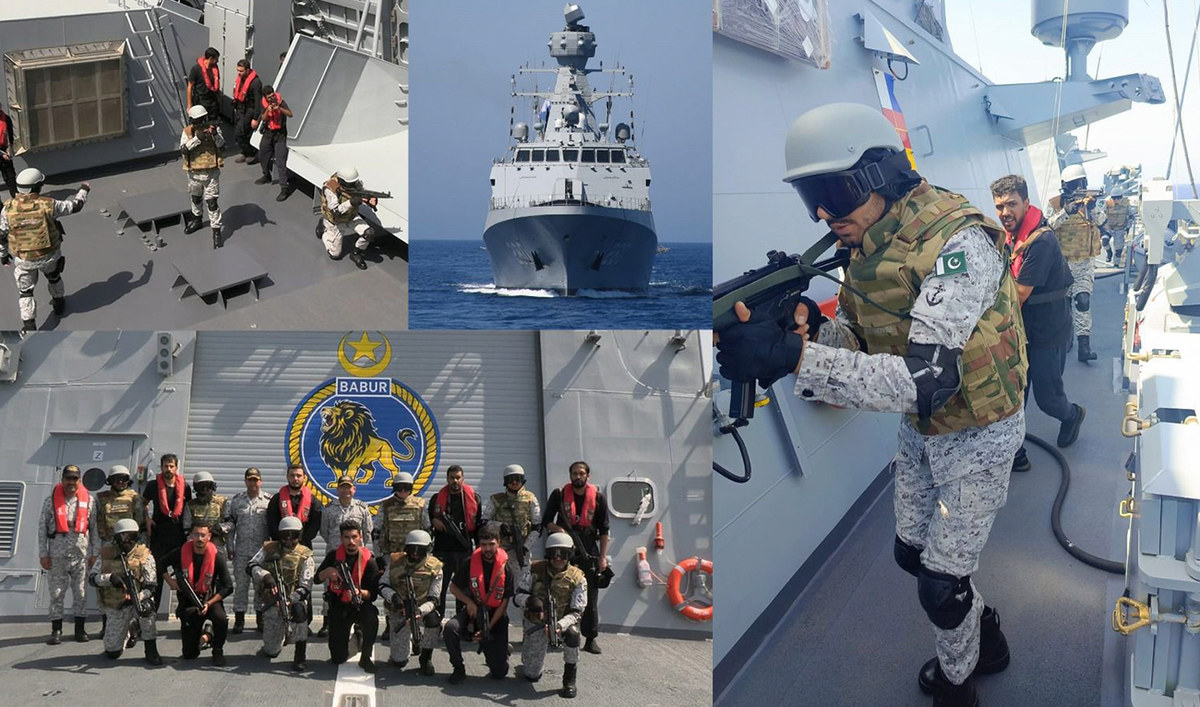


In this handout combination of photographs, taken and released by Director General Public Relations Pakistan Navy on June 19, 2024, Pakistan naval ship Babur conducts passage exercise with Royal Saudi Naval Forces in Jeddah. (Pakistan Navy)


UK says Pakistan regulatory overhaul to yield £1 billion a year as Islamabad launches reform drive

Updated 9 sec ago
Follow

UK says Pakistan regulatory overhaul to yield £1 billion a year as Islamabad launches reform drive

  • Britain says it worked with Pakistan on 472 proposed reforms to streamline business rules across key sectors
  • PM Shehbaz Sharif says Pakistan has stabilized economy and now aims to attract investment by cutting red tape

ISLAMABAD: Britain’s development minister Jenny Chapman said on Saturday Pakistan’s sweeping new regulatory overhaul could generate economic gains of nearly £1 billion a year, as Islamabad formally launched the reform package aimed at cutting red tape and attracting foreign investment.

The initiative, driven by Prime Minister Shehbaz Sharif’s government and the Board of Investment, aims to introduce legislative changes and procedural reforms designed to streamline approvals, digitize documentation and remove outdated business regulations.

Chapman said the UK had worked with Pakistan on 472 reform proposals as part of its support to help the country shift from economic stabilization to sustained growth.

“These reforms will break down barriers to investment, eliminate more than 600,000 paper documents, and save over 23,000 hours of labor every year for commercial approvals,” Chapman said at the launch ceremony in the presence of Sharif and his team. “The first two packages alone could have an economic impact of up to 300 billion Pakistani rupees annually — nearly one billion pounds — with more benefits to come.”

Addressing the ceremony, the prime minister said the reforms were central to Pakistan’s effort to rebuild investor confidence after the country narrowly avoided financial default in recent years.

“Our economy was in a very difficult situation when we took office,” he said. “But we did not lose hope, and today Pakistan is economically out of the woods. Now we are focused on growing our economy and attracting foreign investment.”

He described the new regulatory framework as a “quantum jump” that would reduce corruption, speed up approvals and remove longstanding procedural hurdles that have discouraged businesses.

Chapman told the audience that more than 200 British companies operate in Pakistan, with the largest six contributing around one percent of Pakistan’s GDP.

She said the UK saw Pakistan as a partner rather than a recipient of aid.

“Modern partners work together not as donors but as investors, bringing all our strengths to the table,” she said, adding that the reforms would make Pakistani exports more competitive and encourage UK firms to expand their footprint.

Sharif highlighted the role of the British Pakistani diaspora and said Pakistan hoped to unlock more private capital by engaging diaspora entrepreneurs and financial institutions in the UK.