


KARACHI: While sweets and desserts steal the spotlight during Eid Al-Fitr around the world, on Eid Al-Adha the focus shifts to savory delights, especially dishes prepared with the mutton and beef of animals sacrificed to mark the annual religious holiday.
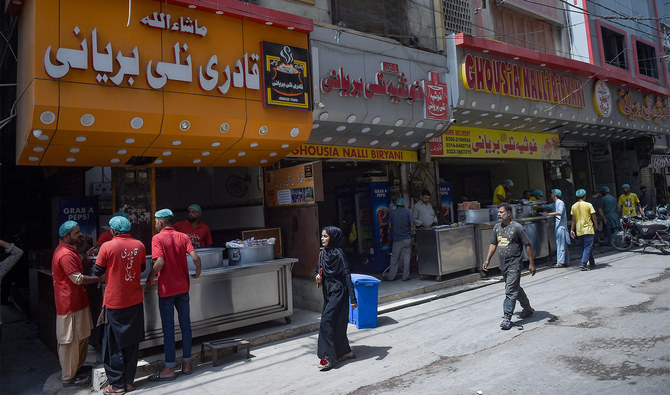
Things are no different in Karachi, Pakistan’s commercial and culinary center, where restaurants on the iconic Burns Road and other food streets start preparing meat specials for Eid.
“People don’t realize it’s Eid-Al-Adha if they don’t get spicy dishes,” said Agha Owais, the owner of Agha Sajji, a restaurant that specializes in slow cooked meats in various forms as well as spicy biryani rice.
After the Eid sacrifice, Owais said, his restaurant got busy preparing hundreds of orders from people who brought over sacrificial meat to the eatery for special dishes to be prepared using it.
“The women at home are often tired during Eid so they prefer to entertain guests by opting for good, spicy, and clean food from reputable places with high-quality ingredients,” Owais said.
A resident of Karachi civil lines, Sadiq Abubakar, said he preferred to have biryani and dried meat dishes prepared at home on Eid but ordered BBQ specials from restaurants.
Among favorites are malai boti, melt-in-the-mouth chunks of boneless chicken, lamb or beef marinated in a mildly flavored cream sauce made with fresh herbs, seekh kebabs made with spiced minced or ground meat formed into cylinders on skewers and grilled, and dhaga kebabs, made without a binding agent like eggs, chickpea or maize flour, but in which a dhaga, or thread, is wrapped around the kebab to hold it better over the grill while cooking.
“Sometimes we give a goat’s leg to a restaurant and get karahi made out of it,” Abubakar said.
“IT’S THE TASTE”
S.M. Iqbal, the owner of New Delhi Gola Kebab House, said his restaurant was closed for Eid dining in order to complete takeaway orders, especially made using people’s own sacrificial meat.
“People also invite us [for catering] to their homes, but we don’t go very often because our outdoor work is at a large scale,” Iqbal said. “We can’t go for 10-15 kgs [of meat], we only go if there’s an order for at least 100 people.”
He said most customers got dhaga and fried kebabs made, which were a specialty at his restaurant.
“It’s the taste that pushes people to bring sacrificial meat to our restaurants,” Iqbal said. “Allah has given us the taste that attracts people.”
Customer Mustafa Tahir said offering guests a mix of homemade dishes and food prepared by restaurants created a good balance during Eid.
“Have them [restaurants] prepare dishes too, they’ll make good food,” he said. “Combine three or four flavours, invite guests at home, and truly enjoy Eid-Al-Adha as it should be enjoyed.”


