
MAKKAH: Each Hajj season, Muslims from all over the world, representing diverse languages, cultures and traditions, gather in the holy cities.
Beyond its religious significance, the pilgrimage offers a platform for cultural engagement among worshippers, displaying the rich cultural tapestry of the global Muslim community.
The cultural diversity is evident not only in the pilgrims’ traditional attire, but also in the variety of languages that can be heard throughout Makkah’s neighborhoods, in the Grand Mosque and the roads leading to it, as well as on public transportation.

Muslim pilgrims arrive to perform the symbolic 'stoning of the devil' ritual as part of the hajj pilgrimage in Mina, near Saudi Arabia's holy city of Mecca, on June 16, 2024. (AFP)
Fawaz Al-Dahas, a history professor at Umm Al-Qura University, emphasized the understanding and solidarity of Muslims who gather for one purpose: to perform Hajj.
Despite their different languages and cultural backgrounds, pilgrims strive for understanding, harmony and kindness with each other to ensure their pilgrimage is accepted and their efforts are not in vain, he said.
“The cultural exchange during Hajj is a unique and enriching opportunity. Pilgrims learn about the customs and traditions of other countries, opening new horizons and deepening knowledge,” Al-Dahas said, adding that this leads to greater respect and deeper understanding among people from different backgrounds.

Muslim pilgrims walk at Mount of Mercy on the plain of Arafat during the annual haj pilgrimage, outside the holy city of Mecca, Saudi Arabia, June 15, 2024. (REUTERS)
“Hajj promotes the concept of one nation, where all pilgrims are equal, regardless of race or nationality,” Al-Dahas said.
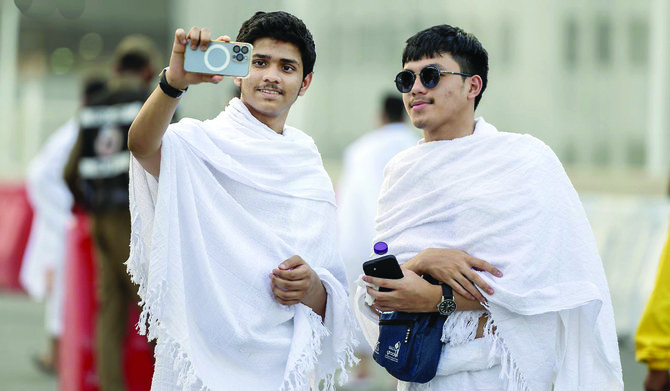
“Wearing the ihram, all pilgrims feel a sense of equality and belonging to a single community, fostering peaceful coexistence. This experience teaches patience, tolerance and cooperation during the performance of the rituals, further strengthening the spirit of understanding and coexistence among Muslims after they return home.”
Hajj also promotes collaboration among Islamic nations in areas such as health, security, and logistics, as governments work together to ensure pilgrims’ safety and comfort, he added. This cooperation promotes brotherly relations and solidarity.

Pilgrims learn the importance of social solidarity through sharing food and mutual assistance in performing the rituals. (SPA)
Through this annual event, Muslims bridge cultural and geographical divides. Hajj highlights the value of interaction between peoples and nations, demonstrating how diversity can be a strength in society.
Rania Shawdary, a mutawif (guide for the pilgrims), said: “Hajj is a significant annual event that reflects the Kingdom’s substantial efforts in serving pilgrims from around the world. Pilgrims witness firsthand the extensive services and facilities provided, which encourages them to cooperate and participate and observe everyone working together for the success of this great ritual for Muslims.”
She highlighted the generosity and hospitality, with pilgrims from different parts of the world receiving free services, such as water, food and housing.

Muslim pilgrims pray at dawn on Saudi Arabia's Mount Arafat, also known as Jabal al-Rahma or Mount of Mercy, during the climax of the Hajj pilgrimage on June 15, 2024. (AFP)
Pilgrims learn the importance of social solidarity through sharing food and mutual assistance in performing the rituals, thereby enhancing the spirit of solidarity and brotherhood, Shawdary said.
“The shared challenges and difficulties faced during their journey prompt pilgrims to assist each other and cooperate, helping them put aside their differences.”
Majid Al-Mufadhli, a Saudi journalist who has covered Hajj events for years, said that media plays a significant role in conveying the Hajj experience to the world.
“This helps promote understanding and communication between different cultures, as media coverage of Hajj events and pilgrim stories and experiences raises awareness of Hajj’s importance and its role in uniting Muslims,” he said.
Social media platforms also enhance communication among pilgrims, their families and friends, as well as between worshippers themselves, facilitating the exchange of experiences and cultures and promoting understanding, Al-Mufadhli added.
“Pilgrims face significant challenges related to crowd management, joint work and adhering to plans set by the responsible authorities, which drives them to cooperate and harmonize with each other to perform the rituals with comfort and ease,” he said.
The pilgrimage also represents an opportunity for innovation in areas such as crowd management, health and transportation technology, utilizing modern technologies to ensure safety and comfort. The atmosphere of cooperation shows the world that Muslims are an organized and compassionate community, capable of adapting to ensure the safety and comfort of all.
“Hajj is an opportunity and an extraordinary gathering that unites languages and cultures. Through participating in this great event, pilgrims learn the values of generosity, hospitality, love and brotherhood, returning home with a new spirit of unity and cooperation,” Al-Mufadhli said.