

New ‘Million Dollar Island’ seasons to be produced at NEOM

1 / 3
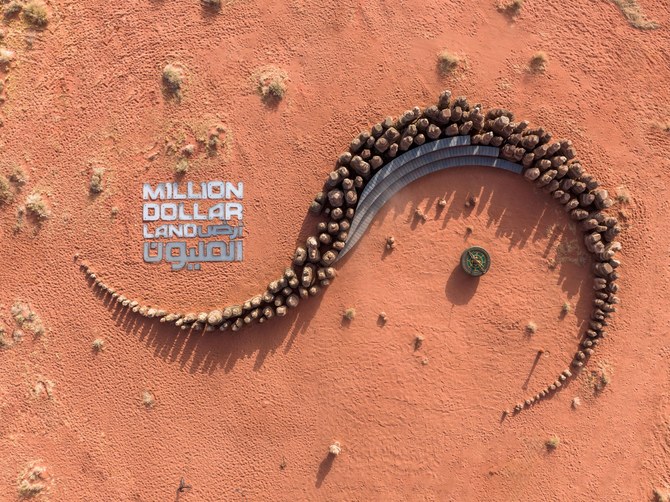
The broadcast date of the new seasons is yet to be announced. “Ard Al-Million” will air on MBC1 and Shahid. (Supplied)
2 / 3
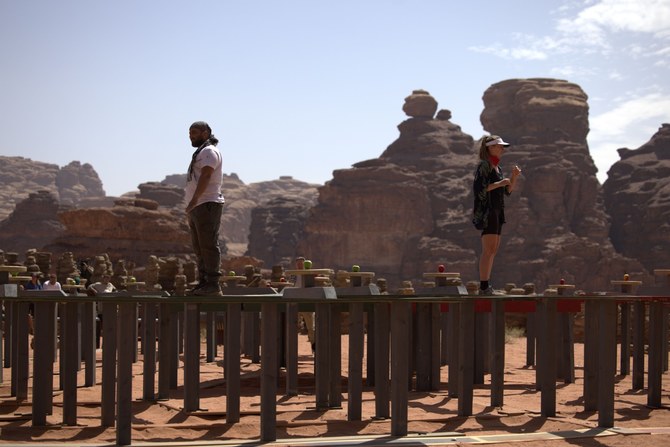
The broadcast date of the new seasons is yet to be announced. “Ard Al-Million” will air on MBC1 and Shahid. (Supplied)
3 / 3
The broadcast date of the new seasons is yet to be announced. “Ard Al-Million” will air on MBC1 and Shahid. (Supplied)
Short Url
Updated 14 June 2024
Follow

New ‘Million Dollar Island’ seasons to be produced at NEOM

  • Talpa Studios recommissions hit reality show for MBC in the Middle East, NET5 in the Netherlands

DUBAI: Talpa Studios, which was founded by John de Mol, the creator of popular shows “The Voice” and “Big Brother,” has recommissioned its reality show “Million Dollar Island” for new seasons in the Middle East and the Netherlands.

The new seasons — titled “Million Dollar Land” or “Ard Al-Million” for MBC in the Middle East and “Million Dollar Desert” for NET5 in the Netherlands  — will be produced at Saudi Arabia’s NEOM production hub, in collaboration with regional production house Blue Engine Studios.

This will be the second season of “Ard Al-Million.” The first season aired on MBC Group’s TV channels MBC1, MBC IRAQ, and Shahid last May.

Produced by Monday Media, “Million Dollar Island” also ran for two seasons in the Netherlands. The new season, however, marks a shift to the desert-oriented format and will be shot at NEOM.

Blue Engine Studios played a key role in facilitating the deal between Talpa Studios and NEOM’s media sector and aims to bring more countries to NEOM’s production hub.

Its work on the Dutch edition included facilitating Monday Media’s production of the latest season, such as sourcing suppliers, permits and equipment as part of the studio’s commitment to establish a hub for the show at NEOM.

Ziad Kebbi, CEO at Blue Engine Studios, said that the “collaboration with NEOM and Talpa Studios underscores our commitment to producing high-quality entertainment that resonates with audiences.”

Unlike previous seasons, which featured 100 contestants, the new seasons will see 30 contestants test their endurance as they navigate the challenges of life in the desert.

There will be other changes to the format revealed when the new seasons go on air.

“These spin-offs preserve “the core principles that have made the original so compelling, while introducing innovative new elements that are perfectly suited to NEOM’s stunning desert scenery,” said Sebastian van Barneveld, director of international distribution at Talpa Studios.

Partnerships such as these ensure “a robust pipeline of productions and afford opportunities to accelerate our media ecosystem while training the next generation of talent,” said Wayne Borg, managing director of NEOM Media Industries.

The broadcast date of the new seasons is yet to be announced. “Ard Al-Million” will air on MBC1 and Shahid.


UAE outlines approach to AI governance amid regulation debate at World Economic Forum

Updated 22 January 2026
Follow

UAE outlines approach to AI governance amid regulation debate at World Economic Forum

  • Minister of State Maryam Al-Hammadi highlights importance of a robust regulatory framework to complement implementation of AI technology
  • Other experts in panel discussion say regulators should address problems as they arise, rather than trying to solve problems that do not yet exist

DUBAI: The UAE has made changes to 90 percent of its laws in the past four years, Maryam Al-Hammadi, minister of state and the secretary-general of the Emirati Cabinet, told the World Economic Forum in Davos on Wednesday.

Speaking during a panel discussion titled “Regulating at the Speed of Code,” she highlighted the importance of having a robust regulatory framework in place to complement the implementation of artificial intelligence technology in the public and private sectors.

The process of this updating and repealing of laws has driven the UAE’s efforts to develop an AI model that can assist in the drafting of legislation, along with collecting feedback from stakeholders on proposed laws and suggesting improvements, she said.

Although AI might be more agile at shaping regulation, “there are some principles that we put in the model that we are developing that we cannot compromise,” Al-Hammadi added. These include rules for human accountability, transparency, privacy and data protection, along with constitutional safeguards and a thorough understanding of the law.

At this stage, “we believe AI can advise but still (the) human is in command,” she said.

Authorities in the UAE are aiming to develop, within a two-year timeline, a shareable model to help other nations learn and benefit from its experiences, Al-Hammadi added.

Argentina’s minister of deregulation and state transformation, Federico Sturzenegger, warned against overregulation at the cost of innovation.

Politicians often react to a “salient event” by overreacting, he said, describing most regulators as “very imaginative of all the terrible things that will happen to people if they’re free.”

He said that “we have to take more risk,” and regulators should wait to address problems as they arise rather than trying to create solutions for problems that do not yet exist.

This sentiment was echoed by Joel Kaplan, Meta’s chief global affairs officer, who said “imaginative policymakers” often focus more on risks and potential harms than on the economic and growth benefits of innovation.

He pointed to Europe as an example of this, arguing that an excessive focus on “all the possible harms” of new technologies has, over time, reduced competitiveness and risks leaving the region behind in what he described as a “new technological revolution.”