Pakistan unlikely to buy spot LNG in summer despite simmering heat

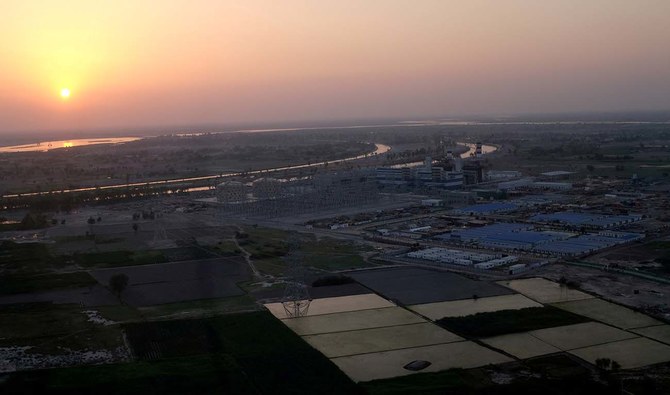
An aerial view of the Haveli Bahadur Shah LNG power plant in Jhang, Pakistan July 7, 2017. (Reuters/File)
Short Url
Updated 12 June 2024
Follow

Pakistan unlikely to buy spot LNG in summer despite simmering heat

  • Pakistan unlikely to buy LNG cargoes until November due to oversupply, high prices
  • Countries seek more LNG cargoes due to extreme heat, driving spot prices to high levels

KARACHI: Pakistan is unlikely to buy liquefied natural gas (LNG) cargoes on the spot market until at least the beginning of winter in November due to oversupply and high prices, its petroleum minister told Reuters.

Extreme temperatures across Asia have pushed countries to seek more cargoes of LNG to address higher power demand, driving spot prices to their highest since mid-December. Asia spot LNG last traded at $12.00 per million British thermal units (mmBtu) on Friday.

However, LNG demand in the second largest South Asian LNG buyer was “subordinate to supplies,” the minister told Reuters, despite heatwaves baking the country of 300 million people with temperatures surging to a near-record.

“The question of getting more LNG when we can’t sell the amount of LNG that we already are obtaining from our long-term contracts, it does not apply,” Musadik Masood Malik, Pakistan’s petroleum minister, told Reuters in an interview.

Annual power use in Pakistan, which gets over a third of its electricity from natural gas, is expected to fall consecutively for the first time in 16 years, due to higher tariffs curbing household consumption.

Poor and middle-class households are still feeling the impact of the International Monetary Fund’s (IMF) bailout of Pakistan last year, which contributed to higher retail prices. A series of power tariff hikes over 12 months was a key part of the IMF program which ended in April.

Industrial demand has also remained tepid due to a cloudy economic outlook.

Pakistan, which last bought a spot LNG cargo in late 2023, canceled its spot LNG tender for delivery in January. Malik attributed the cancelation to oversupply, adding that there were “not a lot of customers” at current LNG spot prices.

Malik said Pakistan was keen to adopt more renewable energy to cut its import bill and exposure to geopolitical shocks. The country suffered widespread power outages due to its inability to buy expensive LNG after prices surged due to Russia’s invasion of Ukraine.

“Any country that is importing $15-18 billion of fuel, how can it be sustainable when the total exports are south of $30 billion? So we have to move away from the imported elements such as LNG,” he said.

Pakistan was also trying to access less expensive natural gas by building a pipeline with Iran, but was wary of sanctions, he said.

“We basically are trying to work out the solution whereby we can have access to less expensive gas, but in a manner which does not invoke any sanctions on Pakistan. It all depends on legal interpretations,” he said.

“From our perspective, we don’t want to get into litigation and we don’t want to get sanctioned.” 


Suicide bomber among five militants killed in counterterror operation in southwest Pakistan— military 

Updated 5 sec ago
Follow

Suicide bomber among five militants killed in counterterror operation in southwest Pakistan— military 

  • Security forces gunned down “Indian-sponsored” Pakistani Taliban militants in Pishin district on Sunday, says military 
  • Says Pakistani forces recovered weapons, explosives from slain militants who were involved in “terrorist activities“

ISLAMABAD: Pakistani security forces this week killed five militants, including a suicide bomber, during an intelligence-based operation in the country’s southwestern Balochistan province, the military’s media wing said on Monday. 

The operation took place in Balochistan’s Pishin district on Sunday after security forces received reports of the presence of “Fitna Al Khwarij,” a term the military uses to describe the Tehreek-e-Taliban Pakistan (TTP) militant group. Pakistani forces engaged the militants with multiple weapons, the Inter-Services Public Relations (ISPR) added, as both sides traded fire. 

“After an intense fire exchange, suicide bomber kharji cowardly blew himself up and four other Indian-sponsored khwarij were hunted down and sent to hell,” the military’s media wing said. 

Pakistani forces recovered weapons, ammunition and explosives from the slain militants, the military said, adding that they were involved in numerous “terrorist activities” in the area. 

The military said it was carrying out sanitization operations to hunt any other militants in the area. It vowed to continue the government’s counterterrorism campaign to wipe out “foreign sponsored and supported terrorism” from Pakistan. 

The TTP has carried out some of the deadliest attacks against civilians and law enforcement agencies in Pakistan since 2007 in its bid to impose its own brand of Islamic law in the country.

Pakistan says TTP, Daesh and ethnic Baloch separatist outfits enjoy sanctuary in Afghanistan from where they launch attacks against its territory. Afghanistan denies the allegations and calls on Islamabad to address its security challenges without involving Kabul.

Pakistan carried out intelligence-based strikes on alleged militant camps and hideouts in Afghanistan’s Nangarhar, Paktika and Khost provinces on Saturday, a security official said. The official said more than 80 militants were killed in the attacks, a claim denied by the Afghan Taliban who said Islamabad killed and wounded dozens of civilians in the strikes.

The strikes have increased tensions between the neighbors, with Afghanistan warning it will retaliate at a “suitable time.”

Islamabad also accuses India of arming and funding militant groups that carry out attacks in Pakistan, a charge New Delhi rejects.