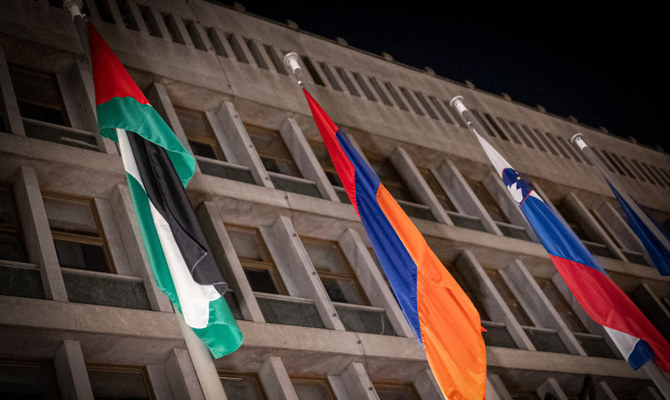
LJUBLJANA: Slovenia’s parliament on Tuesday passed a decree recognizing a Palestinian state, pushing ahead with a vote in defiance of an opposition motion to derail it.
Fifty-two members of the 90-member parliament voted in favor of the government-sponsored decree to recognize a Palestinian state.
The vote followed a similar move by three other European nations last week in response to the devastating Gaza war.
The opposition boycotted the vote except for one lawmaker who attended but abstained.
Slovenia’s center-left government sent the decree on recognizing a Palestine state for parliamentary approval last Thursday as part of efforts to end the fighting in Gaza as soon as possible.
The conservative opposition Slovenian Democratic Party (SDS) led by former prime minister Janez Jansa on Monday then filed a proposal to hold an advisory referendum on the recognition.
It said Slovenia should remain with the majority of EU states that have decided now is not the right time for such a move.
By filing the motion, the SDS had expected to delay the vote on the recognition since the legislation sets a 30-day deadline before lawmakers can vote on a disputed bill.
At Tuesday’s session, 52 lawmakers rejected the motion.
Parliamentary speaker Urska Klakocar Zupancic said the opposition had “abused the referendum mechanism” and announced parliament would proceed with the vote as planned.
She quoted legal interpretations, according to which the 30-day deadline referred only to bills rather than to decrees such as one recognizing a foreign state.
Spain, Ireland and Norway recognized a Palestinian state last week, bringing to 145 the number of the United Nations’ 193 member states that have recognized the statehood, according to the Palestinian authorities.
With the decree, Slovenia recognizes the Palestinian state within the territories set by a 1967 UN resolution or according to any future peace agreement reached by both parties.


![]()
![]()

Slovenia recognizes Palestinian state, defying delay bid

Short Url
https://arab.news/ybr5e
Slovenia recognizes Palestinian state, defying delay bid
- The vote followed a similar move by three other European nations last week in response to the devastating Gaza war


Latest updates


© 2026 SAUDI RESEARCH & PUBLISHING COMPANY, All Rights Reserved And subject to Terms of Use Agreement.