RIYADH: Decision-makers and environmentalists from around the world participated in the Arab Forum for Environment, which began in Riyadh on June 3.
The two-day forum was organized by the joint secretariat of the forum, represented by the general secretariat of the League of Arab States and the United Nations Environment Programme, and hosted by the Ministry of Environment, Water and Agriculture.
The forum discussed critical environmental issues in the Arab region, including land degradation and drought.
The session, titled “Land Degradation, Regional and Global Environmental Challenges,” brought perspectives from Abdel Majeed Haddad, deputy regional director at the United Nations Environment Programme for the Office of West Asia; Andrea Meza Murillo, deputy executive secretary of the United Nations Convention to Combat Desertification; and Reem Nejdawi, chief of the Food and Environment Policies section at the United Nations Economic and Social Commission for Western Asia.
The session highlighted land degradation as a key environmental challenge, as well as discussing relevant global environmental and sustainability agreements, and the tools and needs of the Arab region to reach Sustainable Development Goals.
“We need to put in place as an international community to support the countries, to move from the reactive approach to a proactive approach,” Murillo said. “We need to be better prepared for the next drought.
“What are the kinds of investments we need to put in place? In agriculture, in water systems .... understanding that nature is a great ally as well in generating this resilience,” she said.
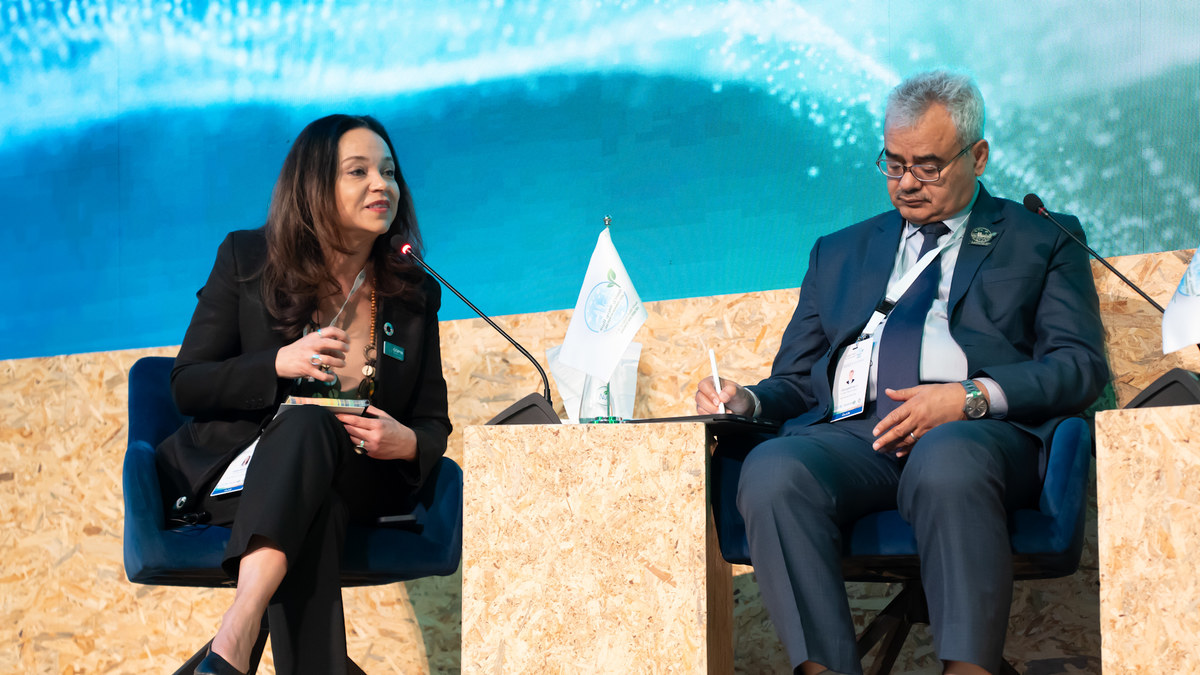
Andrea Meza Murillo, Deputy Executive Secretary of the United Nations Convention to Combat Desertification, talking during the session at the Arab Forum for Environment in Riyadh. (AN/Loai Elkelawy)
The forum noted that climate change in the Arab region had increased the impacts of drought and land degradation dramatically on people and land in the area. This had resulted in many countries experiencing changes in weather such as low rainfall, leading to reduced water resources and eventually damaging agricultural productivity.
In addition, such climate issues led to the failure of crops, loss of livestock, and created severe impacts on food insecurity for populations in the region. As desertification was also accelerating, the fertile topsoil was lost to wind and water erosion.
In countries with higher rates of drought and desert climate, these environmental pressures had contributed to conflicts. Governments and international organizations, however, were working to promote sustainable land management, invest in water infrastructure, and help vulnerable communities adapt to a new lifestyle.
Experts said that the Arab world faced an uphill battle against the impact of a rapidly changing climate, in which international work and global conferences such as the Arab Forum for Environment were vital in combating climate change issues collectively.