

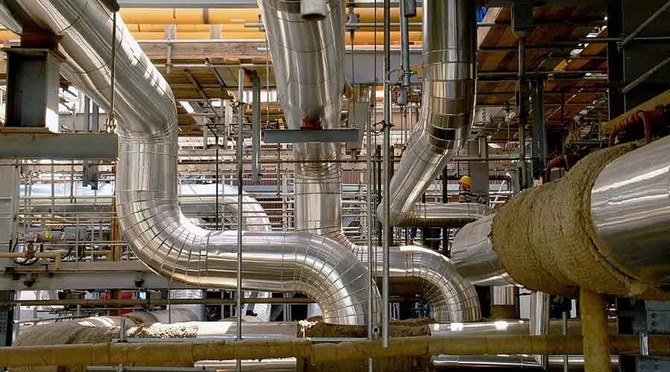
Saudi energy giant ACWA Power sells $225m stake in Rabigh IWSPP 

Rabigh IWSPP is owned and operated by Rabigh Arabian Water and Electricity Co., a joint venture between ACWA Power, Marubeni Corp., JGC Corp., and Petro Rabigh. 
Short Url
Updated 04 June 2024
Follow

Saudi energy giant ACWA Power sells $225m stake in Rabigh IWSPP 

RIYADH: Saudi-listed ACWA Power has agreed to sell 30 percent of its stake in Rabigh Independent Water Steam and Power Project to Hassana Investment Co. for SR844 million ($225 million).  

Parties in the deal included Oasis Power One Conventional Energy and Water Co. and Gosi Investment Ventures Limited, said ACWA Power in a bourse filing. 

Rabigh IWSPP is owned and operated by Rabigh Arabian Water and Electricity Co., a joint venture between ACWA Power, Marubeni Corp., JGC Corp., and Petro Rabigh. 

The project was arranged under an engineering, procurement, and construction contract by Mitsubishi Heavy Industries and consists of conventional thermal power with five 118 megawatt steam turbines, nine 470 tonnes per hour steam generators, three wet limestone flue gas desulphurization units, and 16 reverse osmosis trains capable of producing 504 cubic meters per hour. 

RAWEC is an independent water, steam, and power producer, supplying essential utilities on a captive basis to Petro Rabigh Co. 

ACWA Power stated that the sale is part of its capital recycling strategy. 

The Saudi utility giant previously held a 99 percent shareholding in the project. The company expects to gain from this divestment, which will be calculated on the closing date of the transaction. 

The statement added that RAWEC’s contribution to the group’s net income will be proportionately reduced in line with the divestment. 

On June 2, ACWA Power signed an agreement with the Tunisian government for a project that will produce up to 600,000 tonnes per year of green hydrogen in three phases for export to Europe. 

The memorandum of understanding was inked by Fatma Thabet Chiboub, Tunisia’s minister of industry, mines and energy, and Marco Arcelli, CEO of ACWA Power. 

ACWA Power is set to develop, operate, and maintain 12 gigawatts of renewable energy electricity generation units, including storage systems and transmission lines, along with water desalination plants, electrolyzers, and infrastructures to connect to the main pipeline. 

The first phase will involve installing 4 GW of renewable energy units, 2 GW of electrolyzer capacity, as well as battery storage facilities to produce 200,000 tonnes per year of green hydrogen, which will be exported through the SoutH2 Corridor, a hydrogen pipeline initiative led by European transmission system operators connecting Tunisia to Italy, Austria and Germany. 


GCC debt markets poised for major growth in 2026, led by record sukuk issuance: Fitch

Updated 21 January 2026
Follow

GCC debt markets poised for major growth in 2026, led by record sukuk issuance: Fitch

RIYADH: The Gulf Cooperation Council's debt capital market is set to exceed $1.25 trillion in 2026 as project funding and government initiatives fuel a 13.6 percent expansion, according to Fitch Ratings.

The region is set to remain one of the largest sources of US dollar debt and sukuk issuance among emerging markets , according to the agency, which also flagged cross-sector economic diversification, refinancing needs, and funding for deficits as drivers behind the growth.

The Gulf’s debt capital markets — which stood at $1.1 trillion at the end of the third quarter of 2025 — have evolved from primarily sovereign funding tools into increasingly sophisticated financing means, serving governments, banks, and corporates alike.

As diversification agendas accelerate and refinancing cycles intensify, regional issuers have become regular participants in global debt markets, strengthening the GCC’s role in emerging-market capital flows.

The report noted that the market is expected to be further supported by forecasted lower oil prices, averaging $63 per barrel in 2026 and 2027, and anticipated US Federal Reserve rate cuts to 3.25 percent and 3 percent in those respective years.

Bashar Al-Natoor, Fitch’s global head of Islamic Finance, highlighted the market’s resilience and the rising dominance of sukuk. “Most GCC issuers continued to maintain strong market access in 2025 and so far in 2026 despite global and regional shocks,” he stated, adding: “Sukuk funding share in the GCC DCM outstanding expanded to over 40 percent, the highest to date.”

The analysis noted the high credit quality of the region’s Islamic debt. “About 84 percent of Fitch-rated GCC sukuk are investment-grade, and 90 percent of issuers are on Stable Outlooks,” Al-Natoor added. “While there were no defaults or falling angels, there were rising stars with many Omani sukuk upgraded following the sovereign upgrade.”

In 2025, GCC nations accounted for 35 percent of all emerging market US dollar debt issuance, excluding China. Growth in US dollar sukuk issuance notably outpaced that of conventional bonds. The region’s total outstanding DCM grew by over 14 percent year on year to $1.1 trillion.

The market remains fragmented, with Saudi Arabia and the UAE hosting the most developed ecosystems.

Notably, Kuwait issued $11.25 billion in sovereign bonds, its first such issuance in eight years, while Oman’s DCM is expected to grow more conservatively as the country focuses on deleveraging. “Digitally native notes emerged in Qatar and the UAE,” the report said.

Fitch identified several risks to the outlook, including exposure to oil-price and interest-rate volatility, geopolitical tensions, and evolving Shariah compliance requirements for sukuk. 

Despite this, issuers are increasingly diversifying their funding through private credit, syndicated financing, and certificates of deposit.