
RAFAH, Palestinian Territories: Qatari, Egyptian and US mediators called on Israel and Hamas Saturday to “finalize” the truce deal outlined by US President Joe Biden, as Israeli forces pounded Rafah in southern Gaza.
Fighting has raged in the besieged Gaza Strip since Biden said Israel was offering a new roadmap toward a full ceasefire.
But Israeli Prime Minister Benjamin Netanyahu has since insisted his country would pursue the war until it had achieved all its aims.
He reiterated that position on Saturday, saying that “Israel’s conditions for ending the war have not changed: the destruction of Hamas’s military and governing capabilities, the freeing of all hostages and ensuring that Gaza no longer poses a threat to Israel.”
Hamas, meanwhile, said it “views positively” the Israeli plan laid out by Biden on Friday.
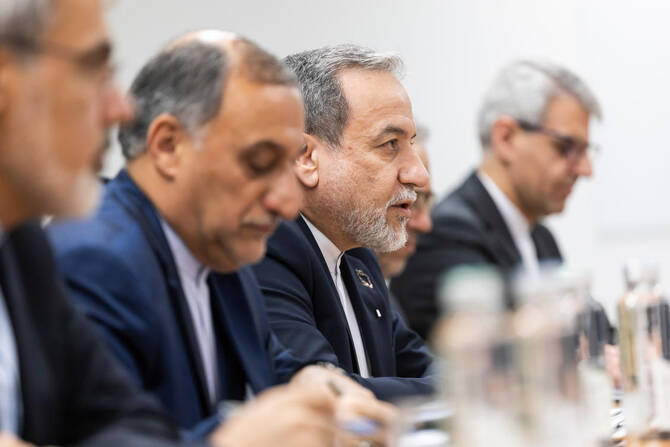
In a joint statement, Qatar, the United States and Egypt said that “as mediators in the ongoing discussions to secure a ceasefire in Gaza and the release of hostages and detainees,” they “call on both Hamas and Israel to finalize the agreement embodying the principles outlined by President Joe Biden.”

A protester holds a placard during a demonstration organized by Kanaks, Urgence Palestine group and anti-fascist movements, in solidarity with Palestinians, at the Place de la Republique in Paris on June 1, 2024. (AFP)
The US president said Israel’s three-stage offer would begin with a six-week phase that would see Israeli forces withdraw from all populated areas of Gaza.
It would see the “release of a number of hostages” in exchange for “hundreds of Palestinian prisoners” held in Israeli jails.
Israel and the Palestinians would then negotiate for a lasting ceasefire, with the truce to continue so long as talks are ongoing, Biden said.
“It’s time for this war to end, for the day after to begin.”
US Secretary of State Antony Blinken called foreign ministers from Jordan, Saudi Arabia and Turkiye on Friday to press the deal, and on Saturday spoke with the Qatari, Egyptian and Emirati ministers.
UN chief Antonio Guterres “strongly hopes” the latest development “will lead to an agreement by the parties for lasting peace,” a spokesman said.
Israeli opposition endorse plan, Netanyahu allies object
Netanyahu took issue with Biden’s presentation of what was on the table, insisting that according to the “exact outline proposed by Israel,” the transition from one stage to the next was “conditional” and crafted to allow it to maintain its war aims.
Israeli opposition leader Yair Lapid said the government “cannot ignore Biden’s important speech” and should accept the proposed deal, vowing to back Netanyahu if his far-right coalition partners quit over it.
“I remind Netanyahu that he has our safety net for a hostage deal,” Lapid said on the X platform, the former Twitter.
Finance Minister Bezalel Smotrich and National Security Minister Itamar Ben Gvir, leaders of the two extreme-right parties in parliament, said they would leave the government if it endorses the truce proposal.
Ben Gvir said on X his party would “dissolve the government,” while Smotrich said: “We demand the continuation of the war until Hamas is destroyed and all hostages return.”
Smotrich added he opposes the return of displaced Gazans to the territory’s north and the “wholesale release of terrorists” in a prisoner swap.
War cabinet member Benny Gantz, a centrist politician, had threatened to resign unless Netanyahu approves a post-war plan for Gaza by June 8.
Netanyahu has faced increasing domestic pressure over the fate of hostages and from a resurgent anti-government movement, with Israelis rallying again on Saturday near military headquarters in Tel Aviv.

Smoke billows following Israeli bombardment in Rafah in the southern Gaza Strip on May 31, 2024, amid the ongoing conflict between Israel and the Palestinian Hamas group. (AFP)
Israeli rampage continues
The Gaza war was sparked by Hamas’s unprecedented October 7 attack, which resulted in the deaths of 1,189 people, mostly civilians, according to an AFP tally based on Israeli official figures.
Militants also took 252 hostages, 121 of whom remain in Gaza, including 37 the army says are dead.
Israel’s retaliatory offensive has killed at least 36,379 people in Gaza, mostly civilians, according to the Hamas-run territory’s health ministry.
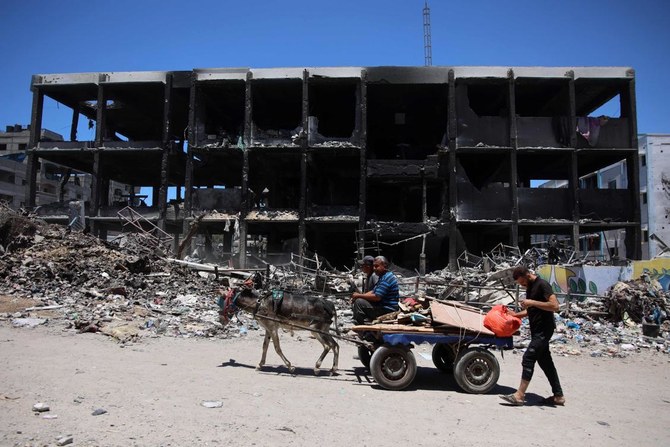
Israel sent tanks and troops into Rafah in early May, ignoring concerns for displaced Palestinian civilians sheltering in the city on the Egyptian border.
On Saturday, residents reported tank fire in the Tal Al-Sultan neighborhood in west Rafah, while witnesses in the east and center described intense shelling.
Before the Rafah offensive began, the United Nations said up to 1.4 million people were sheltering in the city.
Since then, one million have fled the area, the UN agency for Palestinian refugees, UNRWA, has said.
The Israeli seizure of the Rafah crossing has further slowed sporadic aid deliveries for Gaza’s 2.4 million people and effectively shuttered the territory’s main exit point.
Egyptian state-linked Al-Qahera News said Cairo will host a meeting with Israeli and US officials on Sunday to discuss reopening the Rafah crossing.
In northern Gaza, witnesses said that after carrying out a three-week operation in the town of Jabalia, troops had ordered residents of nearby Beit Hanun to evacuate ahead of an assault.
The Israeli army said troops “completed their mission in eastern Jabalia and began preparation for continued operations in the Gaza Strip.”
In parallel to the Gaza onslaught, Israel has also stepped up security operations in the occupied West Bank. The official WAFA Palestinian news agency said a 15-year-old boy was killed by Israeli forces on Saturday near Jericho.
The Israeli military said it had opened fire on two suspects who had thrown petrol bombs at a neighboring Israeli settlement.
At least 520 Palestinians have been killed in the West Bank by Israeli forces or settlers since October 7, according to Palestinian authorities. Fourteen Israelis have died, according to an AFP tally.