LONDON: Hard-right anti-immigration party Reform UK said Tuesday that Conservative defector Robert Jenrick will be its finance spokesman, as leader Nigel Farage announced policy portfolios for his top team.
Brexit cheerleader Farage appointed Zia Yusuf, who had been the party’s head of policy, as home affairs spokesman and deputy leader Richard Tice to a new role combining business, trade and energy policy.
The announcements follow Reform — which only has eight MPs in the 650-seat House of Commons — leading in polls for the past year and with the under-fire Labour government beset by crises and missteps.
The next general election is not due until 2029. But Reform and other opposition parties are eyeing a by-election this month for a parliamentary seat and local polls on May 7 to ratchet up the pressure on center-left Labour.
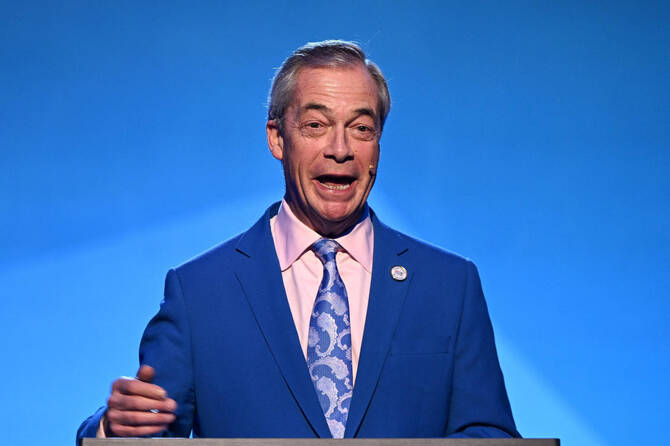
“We are the voice of opposition to this government, and so it’s time for the party to take the next step,” Farage said at a London event unveiling his picks for the new roles.
The 61-year-old — whose Euroskepticism and anti-immigration stances have proved increasingly popular in recent years — insisted his party now has “its own identity.”
“Reform has its own senior characters, with their own departments to lead,” he added, branding his top team a “shadow cabinet” — a term formally reserved in British politics for the main Conservative opposition.
Reform — founded in 2021 from the ashes of Farage’s Brexit Party — has in recent months lured lawmakers away from the Tories, while racking up sizeable donations.
In December, Thailand-based cryptocurrency investor and aviation entrepreneur Christopher Harborne gave it £9 million ($12 million).
However, several recent polls have shown the party’s popularity potentially plateauing, while Farage’s own disapproval ratings have risen.
The latest YouGov weekly voting intention survey showed Reform on 24 percent and its lead over Labour down to five points. The pollster also recently found 64 percent of respondents viewed Farage unfavorably. That was up from 59 percent last June.
In another sign of possible shifting sentiment, betting company Ladbrokes said Monday that, for the first time since last May, Reform were no longer favorites to win the most seats at the next general election.


![]()

Reform UK name Tory defector Jenrick as finance spokesman
Short Url
https://arab.news/g4m5x
Reform UK name Tory defector Jenrick as finance spokesman
- Brexit cheerleader Farage appointed Zia Yusuf as home affairs spokesman
- The next general election is not due until 2029


Latest updates





© 2026 SAUDI RESEARCH & PUBLISHING COMPANY, All Rights Reserved And subject to Terms of Use Agreement.