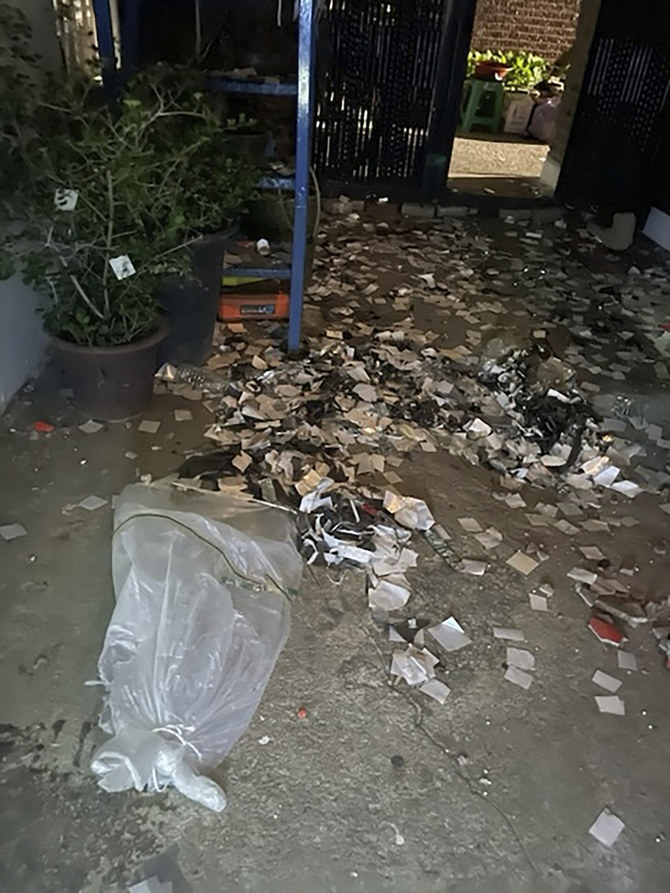

SEOUL, South Korea: Manure. Cigarette butts. Scraps of cloth. Waste batteries. Even, reportedly, diapers. This week, North Korea floated hundreds of huge balloons to dump all of that trash across rival South Korea — an old-fashioned, Cold War-style provocation that the country has rarely used in recent years.
The powerful sister of North Korean leader Kim Jong Un confirmed Wednesday that North Korea sent the balloons and attached trash sacks. She said they were deployed to make good on her country’s recent threat to “scatter mounds of wastepaper and filth” in South Korea in response to the leafleting campaigns by South Korean activists.
Experts say the balloon campaigning is meant to stoke a division in South Korea over its conservative government’s hard-line policy on North Korea. They also say North Korea will also likely launch new types of provocations in coming months to meddle in November’s US presidential election.
Here’s a look at what North Korea’s balloon launches are all about.
What happened?
Since Tuesday night, about 260 balloons flown from North Korea have been discovered across South Korea. There’s no apparent danger, though: The military said an initial investigation showed that the trash tied to the balloons doesn’t contain any dangerous substances like chemical, biological or radioactive materials.
There have been no reports of damages in South Korea. In 2016, North Korean balloons carrying trash, compact discs and propaganda leaflets caused damage to cars and other property in South Korea. In 2017, South Korea found a suspected North Korean balloon with leaflets again. This week, no leaflets were found from the North Korean balloons.
Flying balloons with propaganda leaflets and other items is one of the most common types of psychological warfare the two Koreas launched against each other during the Cold War. Other forms of Korean psychological battle have included loudspeaker blaring, setting up giant front-line electronic billboards and signboards and propaganda radio broadcasts. In recent years, the two Koreas have agreed to halt such activities but sometimes resumed them when tensions rose.
What does North Korea want?
The North’s balloon launches are part of a recent series of provocative steps, which include its failed spy satellite launch and test-firings of about 10 suspected short-range missiles this week. Experts say the North’s leader, Kim Jong Un, will likely further dial up tensions ahead of the US election to try to help former President Donald Trump return to the White House and revive high-stakes diplomacy between them.
“The balloon launches aren’t weak action at all. It’s like North Korea sending a message that next time, it can send balloons carrying powder forms of biological and chemical weapons,” said Kim Taewoo, a former president of South Korea’s government-funded Institute for National Unification.
Koh Yu-hwan, an emeritus professor at Seoul’s Dongguk University, said North Korea likely determined that the balloon campaign is a more effective way to force South Korean President Yoon Suk Yeol’s government to clamp down on the South’s civilian leafletting.
“The point is to make the South Korean people uncomfortable, and build a public voice that the government’s policy toward North Korea is wrong,” Koh said.
North Korea is extremely sensitive to leaflets that South Korean activists occasionally float across the border via their own balloons, because they carry information about the outside world and criticism of the Kim dynasty’s authoritarian rule. Most of the North’s 26 million people have little access to foreign news.
In 2020, North Korea blew up an empty, South Korean-built liaison office on its territory in protest of South Korean civilian leafleting campaigns.
Was anything learned from the trash
North Korea is one of the world’s most secretive countries in the world, and foreign experts are keen on collecting any fragmentary information coming from the country.
But Koh said that there won’t be much meaningful information that South Korea can gain from the North Korean trash dumps, because North Korea would have not put any important items into balloons.
If the manure is the kind made of animal dung, its examination may show what fodder is given to livestock in North Korea. Looks at other trash can provide a glimpse into consumer products in North Korea. But observers say outside experts can get such information more easily from North Korean defectors, their contacts in North Korea and Chinese border towns, and North Korean state publications.
What are the efffpfffffnfvvv?
The North’s balloon activities may deepen public calls in South Korea to stop anti-North Korean leafleting to avoid unnecessary clashes. But it’s unclear whether and how aggressively the South Korean government can urge civil groups to refrain from sending balloons toward North Korea.
In 2023, South Korea’s Constitutional Court struck down a contentious law that criminalized the sending of anti-Pyongyang propaganda leaflets, calling it an excessive restriction on free speech.
“From Pyongyang’s perspective, this is a tit-for-tat and even restrained action to get Seoul to stop anti-Kim regime leaflets from being sent north. However, it will be difficult for democratic South Korea to comply, given ongoing legal disputes over the freedom of citizens and NGOs to send information into North Korea,” said Leif-Eric Easley, a professor at Ewha University in Seoul.
“The immediate danger of military escalation is not high,” he said, “but recent developments show how sensitive and potentially vulnerable the Kim regime is to information operations.”