

Saudi Railways announces increased seating capacity of Haramain High-Speed Train for Hajj season

1 / 4
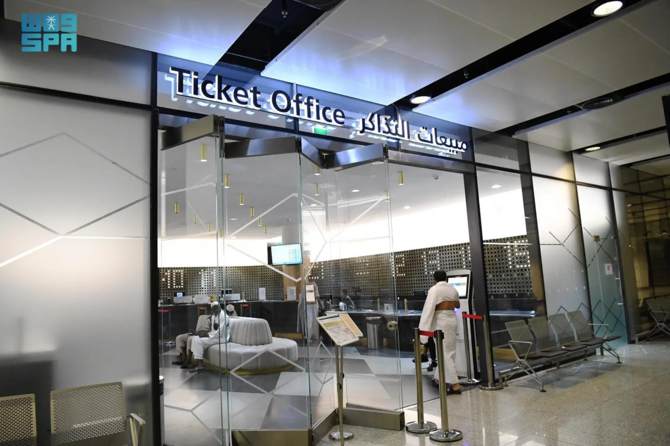
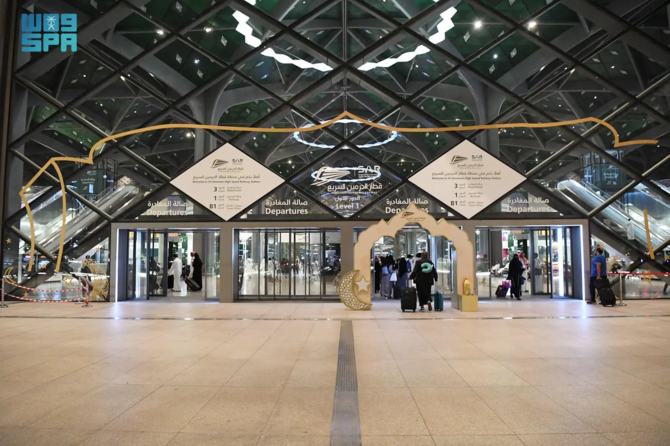
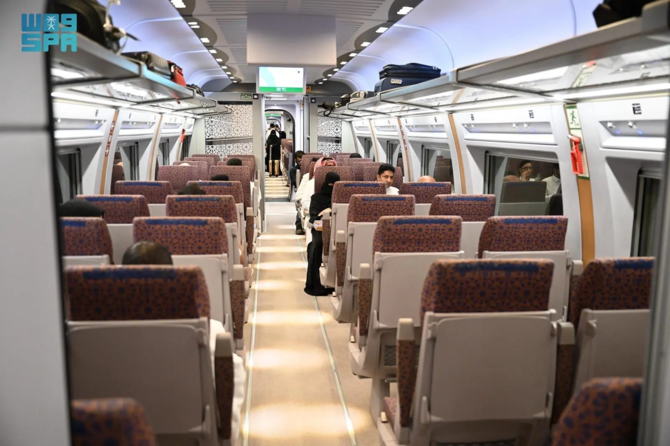
The railway passes through the main Jeddah station in the Sulaymaniyah district, King Abdulaziz Airport station in Jeddah, and King Abdullah Economic City. (SPA)
2 / 4
The railway passes through the main Jeddah station in the Sulaymaniyah district, King Abdulaziz Airport station in Jeddah, and King Abdullah Economic City. (SPA)
3 / 4
The railway passes through the main Jeddah station in the Sulaymaniyah district, King Abdulaziz Airport station in Jeddah, and King Abdullah Economic City. (SPA)
4 / 4
The railway passes through the main Jeddah station in the Sulaymaniyah district, King Abdulaziz Airport station in Jeddah, and King Abdullah Economic City. (SPA)
Short Url
Updated 30 May 2024
Follow

Saudi Railways announces increased seating capacity of Haramain High-Speed Train for Hajj season

RIYADH: Saudi Arabia Railways on Wednesday announced the readiness of the Haramain High-Speed Railway to receive pilgrims for this year’s Hajj season and said it has increased the number of available seats by about 100,000.

SAR revealed its operational plan for the season at its five stations linking Makkah to Madinah, bringing the total number of seats to 1.6 million, up from more than a 1.3 million seating capacity last year, the Saudi Press Agency reported.
The 453-kilometer railway passes through the main Jeddah station in the Sulaymaniyah district, King Abdulaziz Airport station in Jeddah, and King Abdullah Economic City. 
“This expansion also considers the addition of more than 430 new trips to last year’s trips, raising the number of trips scheduled in the operational plan for this year to more than 3,800” from May 9 to June 25, while the numbers of trips on peak days will be 126, SPA said.
The Haramain High-Speed Railway train ranks among the 10 fastest electric trains globally. It reaches 300 km per hour, and operates a fleet of 35 trains, with a capacity of 417 seats per train. It functions based on an environment-friendly system and zero carbon emissions, and plays an important role in preserving roads’ infrastructure by reducing road traffic.


Economic growth and resilience at heart of 2nd AlUla Emerging Market Economies Conference

Updated 03 February 2026
Follow

Economic growth and resilience at heart of 2nd AlUla Emerging Market Economies Conference

  • Event on Feb. 8 and 9 will bring together ministers, governors of central banks, policymakers, economic experts and international financial institutions
  • Emerging-market economies a ‘pivotal element’ in global economic system due to effect they have on growth and stability, says Saudi Finance Minister Mohammed Al-Jadaan

RIYADH: The second annual AlUla Conference for Emerging Market Economies, which Saudi Arabia will host next week, offers a platform to exchange views on global developments and discuss policies and reforms that support inclusive growth and strengthen economic resilience, the Kingdom’s finance minister said.

The event on Feb. 8 and 9 will bring together finance ministers, governors of central banks and policymakers, alongside economic experts and representatives of international financial institutions.

Organized by the Saudi Ministry of Finance in partnership with the International Monetary Fund, it takes place as emerging-market economies face mounting challenges amid rapid global economic change.

Finance Minister Mohammed Al-Jadaan said the decision to host the conference reflects Saudi Arabia’s ongoing commitment to efforts that support global financial and economic stability, and highlights the growing influence of emerging economies on worldwide growth.

Emerging-market economies represent a “pivotal element” in the global economic system due to the direct impact they have on economic growth and stability, he added.

“The AlUla Conference for Emerging Market Economies provides a unique platform for exchanging views on global economic developments, and discussing policies and reforms that will support inclusive growth and enhance economic resilience, in light of broader international cooperation that contributes to confronting common challenges,” Al-Jadaan said.

Kristalina Georgieva, managing director of the IMF, said the event would help emerging economies deal with growing uncertainty driven by technological change, demographic shifts and geopolitical tensions.

“The AlUla conference provides a vital platform for emerging economies to discuss how they can navigate the risks and embrace the opportunities ahead,” she said.

“In these times of sweeping transformations in the global economy, policymakers face a more challenging and uncertain environment. Countries should work together to strengthen resilience through sound macroeconomic and financial policies.”