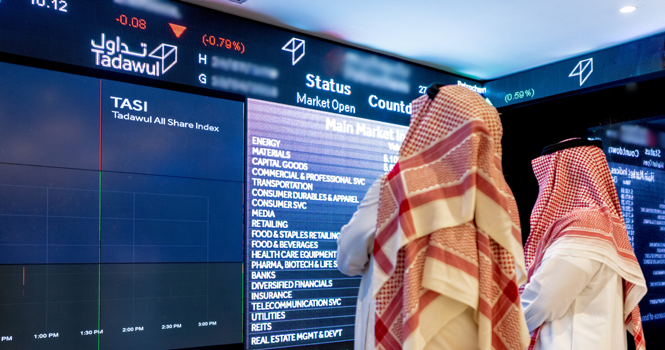

RIYADH: Saudi Arabia will lead the initial public offerings in the Middle East and North Africa region in 2024, with 27 companies eyeing to list on the Kingdom’s main market, an analysis showed.
In its latest report, Dubai International Financial Center, in association with the London Stock Exchange Group, said that the IPO pipeline in the MENA region seems promising this year, as several companies postponed their listings from 2023 to early and mid-2024 in anticipation of more favorable market conditions.
“Deals will be driven mainly by Saudi Arabia, where 27 companies have expressed intent to list on the Saudi Exchange (Tadawul), in addition to expected follow-on issuances from Aramco and Savola,” said DIFC.
It added: “Meanwhile, the IPO pipeline in the UAE includes listings from Parkin, Lulu Group and Tabby.”
According to the report, the privatization of government-backed entities is resulting in greater economic diversification, private sector development and sovereign liquidity creation in the MENA region.
“Driven by the rise in IPOs, capital markets across the MENA region have seen significant growth, with reforms dedicated to improving market infrastructure, attracting even greater foreign investment flows,” said Arif Amiri, CEO of DIFC Authority.
In the report, Nadim Najjar, managing director for Central, Eastern Europe, Middle East and Africa at LSEG, said that the MENA IPO market witnessed a surge in 2022, driven by privatization programs in the UAE and Saudi Arabia amid market challenges.
“The growing trend of both public and private enterprises looking to list publicly has spurred global investment banks to broaden their advisory and underwriting services in the emirate. These emerging investment prospects are consequently drawing a wave of private capital, accompanied by wealth and asset managers to oversee these investments,” said Najjar.
According to the analysis, IPO activity in 2024 will depend largely on global economic stability and a positive track record for recent post-IPO performances.
The report added that improved economic conditions would boost optimism that there will be a revival in the market in 2024, while other variables such as interest rates and market volatility will have a greater influence on market sentiment later in the year.
DIFC further pointed out that the debt market in the MENA region will follow the global trend, and will grow at a marginal pace this year as interest rates remain high, along with high costs of refinancing.
“Interest rates will be the main determinant of debt issuance growth in 2024, with major central banks approaching the end of their rate hike cycles. However, interest rates will likely remain elevated for longer than markets have been anticipating, thereby keeping markets subdued throughout the year,” said DIFC.
According to the study, governments will continue to drive issuance in the region to cover expected budget deficits from lower oil prices, to refinance maturing debt, and to fund major development projects.
However, corporate debt issuance is expected to slow as the cost of borrowing remains high.