

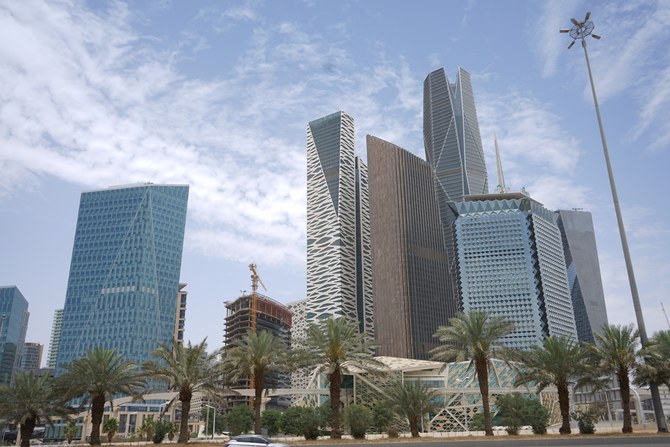
Saudi Arabia’s top banks see 8% earnings surge to $5bn in Q1 

The increase in earnings can be attributed to several factors, including an 11 percent growth in lending and a rising interest rate environment that has heightened the cost of credit. Shutterstock
Short Url
Updated 27 May 2024
Follow

Saudi Arabia’s top banks see 8% earnings surge to $5bn in Q1 

RIYADH: Saudi Arabia’s top 10 listed banks saw their earnings surge by 8 percent in the first quarter of 2024, reaching SR18.65 billion ($5 billion) compared to the corresponding period of the previous year. 

The increase in earnings can be attributed to several factors, including an 11 percent growth in lending and a rising interest rate environment that has heightened the cost of credit. 

According to the latest data from the Saudi Central Bank, loans reached SR2.67 trillion by the end of March, with a growth rate surpassing deposits, which increased by 8 percent. 

Meanwhile, research by Kamco Invest indicated that data from Gulf Cooperation Council central banks showed that, despite higher interest rates, outstanding credit facilities in the region continued to expand during the first quarter of 2024. 

This growth was driven by widespread increases across all seven countries, highlighting the resilience of the financial sector. The robust expansion in lending reflects a broader trend of economic growth and investment within the Gulf region, demonstrating the strength and stability of its financial systems. 

Their analysis showed that lending growth was strong compared to last year, with each country experiencing significant increases. This robust lending growth reflects a solid project pipeline, as aggregate contract awards in the GCC rose by 20.3 percent year-on-year, reaching $45 billion in the first quarter of 2024, up from $37.4 billion in the same period last year. 

S&P Global forecasts robust credit growth for banks in the Kingdom, ranging between 8 to 9 percent in 2024. This expansion is expected to be driven by corporate lending, fueled by increased economic activities stemming from the Vision 2030 program. 

In March, Moody’s Investors Service reaffirmed a positive outlook for Saudi Arabia’s banking sector. This endorsement was based on the Kingdom’s economic diversification programs and the growth of loans for low-risk government-backed projects. These initiatives are expected to enhance loan performance and contribute to robust profits in the banking sector. 

Moody’s emphasized that Saudi Arabian banks anticipate a low nonperforming loan ratio and possess substantial loss-absorption capacity. Furthermore, their capital ratios rank among the highest in the Middle East region. 

Furthermore, there is anticipation that the Saudi government and its affiliated entities will inject deposits into the banking system, thus providing additional support for the credit expansion of financial institutions in the Kingdom. 

In this quarter, Saudi National Bank reported the highest earnings among the top 10 banks, reaching SR5.04 billion, followed by Al Rajhi Bank, which had earnings totaling SR4.41 billion. 

According to Forbes 2024 MENA’s 30 most valuable banks list, Saudi Arabia accounted for a third of the entries, with 10 banks featured. Al Rajhi Bank continued to lead the list, with its market value increasing by $21.7 billion over the past 12 months to reach $96.6 billion. 

Following closely, Saudi National Bank holds a market value of $68.2 billion.  

Despite representing just 7 percent of the total revenues of listed banks in the first quarter, Alinma Bank’s growth significantly contributed to the overall increase. It experienced a 36 percent surge compared to the same period last year, reaching SR1.31 billion. 

The bank attributed these positive results to increases in net income from financing and investment, banking service fees, income from evaluating investments at fair value, and other revenue streams. 

According to S&P Global, Saudi banks are anticipated to adopt alternative funding strategies to manage the swift expansion in lending, driven by the increasing demand for new mortgages. 

Even as the Saudi government and affiliated entities are poised to inject deposits into the banking system, Saudi banks are projected to persist in accessing international capital markets. This trend is expected to endure for the next three to five years. 


Saudi Arabia, Middle East infrastructure and AI to drive next rotation of global capital, says BNY executive

Updated 11 sec ago
Follow

Saudi Arabia, Middle East infrastructure and AI to drive next rotation of global capital, says BNY executive

  • Hani Kablawi: I’m excited about (Saudi Arabia) coming out in force, reaching out to the investor community, saying: ‘Tell us what you need to see’
  • Kablawi: We (BNY) are one of, within our peer group, the biggest investors in both AI and in digital assets

DAVOS: As global markets contend with heightened volatility and shifting capital flows, the Middle East — and Saudi Arabia in particular — is positioning itself as a destination for long-term investment, according to Hani Kablawi, senior executive vice president and head of international at BNY.

Speaking to Arab News at the World Economic Forum in Davos, Kablawi pointed to the region’s increasing engagement with international investors, combined with large-scale infrastructure ambitions, as key factors shaping where global capital could move next.

“The really exciting thing for me in the Middle East is it isn’t one thing,” Kablawi said. “It’s very different. Demand profiles are very different, investing structures are very different, and what they’re looking to achieve is very different in different places.”

Saudi Arabia, he said, was standing out for its approach to the global investment community.

“I’m excited about (Saudi Arabia) coming out in force, reaching out to the investor community, saying: ‘Tell us what you need to see’,” he said.

“We, Saudi, are united in our approach to the international global investment community, and we are able and willing to make the changes necessary to be a destination of capital and foreign direct investments over the next few years.”

While foreign direct investment into Saudi Arabia has increased significantly in recent years, Kablawi pointed out it remains from a relatively low base.

“FDIs in Saudi have gone up fourfold over the past few years,” he said, adding there was still substantial headroom for growth.

He said the Kingdom understands what international investors require, particularly around transparency, data and risk-return profiles.

Saudi Arabia also benefits from the presence of government and semi-state entities that can help de-risk projects.

“They have the structures also to provide a good risk-return trade-off,” he said, pointing to partnerships involving national funds and government-linked investors.

Major infrastructure investment is central to that strategy, spanning transportation, aviation, ports, logistics, rail and economic cities.

“They have announced the big projects. We know what they look like,” Kablawi said. “Now it’s about the structuring of those projects in a way that attracts investment.”

Globally, capital flows remain heavily concentrated in the US, even during periods of market stress. Drawing on BNY’s data, which covers $58 trillion in assets under custody and administration, Kablawi said US assets continue to sit above long-term trend lines.

“US equities currently represent 64 percent of our total equity holdings, and government securities in the US are 72 percent of our total holdings,” he said.

During the market volatility seen last April, he added, holdings in US Treasuries fell only marginally.

“That represented two things,” Kablawi said. “One is, from a reserve currency status perspective, no alternatives yet. And from an equity perspective, continued interest in the Magnificent Seven (seven dominant US technology giants), tech stocks, AI, and the accessibility of those investments to global investors.”

Looking ahead to 2026, BNY’s analysts expect interest rate easing in the US, alongside a broadening of equity investment beyond the largest technology names. Kablawi also highlighted Europe as an area where both equities and fixed income remain underheld, despite growing infrastructure ambitions across the region.

“There’s a lot of demand for infrastructure investment all around the world,” he said, pointing to announced spending in the UK, Germany and the Middle East.

“In 2026, we’re going to be watching and hopefully helping with some of those rotations going towards long-term productive finance,” he added.

Technology is another defining theme.

Kablawi said BNY is focusing on areas it can control, particularly investment in artificial intelligence and digital assets.

“We are one of, within our peer group, the biggest investors in both AI and in digital assets,” he said.

Since last year, BNY has rolled out more than 130 AI use cases into production and made its enterprise AI platform available to all employees.

He added the firm now has around 140 “digital employees” supporting day-to-day operations.

“The connectivity between traditional finance and digital finance will grow,” Kablawi said. “The rails that exist that BNY is offering between traditional finance and digital finance will continue to grow.”

Looking ahead, he stressed progress will depend on continued innovation: “Anybody who’s got a little bit of an early mover advantage, it’s only an early mover advantage,” he said. “A lot of people will be pushing into it. You can never be complacent, but we like where we are.”