Sync Summit at Ithra ends with world premiere of documentary

1 / 4
Bahraini filmmaker and influencer Omar Farooq premiered his Ithra-produced documentary, “The Dark Side of Japan,” at the closing of the Sync Summit. (Supplied)
2 / 4
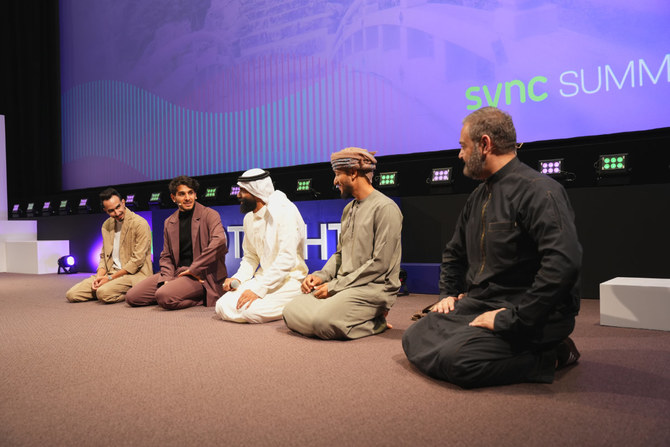
Omar Farooq (second L) alongside his Japan-filming team. Majed Z. Samman (far R), the head of performing arts and cinema at Ithra, moderated the panel. (Supplied)
3 / 4
The panel sat on the floor, Japanese style, for the panel discussion. (Supplied)
4 / 4
Audience members awaiting the start of the documentary. (Supplied)
Short Url
Updated 24 May 2024
Follow

Sync Summit at Ithra ends with world premiere of documentary

  • The documentary takes viewers on a trip as he journeys to places near and far within Japan to interact with locals, expats and visitors about their relationship to technology and nature

DHAHRAN: For the finale of the two-day Sync Digital Wellbeing Summit at the King Abdulaziz Center for World Culture, or Ithra, a documentary titled “The Dark Side of Japan” premiered at the Ithra Cinema on Thursday. 

The Bahraini creative influencer, Omar Farooq, who was the narrator in the documentary, was there in-person with his team to answer questions after the screening.

As part of the Sync Spotlight series, the documentary tied together all the various themes explored during the summit, of which technology and wellness topics were explored on stage and at various points throughout the center. The documentary, which was filmed in Japan, showcases Farooq as he observes the Japanese people’s intense interactions with — and addictions to — their screens. Amid the bright lights of flashy Tokyo emerges a lingering dark side of loneliness, heads down, and fingers scrolling endlessly.

The filmmaker and influencer tried to convey an important message the old-fashioned way before the film premiere. He asked every attendee to take a moment to look under their seats. After a minute of awkward shuffling, it was revealed that an envelope was placed there so they could tuck their phones away and watch the documentary phone-free.
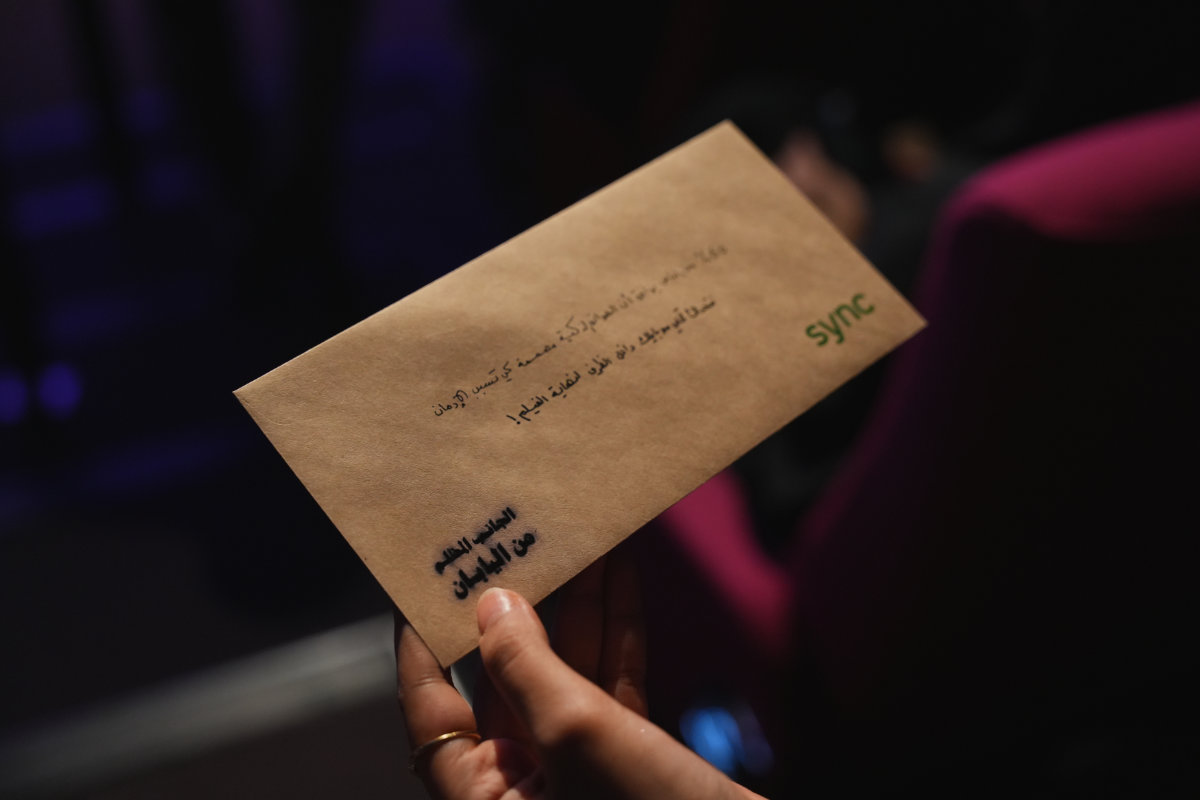


An envelope that was placed under each seat at the Ithra Cinema instructing viewers to place their phones there and enjoy the documentary phone-free. (Supplied)

Farooq wanted the audience to be completely immersed and to be on the journey alongside him.

The documentary takes viewers on a trip as he journeys to places near and far within Japan to interact with locals, expats and visitors about their relationship to technology and nature. He spoke to families of young children about the school system and he spent time with adults of various backgrounds to ask about their preferences: city life or country life?

“It’s hard to keep a close relationship with people (in Tokyo). We don’t have time to care about others,” a Japanese artist told him in one scene.  

Wildly popular, with 3.9 million followers on instagram, Farooq was on hand to have a discussion on stage after the screening. Moderated by Ithra’s own head of a performing arts and cinema, Majed Z. Samman, who had studied in Japan and was familiar with the Japanese culture, they were joined by Mohammed Alhajri and Ahmed Alsayed, both of whom were with Farooq in Japan to assist with the filming. They sat on the floor, Japanese style, on stage for the discussion.
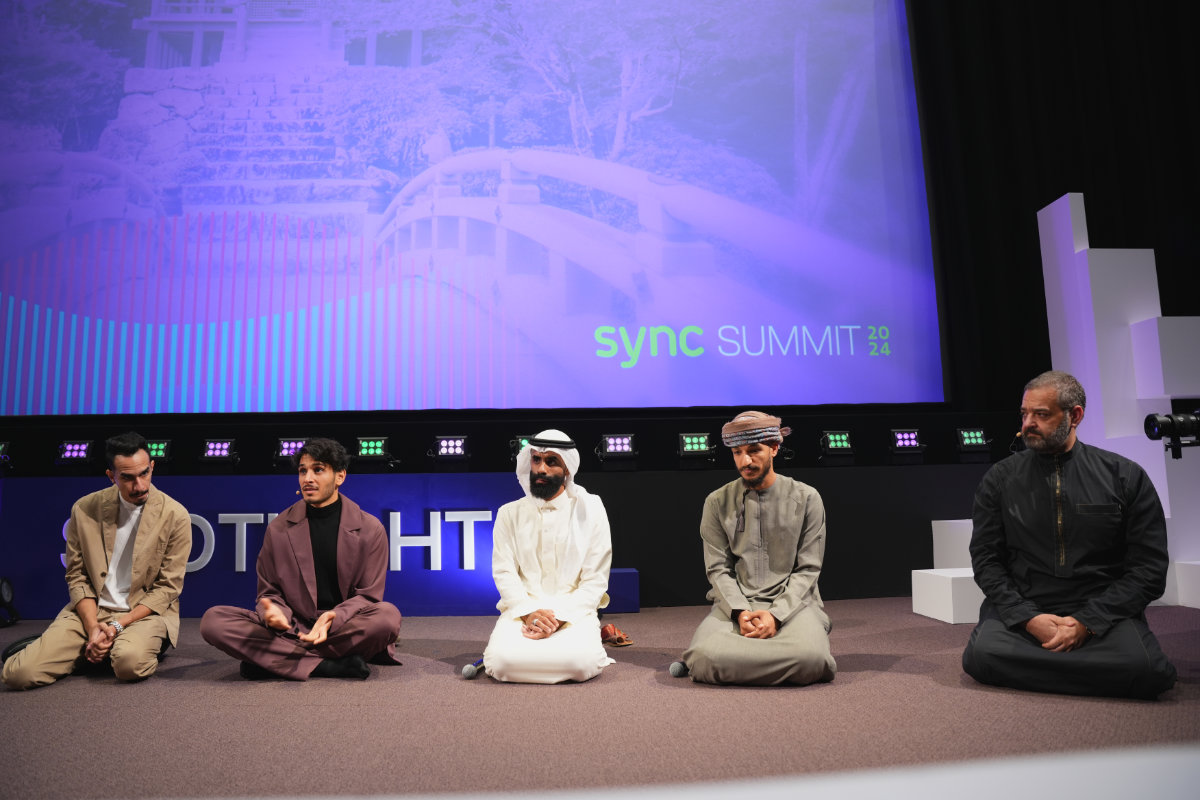


The panel sat on the floor, Japanese style, for the panel discussion. (Supplied) 

“This documentary isn’t about Japan,” Farooq cautioned the audience. Japan was merely an example of a place that has been plagued by hyper internet addiction and loss of real world connection. He asks the question: “Will this be our future? Is it already our present?”

He instructs viewers to look within and not just walk away as a programmed robot on autopilot; constantly shackled to their smartphones and ignoring the world around them.

After the initial screening, there were two other screenings back-to-back at the cinema, both of which were sold out.

The Ithra-produced documentary was mostly in Arabic, with some English and some Japanese.


Rebuilding lives: Saudi initiative gives fresh hope to amputees

Updated 08 December 2025
Follow

Rebuilding lives: Saudi initiative gives fresh hope to amputees

  • Baitureh Health Association has provided life-changing support to more than 1,000 people
  • Prosthetic limbs can cost up to $76,000

MAKKAH: The Baitureh Health Association for the Care of Amputees has quickly become one of Saudi Arabia’s most impactful humanitarian initiatives, transforming support for people with lost limbs.

Established in 2020, the association deals with people’s physical, psychological and social needs and fills a long-standing gap in the national health system.

CEO Badr bin Alyan told Arab News that the initiative was created in response to a growing need, driven by amputations linked to accidents, blood disorders, occupational injuries and other causes.

Its operations were “based on service integration rather than fragmentation, enabling beneficiaries to return to their lives with confidence, ability and independence,” he said.

This holistic process covers everything from initial evaluations to psychological and physical rehabilitation, family support, prosthetic fitting and ongoing maintenance.

Its psychological support programs include group sessions led by certified mentors who have undergone similar experiences, as well as field visits to support patients before and after amputation.

More than 1,000 people across the Kingdom have so far benefitted from the association’s work, about 10 percent of them children, whom Alyan said were “the most sensitive and the most in need of intensive psychological and family support.”

Its specialist programs for children — My First Step and Therapeutic Entertainment — help young people adapt to prosthetics, overcome trauma and build confidence in a safe and supportive setting.

The association has completed more than 300 prosthetic fittings, including silicone cosmetic limbs, mechanical, hydraulic, electronic and 3D-printed models. 

Alyan said the type of prosthetic selected depended on a number of factors, such as age, lifestyle, type of amputation, activity level and psychological readiness.

Children also have to undergo frequent adjustments to their new limbs to account for their growth.

Each prosthetic cost between SR20,000 ($5,300) and SR285,000, Alyan said.

The association funds its work through sponsorships, community contributions and strategic partnerships.

Despite its success, Alyan said there were still challenges to be faced, including the lack of a consolidated base for the provision of psychological support and therapy services and prosthetics development and maintenance.

There was also a shortage of local experts, he said.

In response, the association set up a rehabilitation center, which Alyan said would help to localize prosthetics manufacturing, reduce costs and accelerate fitting processes and create opportunities for local experts to develop their knowledge and experience.

But providing prosthetics was only part of the association’s work, he said.

“Rebuilding a human life is the deeper goal.”