

Digital wellbeing summit at Ithra to confront technology’s dangers, advantages

1 / 6
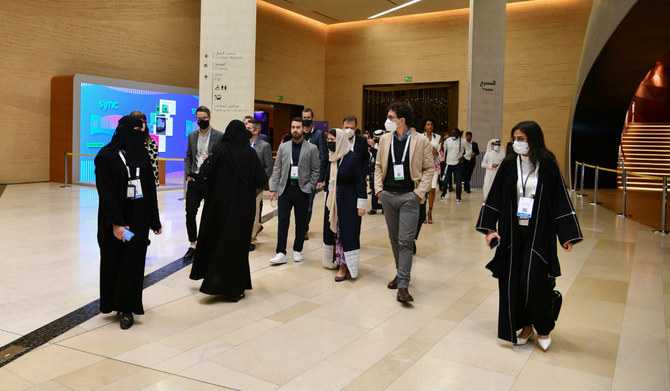
The second Sync Summit is scheduled for may 22 and 23, and Ithra will be buzzing with all things that merge technology and wellness. (Supplied)
2 / 6
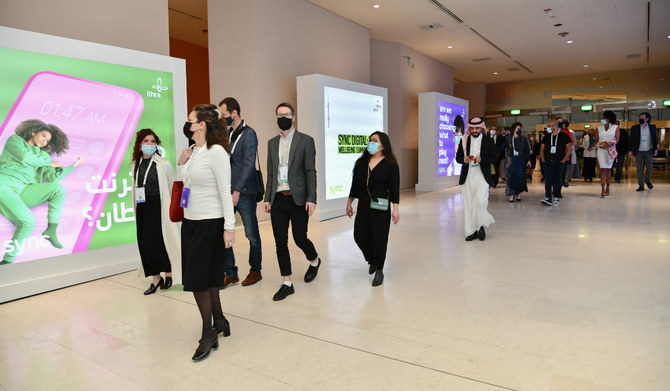
The second Sync Summit is scheduled for may 22 and 23, and Ithra will be buzzing with all things that merge technology and wellness. (Supplied)
3 / 6
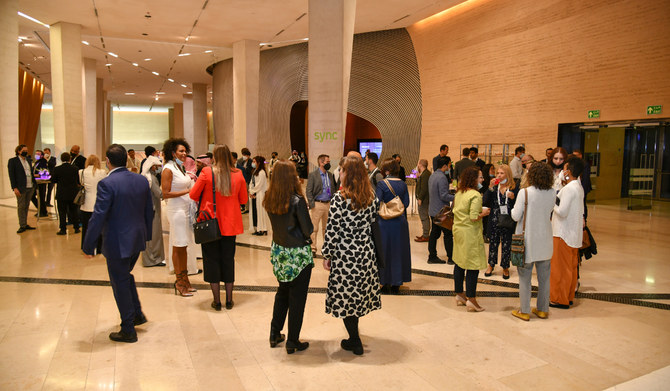
The second Sync Summit is scheduled for may 22 and 23, and Ithra will be buzzing with all things that merge technology and wellness. (Supplied)
4 / 6
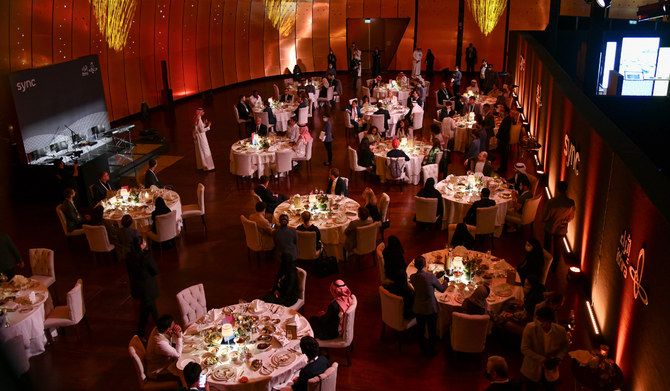
The second Sync Summit is scheduled for may 22 and 23, and Ithra will be buzzing with all things that merge technology and wellness. (Supplied)
5 / 6
The second Sync Summit is scheduled for may 22 and 23, and Ithra will be buzzing with all things that merge technology and wellness. (Supplied)
6 / 6
The second Sync Summit is scheduled for may 22 and 23, and Ithra will be buzzing with all things that merge technology and wellness. (Supplied)
Short Url
Updated 20 May 2024
Follow

Digital wellbeing summit at Ithra to confront technology’s dangers, advantages

  • Event at Ithra will have over 110 digital experts, 70 speakers from 20 countries

DHAHRAN: After a two-year hiatus, the second Sync Digital Wellbeing Summit 2024 returns to the King Abdulaziz Center for World Culture, or Ithra, this week for discussions and debates by world-leading experts.

Scheduled for May 22 and 23, Ithra will be buzzing with all things that merge technology and wellness, and will feature 110 digital experts and 70 speakers from 20 countries.
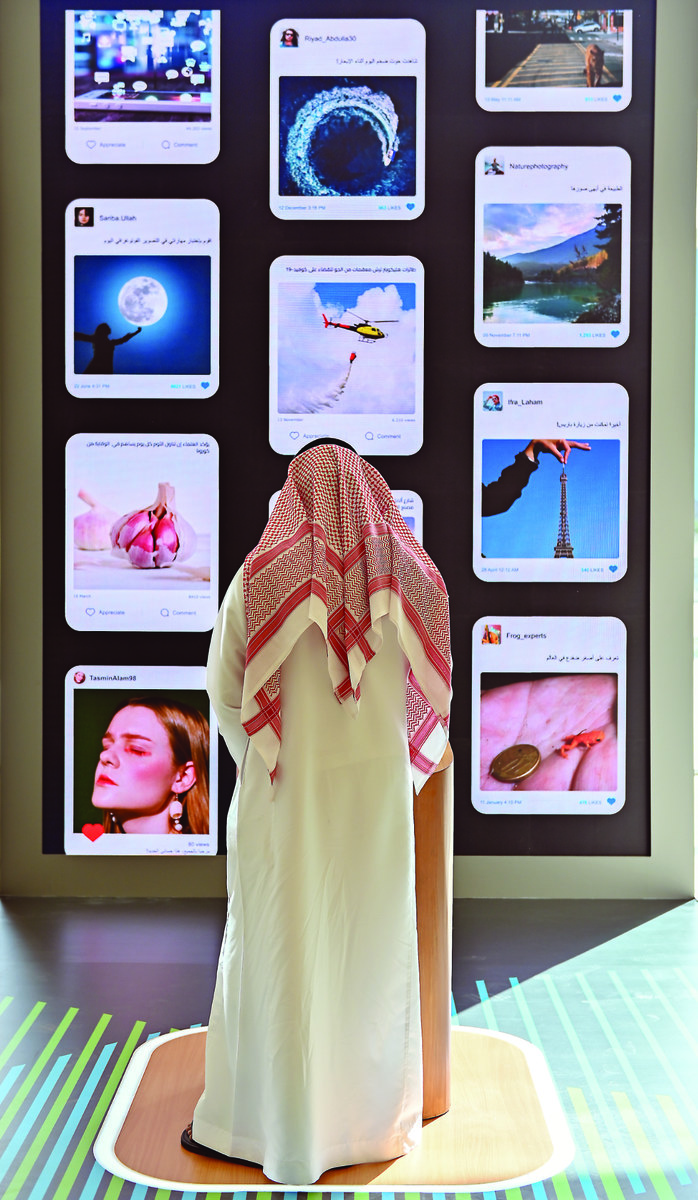


The second Sync Summit is scheduled for may 22 and 23, and Ithra will be buzzing with all things that merge technology and wellness. (Supplied)

“The Sync Summit 2024 is not just another conference. It’s a platform for meaningful discussions, critical reflections, and collective actions for a better digital future,” said Wadha Al-Nafjan, head of digital wellbeing at Sync. “As we navigate the digital paradox, it is vital to recognize our responsibility in shaping the world we want to live in.”

Topics including algorithmic homogenization and identity loss, AI’s impact on the creative industries, and misinformation will be tackled under the theme “Confronting the Digital Paradox.”
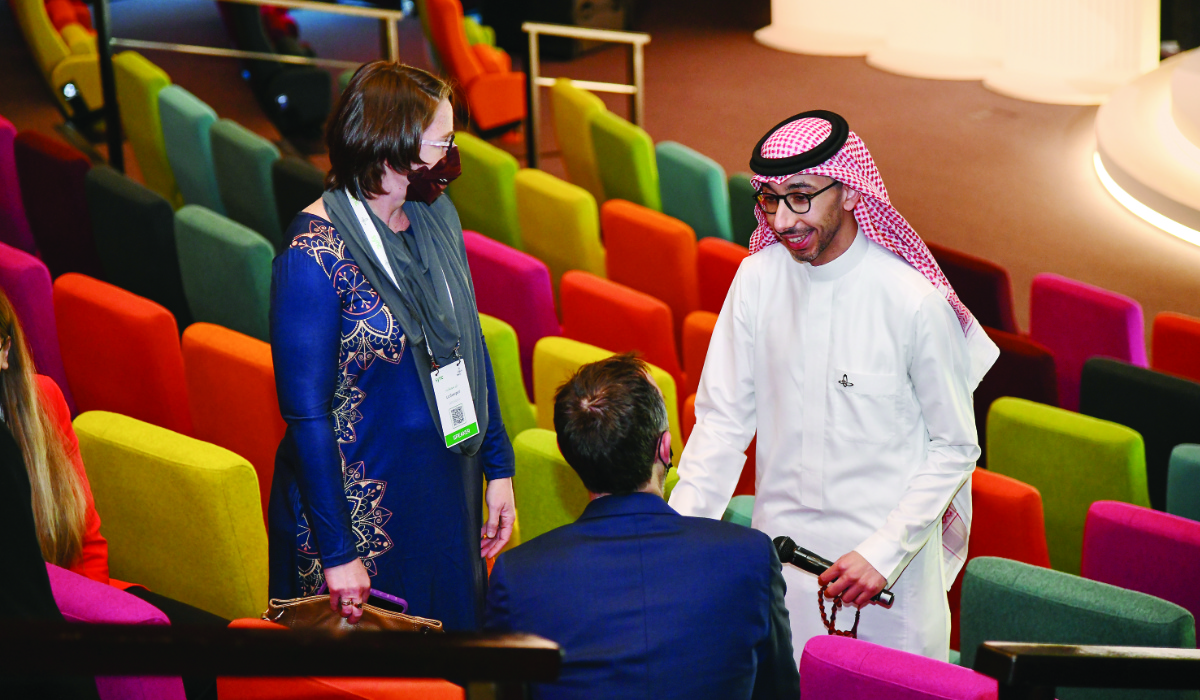


The second Sync Summit is scheduled for may 22 and 23, and Ithra will be buzzing with all things that merge technology and wellness. (Supplied)

The summit will be held at the Ithra headquarters in Dhahran, with a live stream available.

Day one, organized around the sub-theme “Cuts Both Ways: Wrestling with the Tensions of the Digital Era,” includes seven panels, two fireside chats and two keynote talks.

It’s a platform for meaningful discussions, critical reflections, and collective actions for a better digital future.

Wadha Al-Nafjan, Head of digital wellbeing at Sync

Day two, centering on the sub-theme “A Digital Renaissance: Shaping Our Relationship with Digital for a Better Future,” will have eight panels and three keynotes. In addition, it will have the Sync Spotlight series finale, for which creative influencer Omar Farooq will screen his new documentary, “The Dark Side of Japan.”

Although there was no summit last year at Ithra, the Sync team conducted extensive research globally that led to some compelling findings.
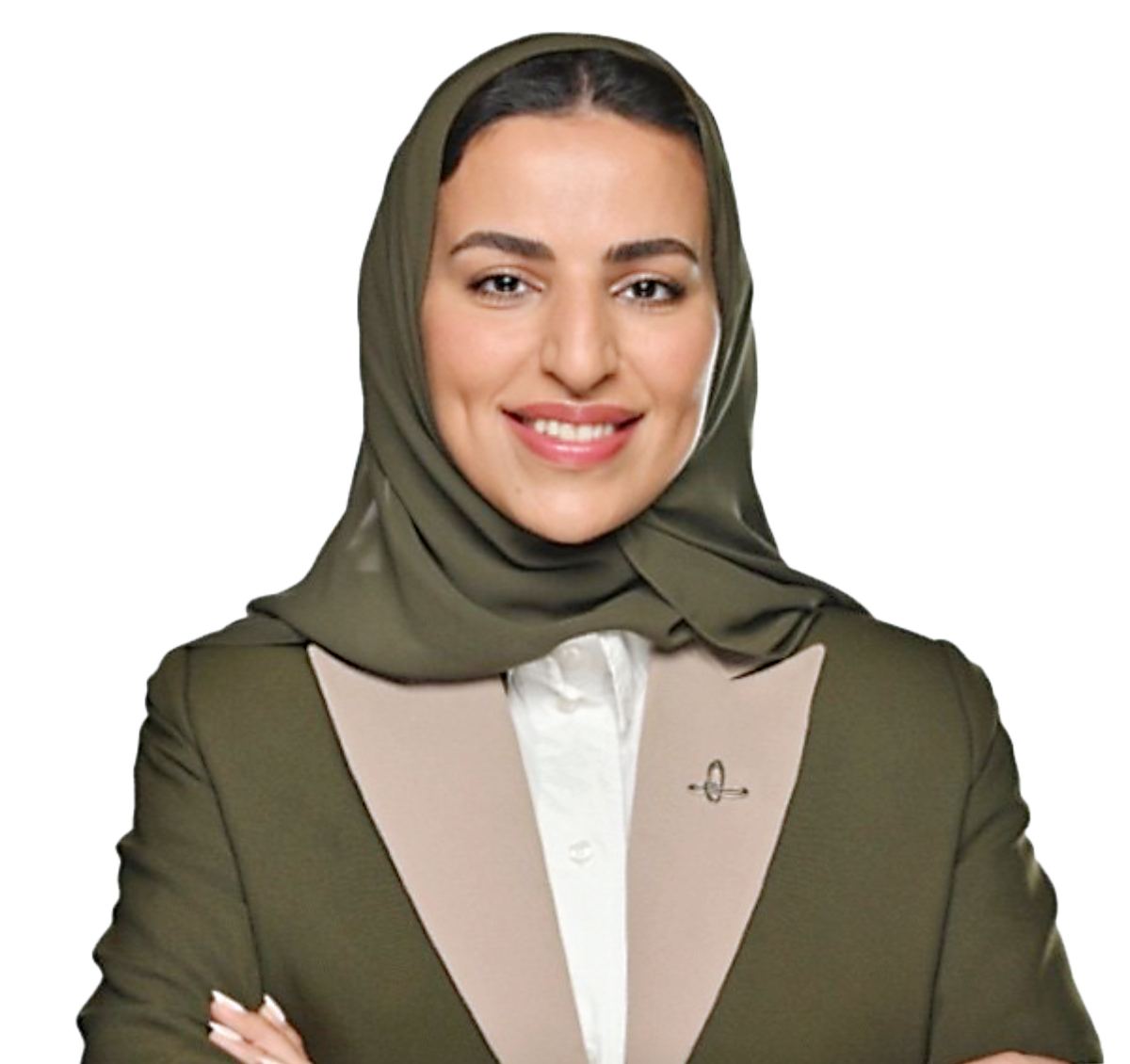


Wadha Al-Nafjan, Head of digital wellbeing at Sync

According to their research, 81 percent of those surveyed are concerned about the unsolicited collection of their personal data, 53 percent struggle to maintain boundaries between their work and personal lives, while 66 percent believe that the internet needs more regulation. About 73 percent of participants think social media was designed to be addictive.

Furthermore, the average time spent online daily has gone down, compared with 2021. About 68 percent claim to understand AI, 87 percent think technology is allowing people to work and study more flexibly, and 91 percent use digital devices to access resources including books and tutorials.
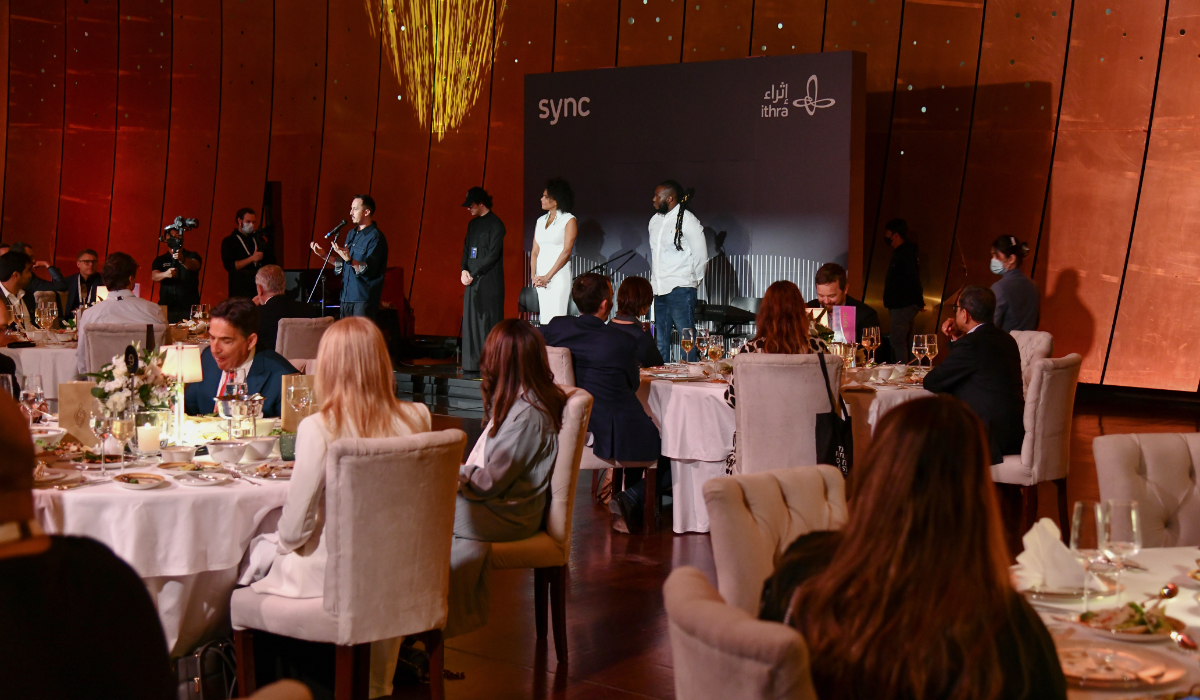


The second Sync Summit is scheduled for may 22 and 23, and Ithra will be buzzing with all things that merge technology and wellness. (Supplied)

“Never before has the world been so connected to everything and everyone. We know technology has improved our lives, but it also has the painful potential to distract and harm,” Ithra said in a statement to Arab News. The summit’s activities are geared toward “ensuring that we as humans come together to keep digital technology in check and working towards the greater good, safeguarding its future, and our own.”

The event will bridge the gap between academic research, industry practices, and end-users regarding digital wellbeing through a variety of sessions.

Sync Spotlight

A series of sessions will run in parallel to the two-day Sync Summit stage program, offering greater interaction between speakers and audience members.

Sync Action Forum

The worldwide Gen Alpha Forum, an initiative developed by Sync Research with McCann Worldgroup, will see the community expand to include Saudi Arabia parents of Gen Alpha children, as well as educators, and other Gen Alpha stakeholders.

Majlis

In partnership with Johns Hopkins, which has a local hospital at Aramco, the Majlis will host three sessions exploring digital wellbeing with educators, researchers and students.

The Plaza

The gamified experience will dive into the findings compiled by the Sync Research team through the lens of three projects which were developed with partners Horizon Group, PSB and McCann Worldgroup.

Sync Immersive

In this interactive journey, the organizers promise to provide a three-step experience designed to impact participants’ emotions and understanding, while guiding them into navigating the complexities of digital ethics.

Podcast

The booth experience will serve both as a studio to record live podcast episodes hosted by Mo Gawdat, formerly of Google, and as a multi-functional space for hosting media interviews. Saudi Arabia’s Mohammed Islam, host of the English-language podcast, The Mo Show, will also be present.

Other notable speakers this year include US data scientist and AI specialist Rumman Chowdhury; Saudi Arabia athlete, FIFA World Champion and owner of an esports team, Abdulaziz Alshehri; and Apple Inc. co-founder Steve Wozniak.

One May 21, Ithra will host the Global Digital Wellbeing Assembly, a gathering of experts from across the Kingdom and the globe to discuss the guiding objectives and roadmap for a new digital wellbeing society.

Registration is now open and attendance is free.


National program identifies 165 native plants for afforestation efforts in Asir

Updated 29 December 2025
Follow

National program identifies 165 native plants for afforestation efforts in Asir

  • The survey is part of broader plans focused on restoring degraded land, using native vegetation 

JEDDAH: Saudi Arabia’s National Afforestation Program has identified more than 165 species of native plants suitable for afforestation in the Asir region, highlighting the ecological diversity of one of the Kingdom’s most environmentally varied areas, the Saudi Press Agency reported.

The findings form part of broader national efforts to expand vegetation cover, address land degradation, and support sustainability goals linked to the Saudi Green Initiative and Vision 2030.

According to the program, the identified species are distributed across a wide range of natural environments in Asir, including mountainous terrain, highlands, slopes, valleys, plains, rocky landscapes, and coastal areas stretching from the Red Sea to Tihama.

The species belong to numerous plant families, including Fabaceae, Anacardiaceae, Burseraceae, Capparaceae, Ebenaceae, Euphorbiaceae, Malvaceae, Myrtaceae, Oleaceae, and Primulaceae, among others.

Plants suitable for afforestation range from large and small trees to perennial and annual shrubs, herbs, succulents, bulbs, and climbing plants. 

Among the most notable species identified are the grey mangrove, mastic tree, mooring or ben tree, juniper, sycamore fig, wild olive, henna, wild jasmine, hawthorn, and arak.

The Saudi Arabian Botanical Society described the announcement as an important step in protecting plant diversity and strengthening the ecosystem conservation in the Kingdom. 

Munirah bin Hamad Al-Hazani, founder and president of the society, said that prioritizing native species is central to sustainable afforestation.

“Focusing on the cultivation of native plants adapted to diverse environments forms the cornerstone of sustainable afforestation projects, as it plays a pivotal role in enhancing vegetation cover, combating land degradation, and conserving natural and financial resources,” she told Arab News.

Al-Hazani added that long-term success depends on cooperation between government bodies and the nonprofit sector, alongside community involvement and environmental awareness programs.

The National Afforestation Program has increasingly emphasized community participation, working with government agencies, private companies, and nonprofit organizations to support planting initiatives and environmental education. Its approach includes promoting volunteerism and discouraging harmful environmental practices, while focusing on the use of native plants adapted to local conditions.

Parallel efforts are underway in other regions of the Kingdom to support vegetation restoration through research and infrastructure development. In Jouf, often referred to as the Kingdom’s food basket, the King Salman bin Abdulaziz Royal Reserve Development Authority has established a Central Nursery and a Wild Seeds Research and Production Station to address the growing demand for reliable sources of native seeds and seedlings.

The project was launched in 2023 under the directive of Prince Abdulaziz bin Saud bin Naif, the minister of interior and chairman of the authority’s board of directors. 

Since then, the facilities has become a key component of vegetation restoration efforts within the reserve.

The authority has focused on building operational capacity by recruiting and training specialists to manage cultivation and research activities. The research and production station includes 14 mother-seed production fields containing over 400,000 trees and shrubs. 

Planting began in late 2024, with more than 30 native plant species represented, selected for their role in the reserve’s natural ecosystem. 

The facility also includes two seed storage units with a combined capacity of 3,000 kilograms. Seeds are collected annually from multiple sites within the reserve and used for seedling production habitat rehabilitation.

The Central Nursery spans 6,000 square meters and includes 30 greenhouses spanning 1,500 square meters, as well as two shade houses used during summer months. A plant hardening facility, designed to prepare seedlings for natural environmental conditions, covers 10,000 square meters and is divided into seven sections. The nursery’s annual production capacity reaches 1.5 million seedlings, representing more than 15 native plant species. 

Together, these initiatives underscore the growing role of native plant research and propagation in Saudi Arabia’s afforestation strategy, particularly as the Kingdom works to balance environmental restoration with long-term sustainability goals.