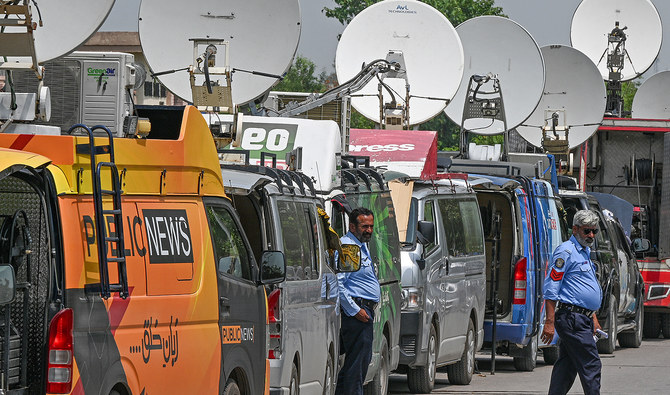
ISLAMABAD: The Lahore and Islamabad high courts on Friday issued notices to the Pakistan Electronic Media Regulatory Authority (PEMRA) while hearing petitions challenging a ban by the regulator on TV channels airing news, opinions and commentary on proceedings of ongoing court cases.
PEMRA announced the ban on Tuesday amid tensions between the government and the Islamabad High Court over hearings into the alleged kidnapping of Kashmiri poet Ahmad Farhad from outside his home on May 14. The poet’s family has filed a case with the IHC and accused Pakistan’s Inter-Services Intelligence spy agency of being behind his disappearance over social media posts critical of the military. The army has not commented on the development or the accusations by the family.
Pakistan media had been extensively reporting on the hearings of the case this week, with the high court directing authorities to produce the missing poet within four days and fiercely criticizing intelligence agencies for overstepping their jurisdiction.
“The Lahore High Court (LHC), during the hearing of pleas conducted by Justice Abid Aziz Shaikh, also ordered the electronic media watchdog to respond to its notice on May 29,” Pakistan’s Geo News reported. Multiple other Pakistani news websites also reported that the LHC and IHC had sent notices to PEMRA over the ban.
Petitioners against the PEMRA ban have said it is in violation of Article 10-A, 19 and 19-A of the constitution of Pakistan, which pertain to the right to a fair trial as well as freedom of speech and right to information. One of the pleas also requested the court to reject the prosecutor’s plea and declare it “inadmissible” and the PEMRA notification “null and void.”
Petitions challenging the ban have been filed in the Sindh, Lahore and Islamabad high courts as well as the Supreme Court.
Journalists in Pakistan are increasingly reporting on growing media censorship, with many blaming Pakistan’s powerful military for putting pressure on critical voices. The military has repeatedly denied it suppresses the press.
“TV channels are directed to refrain from airing tickers/headlines with regard to court proceedings and shall only report the written orders of the court,” the PEMRA notification said on Tuesday.
The regulator also directed TV channels to air “no content including commentary, opinions or suggestions about the potential fate of sub judice matter which tends to prejudice the determination by a court, tribunal.”
However, PEMRA allowed TV channels to report on court proceedings if they were broadcast live by the judiciary.


![]()

Lahore, Islamabad courts challenge Pakistan media regulator’s ban on reportage of court cases
Short Url
https://arab.news/z88ku
Lahore, Islamabad courts challenge Pakistan media regulator’s ban on reportage of court cases
- PEMRA ban came amid tensions between government, courts over alleged kidnapping of poet Ahmad Farhad
- Farhad’s family says he was abducted from his home on May 14 by officials from the military’s ISI spy agency
Latest updates


Recommended


© 2026 SAUDI RESEARCH & PUBLISHING COMPANY, All Rights Reserved And subject to Terms of Use Agreement.