

Italian shipbuilding giant floats Saudi Arabia partnership plan

1 / 4
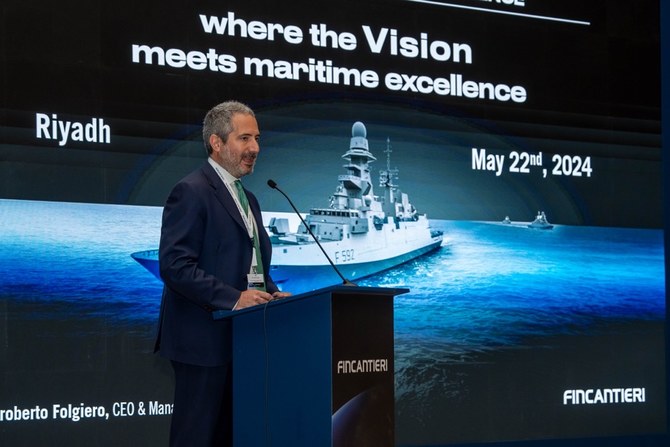
CEO of Fincantieri, Pieroberto Forgiero, during his speech at the event. (AN photo/Huda Bashatah)
2 / 4
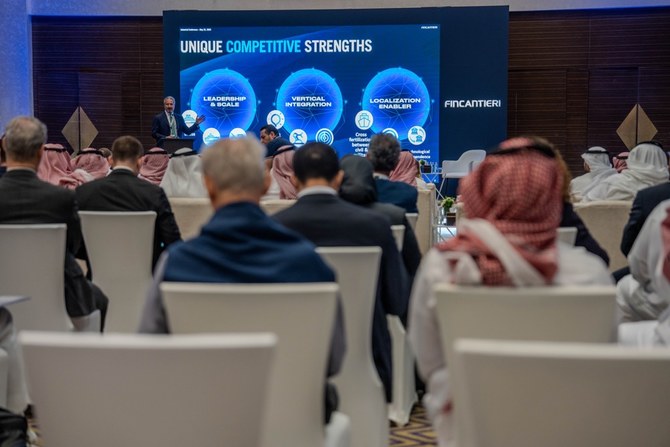
CEO of Fincantieri, Pierroberto Folgiero, during his speech. (AN photo/Huda Bashatah)
3 / 4
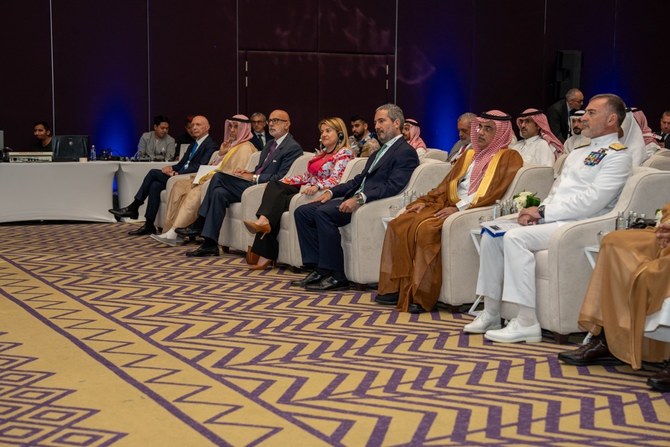
Saudi decisionmakers from related sectors in Riyadh joined Italian officials in a range of sessions at the forum. (AN photo/Huda Bashatah)
4 / 4
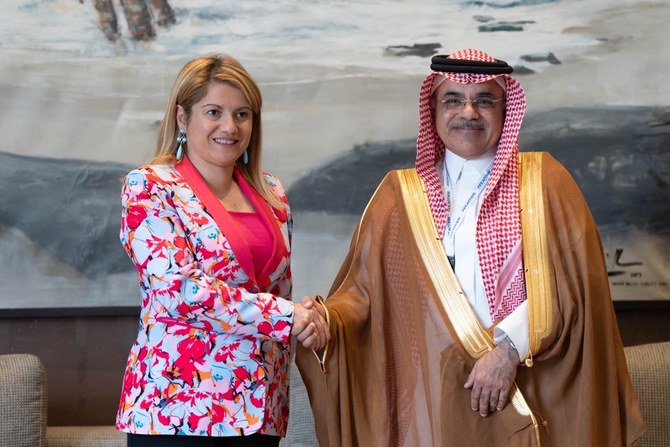
Her Excellency Maria Tripodi, Undersecretary of State for Foreign Affairs, and His Excellency Khalil Ibrahim Bin Salamah, Deputy Minister for Industry Affairs. (AN photo/Huda Bashatah)
Short Url
Updated 25 May 2024
Follow

Italian shipbuilding giant floats Saudi Arabia partnership plan

  • Fincantieri stands out in the shipbuilding industry for its innovation, says CEO

RIYADH: One of the world’s biggest shipbuilders will work in partnership with Saudi Arabia to strengthen the Kingdom’s maritime sector, with a focus on sustainability and the development of “green shipping.”

Fincantieri, an Italian company and Europe’s largest shipbuilding group, highlighted its commitment to Saudi Arabia’s Vision 2030 agenda at a conference under the theme “Where Vision Meets Maritime Excellence” held in Riyadh on Wednesday.

Saudi decisionmakers from related sectors in Riyadh joined Italian officials in a range of sessions at the forum.

During the event, Fincantieri CEO Pierroberto Folgiero outlined the shipbuilder’s plans to collaborate with Saudi companies in line with Vision 2030.

“Our commitment to the Kingdom of Saudi Arabia is steadfast,” he said.

Fincantieri stands out in the shipbuilding industry for its innovation, and has a leading role in the naval, cruise, and oil and gas sectors, Folgiero said.

The CEO highlighted the importance of developing green ships, designed to minimize the environmental impact of maritime operations, as part of Saudi Arabia’s commitment to achieving net-zero emissions by 2060.

Digitizing shipyard operations through innovations such as AI also aligns with the goals of Vision 2030, Folgiero said.

“Today, the shipping industry and the maritime industry, in general, is coping with environmental regulation. For us, it is not only a source of compliance, but also a source of distinctiveness. So, we believe that in the maritime sector, in the shipbuilding sector, mastering energy transition and new technologies will be a source of competitiveness and distinctiveness,” he said.

“That is why we are engaged in all the solutions (regarding) energy transition at sea. We are a new engine. We are in biofuels. We are in methanol. We are in LNG. We are in ammonia. We are in hydrogen. We are everywhere there is innovation at sea.”

Maria Tripodi, undersecretary of state for foreign affairs at the Italian Ministry of Foreign Affairs and International Cooperation, discussed the significance of keeping operations and businesses sustainable.

Fincantieri’s ships are built to produce zero carbon emissions, which helps to protect the environment and marine ecosystem, she said.

Khalil Ibrahim bin Salamah, deputy minister for industry affairs at the Saudi Ministry of Industry and Mineral Resources, said: “Localization for us is a key factor. Key components are crucial, but the whole supply chain is equally important.”

New ownership rules spark foreign demand for Saudi real estate

Updated 9 sec ago
Follow

New ownership rules spark foreign demand for Saudi real estate

RIYADH: Property developers in Saudi Arabia are seeing increased interest from international investors following the Kingdom’s recent amendments to real estate ownership laws, industry figures told Arab News.

Speaking at the Real Estate Future Forum in Riyadh, developers said the new regulations permitting foreign ownership of land are beginning to influence market behavior, including decisions by developers and speculators.

The updated regulatory framework officially came into effect on Jan. 22, enabling non-Saudis to apply for property ownership through the Saudi Arabia Real Estate digital platform.

Under the new rules, foreign individuals, companies, and entities are allowed to own property across the Kingdom, including in major urban centers such as Riyadh and Jeddah. Ownership in Makkah and Madinah, however, remains limited to Saudi companies and Muslim individuals.

Developers say the policy shift is already shaping large-scale projects, including Alma Destination on the Red Sea coast.

The waterfront mixed-use tourism development is opening opportunities for hospitality operators and investors, with plans encompassing residential units, hospitality offerings, marina facilities, and entertainment venues.

Zuhair Bakheet, CEO of Al Thuraya Al Omranya Properties and master developer of Alma Destination. Supplied

Zuhair Bakheet, CEO of Al Thuraya Al Omranya Properties and master developer of Alma Destination, said the project’s location in Jeddah, situated between the holy cities of Makkah and Madinah, enhances its appeal to international buyers.

“If we attract people who would love to have a unit within the Makkah and Madinah region, it’s a good option. If we think of Muslim countries like … Malaysia, Indonesia, Egypt, they would love to have a unit within close proximity of the holy cities,” he said.

Another developer factoring the regulatory change into its strategy is Emaar Economic City, the main developer of King Abdullah Economic City.

Emaar Economic City Chief Investment Officer Ali Al-Khatib told Arab News that the new framework represents a major shift for the sector. “We believe these new regulations for non-Saudi ownership are a significant turning point in the real estate sector in the Kingdom, and specifically for King Abdullah Economic City.

“We’ve already seen interest before the system was launched from last year … we’ve had interests from all around the world from Southeast Asia, from Africa, from Europe, from the West.”