KHARKIV: Ukraine said Russian shelling targeted civilians in two cities in the northeastern region of Kharkiv on Saturday while President Volodymyr Zelensky reported successes by troops fighting a renewed Russian assault there.
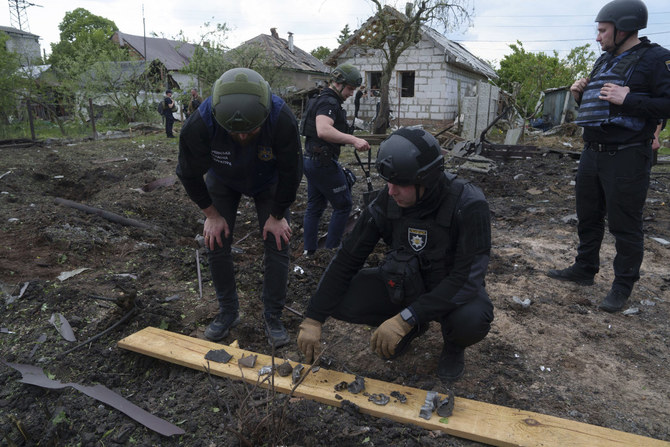
Ukrainian prosecutors said they were investigating as a potential war crime a Russian air strike on a residential area of the regional capital Kharkiv in which six civilians were wounded, including a 13-year-old girl, 16-year-old male and an eight-year-old.
Moscow denies deliberately targeting civilians but thousands have been killed and injured since its February 2022 invasion of Ukraine.
About 70 km (45 miles) to the northeast in Vovchansk, a city just 5 kilometers (three miles) from the Russian border, prosecutors said Russian shelling killed a 60-year-old woman and injured three other civilians. A 59-year-man was also injured in the village of Ukrainske, they said.
Across the border in Russia’s Belgorod region, Moscow’s defense ministry said its forces shot down a Tochka-U missile fired by Ukraine. A similar missile caused a Belgorod apartment building to collapse last week, killing at least 15 people, Russia said.
Late on Saturday Belgorod regional governor Vyacheslav Gladkov said a Ukrainian drone attack injured a woman and a man in the village of Petrovka. They were treated for shrapnel injuries in Belgorod, he wrote on the Telegram messaging app.
Zelensky said in his nightly video address that Ukrainian forces were on surer footing, particularly in Kharkiv region.
“The occupier is losing its infantry and equipment, a tangible loss, even though, just as in 2022, it was counting on a quick advance on our land,” Zelensky said, referring to Russia’s initial invasion of Ukraine in February of that year.
However, Russia’s defense ministry said its forces captured the village of Starytsia in the Kharkiv region on Saturday, eight days after a new Russian push in the area began.
Zelensky said his forces repelled an assault farther south in the eastern Donetsk region around Chasiv Yar, a city seen as a key target in Russia’s campaign. “Our soldiers destroyed more than 20 units of the occupier’s armored vehicles,” he said.
Reuters could not immediately verify the battlefield accounts.
Regional governor Vadym Filashkin credited special units under the HUR military intelligence agency for the battlefield success, which he said took place on Friday.
“There is not a single occupier in Chasiv Yar,” he said on the Telegram messaging app. “They burned armored vehicles and smashed enemy ranks,” he added in comments accompanying a video showing vehicles exploding.
In the village of Stanislav in the southern region of Kherson, governor Oleksandr Prokudin said a Russian drone strike killed a man about 40 years old and injured a woman.


![]()
![]()

Ukraine says Russian shelling targets civilians in Kharkiv region

Short Url
https://arab.news/rwgya
Ukraine says Russian shelling targets civilians in Kharkiv region
- Ukrainian prosecutors said they were investigating as a potential war crime a Russian air strike on a residential area of the regional capital Kharkiv in which six civilians were wounded


Latest updates


© 2026 SAUDI RESEARCH & PUBLISHING COMPANY, All Rights Reserved And subject to Terms of Use Agreement.