- Around 6,000 Pakistanis are studying in Bishkek, where mob violence erupted after some Egyptians quarreled with locals
- Pakistani students say they have been stuck inside their residences, urge Islamabad to immediately evacuate them to safety
ISLAMABAD/KARACHI: Five Pakistani medical students were injured in a mob attack on foreign students in the Kyrgyz capital of Bishkek, Pakistan’s ambassador to Kyrgyzstan said on Saturday.
A number of incidents of mob violence against foreign students have been reported in Bishkek since Friday evening. The matter boiled over due to sharing online of videos of a brawl between Kyrgyz students and medical students from Egypt on May 13, the Pakistani embassy said on Facebook, citing the Kyrgyz press.
So far, a few hostels of medical universities in Bishkek and private residences of international students, including Pakistanis, have been attacked. The hostels are inhabited by students from India, Pakistan and Bangladesh, and there have been reports of minor injuries to some Pakistani students.
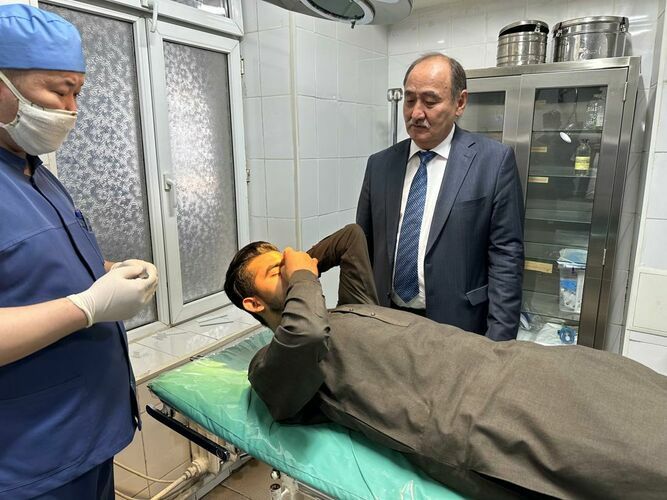
“Five Pakistani students were injured in the mob violence. One of them is admitted in a local hospital with some jaw injuries, while four others were released after first aid,” Hasan Zaigham, Pakistan’s ambassador to Kyrgyzstan, told Arab News over the phone.
“No Pakistani is killed or raped in the violence,” he said, rebutting rumors on social media. “The situation is under control now as Bishkek authorities have dispersed all the miscreants.”
The ambassador said they had advised Pakistani students to stay indoors and get in touch with the embassy in case of any urgency. “We are in touch with the local law enforcement authorities to ensure safety of our students,” he said.
Around 10,000 Pakistani students are enrolled in different institutes in Kyrgyzstan and nearly 6,000 of them are residing and studying in Bishkek where the violence erupted Friday night, according to Zaigham.
Pakistani students call for evacuation
Nisar Ali, 23, a fourth-year MBBS student in Bishkek hailing from Peshawar, said the local police appeared to be “assisting the rioters,” instead of stopping them.
“They [rioters] are not discriminating among international students. Although it started between Egyptian students and locals, they are now attacking every foreigner, whether they are Indian, Pakistani, Egyptian, Bangladeshi, or citizens of any other country. Every other student is injured. Several of my friends who lived in the hostel have been attacked and are severely injured,” he said.
“It started at around 10pm last night, but until morning, the Pakistan embassy didn’t answer our calls. I live with Pakistani friends in an apartment. We have locked ourselves in with all lights off. We have nothing to eat, and we cannot go out, as going out means you’re attacked.”
Ali said some peace was restored when the army troops arrived in Bishkek, but even then, they were not safe. “We appeal to the government of Pakistan to safely evacuate us,” he added.
Muhammad Waleed, a final year medical student, said they haven’t received any “support from the Pakistan embassy despite our repeated calls and messages,” but warnings to stay indoors, appealing the Pakistani government to immediately evacuate them.
“I am taking shelter here in Bishkek at a human rights organization’s office along with dozens of other Pakistani students,” Waleed told Arab News over the phone from the Kyrgyz capital.
“Most of the students are still stuck in their hostels and apartments, but the situation is better now as paramilitary troops have been deployed in the city to maintain law and order. We want Pakistani government to immediately arrange for our safe travel to back home as the situation may escalate again once the troops are pulled out.”
Tariq Aziz, a resident of the Pakistani city of Karachi, said his daughter was “trapped inside a flat along with three friends,” which was located opposite to the hostel that was attacked last night.
“When I talked a little while ago, my daughter told me that only one message came from the Pakistan embassy, saying not to leave the flat. But there is no guarantee that the rioters, just like they broke the doors of several other flats where students were residing, will not break door of their flat too,” Aziz told Arab News.
“A long time has passed since the violence started. The Pakistan Embassy should not send messages but arrange security for the girls and safely take them to the airport.”
Pakistan summons Kyrgyz envoy
Pakistan’s foreign ministry said it had summoned and handed a protest note to Kyrgyzstan’s top diplomat in the country in response to violence against Pakistani students.
“It was impressed on the Kyrgyz charge d’affaires that the Kyrgyz government should take all possible measures to ensure the safety and security of Pakistani students and citizens,” Pakistan’s foreign ministry said in a statement.
Earlier in the day, Pakistan Prime Minister Shehbaz Sharif expressed his concerns over the violence around student hostels in Bishkek and asked his country’s embassy to help Pakistani students in the city.
“Deeply concerned over the situation of Pakistani students in Bishkek, Kyrgyzstan. I have directed Pakistan’s Ambassador to provide all necessary help and assistance,” Sharif said on X. “My office is also in touch with the Embassy and constantly monitoring the situation.”
Mumtaz Zahra Baloch, a spokeswoman for the Pakistani foreign office, said the Pakistani embassy had responded to hundreds of queries by students and their families. She said Pakistan’s envoy and his team were available on the emergency contact numbers: +996555554476 and +996507567667.
“In case the numbers do not connect because of phone traffic, please text/WhatsApp,” Baloch said on X.
The Pakistani embassy earlier said it had been able to contact over 250 students and their family members in Pakistan, adding the violence appeared to be directed at all foreign students and was not specific to Pakistanis.
It said this was an evolving situation and they would inform the Pakistani community in Kyrgyzstan and their relatives in Pakistan about any further developments.