

Saudi Center for Space Futures will support lunar mission and $2tn global space economy, NASA chief tells Asharq TV

Short Url
Updated 16 May 2024
Follow

Saudi Center for Space Futures will support lunar mission and $2tn global space economy, NASA chief tells Asharq TV

  • New center will bring space industries together with government programs, says Bill Nelson on Riyadh visit 
  • NASA plans to “go back to the moon” with commercial and international partners, agency chief tells Maya Hojeij

RIYADH: The Center for Space Futures, hosted by the Saudi Space Agency, will bring together space industries to send a mission to the moon and build a $2 trillion global space economy by 2035, NASA Administrator Bill Nelson has said.

During a visit to Riyadh this week, the US space agency chief said in a special interview with the Asharq TV channel: “The future of the space center is to bring together space industries, commercial companies, together with the government programs.”

On April 29, the Saudi Space Agency and the World Economic Forum signed an agreement to establish a Centre for the Fourth Industrial Revolution focused on space.
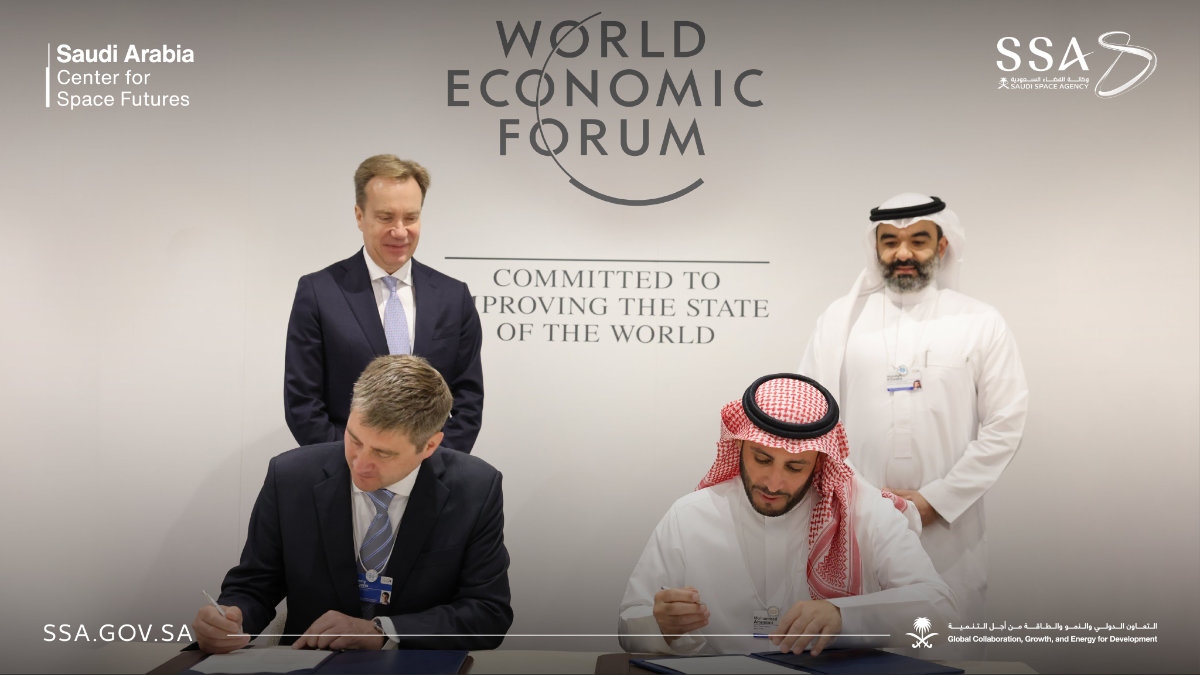


The World Economic Forum and the Saudi Space Agency signed an agreement to establish the Center for Space Futures. (AN photo by Abdulrahman Bin Shalhoubh) 

Set to open in the fall of 2024, the Center for Space Futures will be the first center in the C4IR network. It aims to facilitate public-private discussions on space collaboration and contribute to accelerating space technologies.

Nelson told business anchor Maya Hojeij that, after a hiatus of half a century, NASA plans to “go back to the moon.” However, he added: “This time with not only commercial partners, but also with international partners.”

He highlighted that the Center for Space Futures will “bring together those commercial and government programs in order to build a significant space economy.”

Earlier this year, NASA announced that its Artemis II lunar mission will aim to land the first astronauts near the moon’s South Pole in September 2025.



On May 21, 2023, Saudi astronauts Rayyanah Barnawi (L) and Ali Al-Qarni (R) launched toward the International Space Station together with American astronauts Peggy Whitson (2R) and pilot John Shoffner (2L). (Axiom Space photo/file)

NASA’s administrator added: “We’re talking about a space economy that will be almost $2 trillion dollars by the year 2035 — only a little over a decade away — a significant part of the economic sector of a country.”

Elaborating, he said that the “$2 trillion is worldwide. And that is a lot of startup companies, such as I have seen here in Riyadh today, that are partnering with other companies from around the world that are including incentives by the Saudi government.

“So, we do that in America, and that’s where I mentioned that we’re going back to the moon, this time after a half century, because we were on the moon a half-century ago.

“This time, we’re going back to the moon for a different reason, we’re going to learn, to invent, to create in order to be able to go to Mars and beyond. And this time we go back with commercial enterprises.”

NASA’s Apollo 17, which celebrated its 50th anniversary in December 2022, was the space agency’s sixth and final mission to land people on the moon.

The mission landed on the Taurus-Littrow site, which offered a mix of mountainous highlands and valley lowlands, allowing the crew to collect 741 lunar samples.

Nelson told Asharq’s Hojeij that NASA has partnered with Saudi Arabia on multiple scientific instruments to send Artemis II to the moon for economic benefits and to better understand climate change.
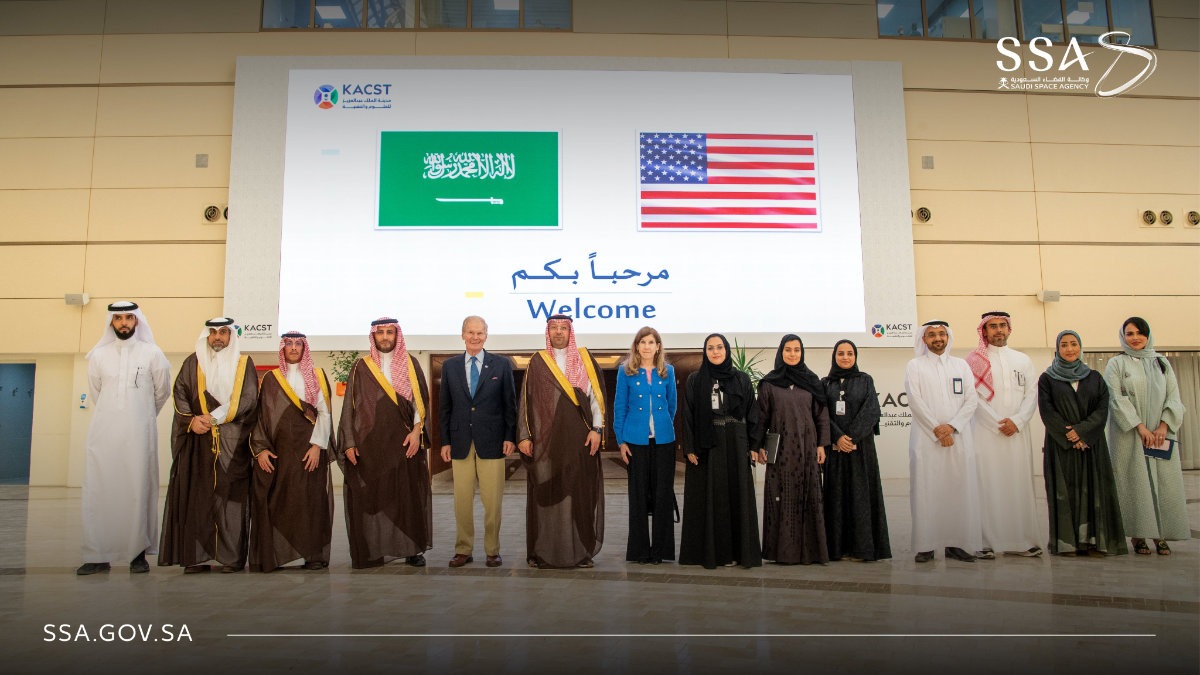


During a meeting organized by the Saudi Space Agency and King Abdulaziz City for Science and Technology in Riyadh, Saudi space officials met with NASA chief Bill Nelson and discussed ways to deepen the cooperation in the fields of space. (Courtesy: SSA)

“We have a partnership with Saudi Arabia,” he said. “We’ve already partnered on a number of scientific instruments, but we’ve got a whole way to go.

“We’re going back to the moon and then we’re going to Mars. We are constantly looking down on Earth to help our climate, to better understand what is happening to the Earth, to give very precise measurements of exactly what’s happening there.

“We’re going to coordinate and partner with Saudi Arabia on all of these things.”

Asked about space challenges and how the partnership between Riyadh and Washington sought to address them, Nelson said that debris in space was among the biggest threats to satellites and spacecraft.

“Debris in space is a major problem,” he said. “We are too often having to move our International Space Station to get it out of the way of a piece of space junk that otherwise could hit it.

“Same thing with a lot of our satellites. And so that applies to everybody’s satellites, not just US satellites, Saudi satellites.”

Nelson added that NASA was working with partners “to come up with systems and mechanisms by which we can require the manufacturers of satellites to be able, after their useful life, have a precise landing back through the Earth’s atmosphere to burn up and if any pieces are left over, that they would fall harmlessly in the southern Pacific Ocean.”

Underscoring the importance of these efforts, he said that “whenever something is left in space, it becomes a dangerous projectile that could always ram into something, like our space station.”

The UNU Institute for Environment and Human Security, in its Interconnected Disaster Risks 2023 report, included space debris among its six risk tipping points.

The report, released in February, found that there were 35,150 tracked objects in orbit in 2023. Just 25 percent of these were working satellites while the rest were considered junk, including broken satellites and rocket parts.
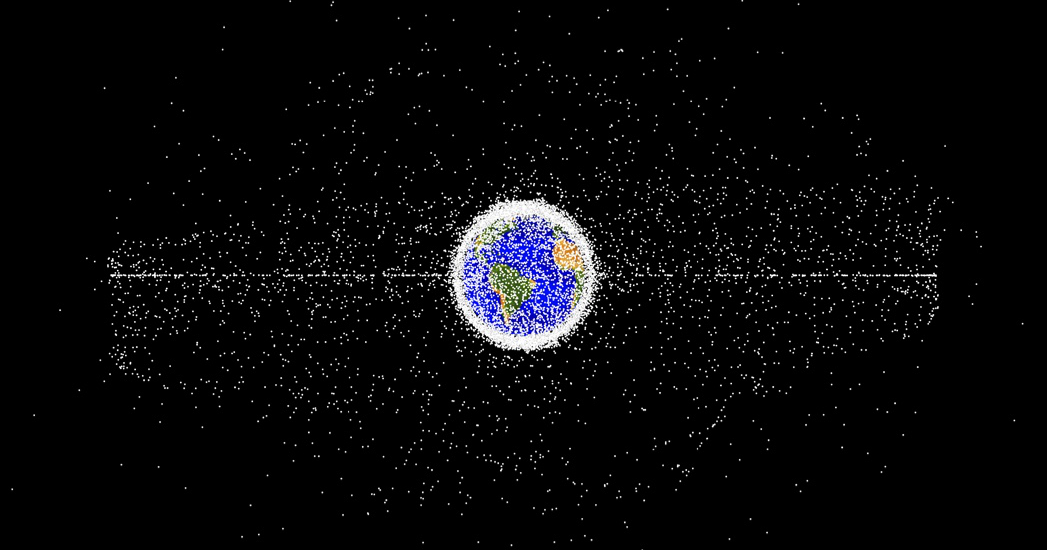


This illustration from the Interconnected Disaster Risks 2023 report of the UNU Institute for Environment and Human Security shows computer-generated images of objects in Earth orbit being tracked as of January 2019. Approximately 95% of the objects in the illustration, according to the report that included space debris among its six risk tipping points. (Credit: UNU-EHS)

As objects in space travel at speeds exceeding 25,000 km per hour, any collision may be “catastrophic,” and even the smallest objects can cause significant damage, according to the same UNU-EHS report.

Asked about the Artemis Accords, which Saudi Arabia signed in 2022, the NASA administrator described it as “a common sense set of principles of the peaceful uses of space.

“For example, in the Artemis Accords, we have that you would come to the aid and assistance of a nation that would have a problem in space,” he said.

“We would develop common elements so that you could help each other out, perhaps remotely in space. But, basically, the thrust of it is the peaceful use of space.”

Saudi Arabia is the 21st country globally and the fourth Middle Eastern nation to sign the Artemis Accords, which set out common principles, guidelines and best practices to ensure safe, peaceful and sustainable space exploration.

Nelson’s visit to the Kingdom is intended to explore future collaboration between the US space agency and key government officials, while also emphasizing the significance of civil space cooperation in the broader US-Saudi relationship
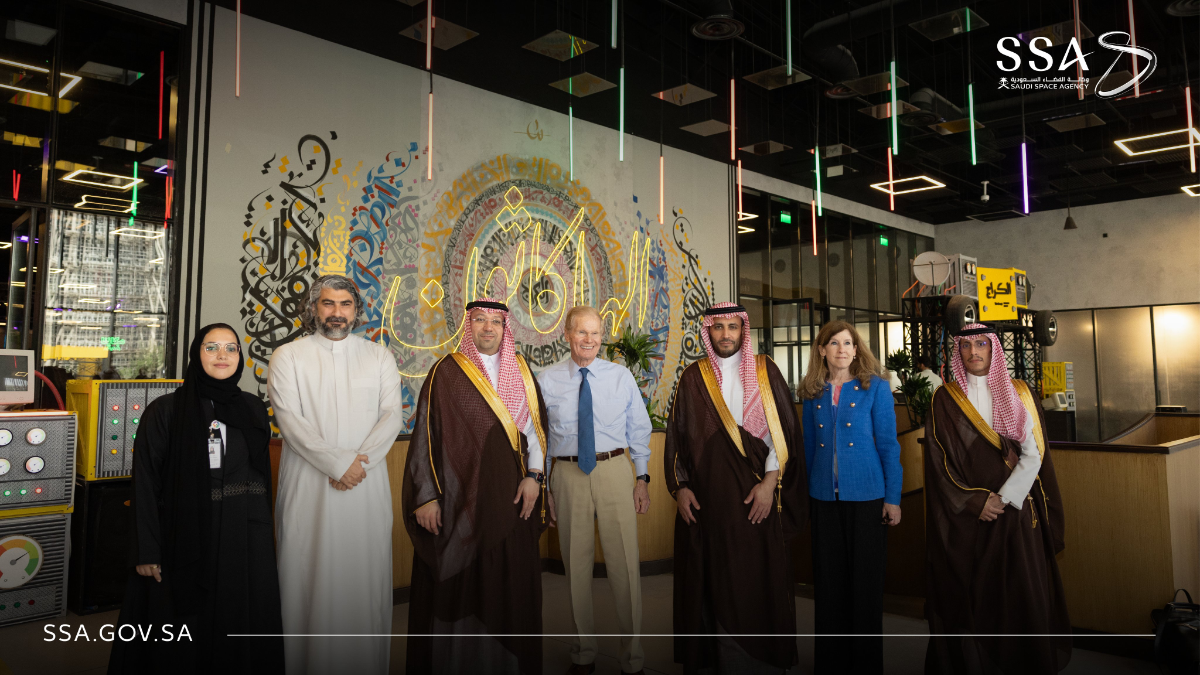


NASA Administrator Bill Nelson’ and key Saudi government officials explored future collaboration between the US space agency and the Kingdom's space agency. (

The Saudi Space Agency was launched by royal decree in December 2018 to accelerate economic diversification, enhance research and development, and raise private-sector participation in the global space industry.

Since its launch, the Kingdom’s state-funded space program has struck deals with several of the world’s established space agencies, astronautical companies and top universities to benefit from advanced technological cooperation.

Saudi Arabia’s space industry holds great potential for growth after recording $400 million in revenue in 2022, according to a report by the Saudi Communications, Space and Technology Commission published late last year.

The global space economy is projected to expand to $1.8 trillion by 2035, marking a threefold increase from $630 billion in 2023, according to research published by the World Economic Forum in April.

A growing number of businesses across sectors including agriculture, construction, insurance and climate-change mitigation, are expected to drive the new and expanding space economy.

This rapid surge is being driven by reduced costs and broader accessibility to space-enabled technologies, encompassing various commercial sectors such as communications, positioning, navigation, timing, Earth observation services, tourism and manufacturing.

While state-sponsored investments will remain the cornerstone of the industry, enhanced collaboration between various stakeholders across public and private sectors will be increasingly important to fully realize the sector’s potential in the future.


Saudi Arabia’s oil sector skills to help Kingdom evolve as a green hydrogen hub, experts say

Updated 28 February 2026
Follow

Saudi Arabia’s oil sector skills to help Kingdom evolve as a green hydrogen hub, experts say

  • Saudi Arabia, having set its net-zero target for 2060, has been heavily investing in the renewable energy sector

RIYADH: Saudi Arabia’s long-proven expertise in the oil industry could help the Kingdom emerge as a global leader in green hydrogen production as the world marches toward a sustainable future, experts told Arab News. 

Saudi Arabia, having set its net-zero target for 2060, has been heavily investing in the renewable energy sector, and with the world’s largest green hydrogen plant, located in Neom, set to become fully operational in 2027. 

The plant will rely entirely on solar and wind energy to power a 2.2 gigawatt electrolyzer, designed to produce hydrogen continuously. 

Speaking to Arab News, Paul Sullivan, an energy and environment expert at Johns Hopkins University, said that Saudi Arabia could use its vast experience in project management and execution in the traditional energy sector to become a leader in green hydrogen production. 

“Many skills could be transferred from traditional fuels, such as oil and gas, to green hydrogen. Experience and skills in project development could be transferred,” said Sullivan. 

He added: “The knowledge gained from developing traditional energy projects at Saudi Aramco and its contractors puts Saudi Arabia at an advantage as it advances its hydrogen projects. AI expertise can be used across energy types and uses. AI could help optimize current and future energy systems, regardless of their nature.” 

Samuele Bellani, managing director and partner at Boston Consulting Group, shared similar views, and said that Saudi Arabia has access to advantageous solar and wind renewable energy, which could help the Kingdom emerge as a global powerhouse in green hydrogen production. 

“This strong competitive advantage, together with Saudi Arabia’s commercial and marketing capabilities, and decades of experience in large-scale gas processing, refining, and project execution can position the country as a key producer and exporter of low carbon hydrogen in the future,” said Bellani. 

The BCG official added that the Kingdom’s expertise in managing complex, capital-intensive projects at scale in the traditional fuel sector provides an invaluable foundation for hydrogen development, where similar skills in engineering, logistics, and international energy trading are essential. 

Green hydrogen, created through electrolysis powered by renewable energy, is seen as a critical component in reducing global carbon emissions, because it produces no greenhouse gases in the production process.

In December, speaking to Al-Eqtisadiah on the sidelines of the Absher Conference, Saudi Arabia’s Minister of State for Foreign Affairs and Climate Envoy Adel Al-Jubeir said that the Kingdom is making steady progress in advancing the circular carbon economy and green hydrogen production as part of broader efforts to address climate challenges through technology and investment. 

The minister added that the Kingdom has made tangible progress in deploying new technologies that support more efficient energy use while expanding the production of alternative and renewable energy sources.

Upgrading existing systems

Sullivan said that infrastructure used in the traditional energy sector, such as pipelines, can be repurposed for the renewable industry, with some required changes to ensure safety and affordability. 

“A wide range of legal, administrative, managerial, engineering, supply chain, policy development, governance, finance, safety and risk management, and economic skills could be transferred. Plumbers, electricians, pipefitters, welders, and other skilled craftspeople can be repurposed and used directly,” said Sullivan. 

He added: “Furthermore, the oil and gas industries already produce hydrogen for their own needs. They have experience in developing ports, pipelines, and other logistical systems, as well as international trading and supply chain networks. That experience will not go to waste.” 

Bellani said that Saudi Arabia can adapt existing gas, power, and industrial infrastructure to support blue hydrogen with carbon capture and storage, and green hydrogen powered by renewables. 

The BCG official added that export infrastructure — including ports, storage tanks, and shipping — could be upgraded to handle hydrogen carriers such as ammonia. 

Carbon capture and storage is central to Saudi Arabia’s blue hydrogen strategy.

Samuele Bellani, managing director and partner at Boston Consulting Group

Industrial zones and pipelines can be repurposed or expanded to integrate hydrogen production, conversion, and export at scale provided materialization of demand and ability to secure long term offtake agreements. 

“This adaptive approach maximizes the value of existing investments while minimizing development timelines. The Kingdom’s world-class port facilities and industrial complexes provide a strong foundation that can be enhanced rather than rebuilt, offering significant cost and time advantages over competitors starting from scratch,” he added. 

According to Bellani, carbon capture and storage is central to Saudi Arabia’s blue hydrogen strategy, enabling production from natural gas while significantly reducing lifecycle carbon dioxide emissions. 

“The Kingdom’s large geological storage potential and experience with CO2 injection support the development of high-capture-rate projects at scale. This technology serves as a crucial bridge, allowing Saudi Arabia to leverage its existing natural gas resources while building toward a fully renewable hydrogen economy,” said Bellani. 

He added: “The Kingdom’s geological advantages — including extensive underground formations suitable for CO2 storage — provide a natural competitive edge in blue hydrogen production that few other nations can match.” 

The strategic Vision 2030 agenda

According to Sullivan, Saudi Arabia’s Vision 2030 economic diversification program, as well as the initiatives taken by the Kingdom’s sovereign wealth fund, is playing a crucial role in materializing the nation’s hydrogen goal. 

Sullivan said that Vision 2030 is the umbrella for strategic policies, including building new supply chains and new visions toward trade and commerce, as well as economic, financial, and employment diversification. 

The Public Investment Fund is funding such activities, including the giant Neom and Yanbu green hydrogen projects, as well as the development of green hydrogen hubs.

“PIF green bonds help reduce costs and make financing green hydrogen projects cheaper than they would otherwise be. The Saudi Green Initiative provides direction and policy developments on climate and environmental policies that could help advance green hydrogen in tandem with Vision 2030 and the PIF’s work,” said Sullivan. 

He added: “Without a proper strategic confluence of all three, many of today’s and future green hydrogen projects could face a more difficult future.”

Bellani shared a similar opinion and said that the Vision 2030 program’s strategic framework ensures that hydrogen development receives the highest levels of government support and investment priority. 

The BCG official added that Saudi Arabia can reduce its dependence on oil revenues while developing new industrial capabilities and contributing to global decarbonization efforts by building a valuable hydrogen economy. 

“Vision 2030 promotes economic diversification, industrial localization, and energy transition. All these three objectives align with low carbon hydrogen value proposition,” said Bellani. 

Target countries

According to Sullivan, Europe will be one of the priority markets for Saudi Arabia as it ramps up green hydrogen production. 

“Saudi Arabia’s green hydrogen has better economics than many other countries’, given the costs of electricity production and offtake contracts under concessional regimes, as well as its natural endowments for green energy,” said Sullivan. 

He added: “Even with shipping costs included, Saudi green hydrogen could be competitive in Europe in many circumstances.” 

Bellani echoed similar sentiments and said that the demand for Saudi Arabia’s green hydrogen will be driven by demand for both blue and green hydrogen to meet decarbonization targets and energy security needs. 

East Asian countries such as Japan and South Korea are also key markets due to their limited domestic energy resources and strong interest in hydrogen and ammonia imports. 

The BCG official further said that additional demand may emerge from other Asian and emerging economies seeking affordable, low-carbon fuels in the future. 

Potential challenges and combat measures

Speaking to Arab News, Safak Yucel, associate director of business of sustainability initiative at McDonough School of Business Georgetown University Dubai, said finding buyers could be one of the obstacles Saudi Arabia faces in its hydrogen journey. 

“The biggest challenge is driving the cost down sufficiently so that there would be a meaningful scale of buyers. This would require significant investments not only in the infrastructure but also research and development,” said Yucel. 

Bellani said that the challenges Saudi Arabia could face include ensuring global demand certainty, securing long-term offtake contracts, and remaining cost-competitive as international hydrogen markets evolve. 

The BCG official added that scaling CCS for blue hydrogen and renewable capacity, water supply, and electrolysis for green hydrogen requires significant coordination and capital.

Regulatory alignment, certification complexity, and infrastructure build-out timelines also pose execution risks. 

“These challenges highlight the complexity of transforming an entire energy system while building new international markets simultaneously. However, Saudi Arabia’s experience managing large-scale energy projects and its substantial financial resources position the Kingdom well to address these implementation hurdles systematically,” added Bellani. 

Yucel said that Saudi Arabia could explore international collaboration, to evolve as a market leader in the hydrogen energy ecosystem. 

“Many companies are interested in investing in green hydrogen and several research groups across the globe are working on further advancing the technology. Such collaborative efforts would be vital in driving costs down,” said Yucel. 

Bellani elaborated and said that there are strong opportunities for collaboration across the value chain, including joint ventures for blue and green hydrogen projects, offtake agreements, and infrastructure development. 

According to him, international energy companies, technology providers, and engineering firms can contribute expertise in CCS, electrolysis, ammonia, and logistics, while partnerships with research institutions can accelerate innovation in hydrogen technologies, cost reduction, and sustainability standards. 

“Saudi Arabia’s transition from oil giant to hydrogen superpower represents one of the most significant energy sector transformations of our time. By systematically addressing each aspect of hydrogen economy development — from leveraging existing expertise to building new international partnerships— the Kingdom is positioning itself at the forefront of the global energy transition,” said Bellani.