ISLAMABAD: Pakistan Prime Minister Shehbaz Sharif said on Sunday peaceful protests were a democratic right, but there should be “no tolerance” for violence, amid protests in Azad Kashmir for subsidized wheat flour and cheaper electricity.
The statement came a day after clashes erupted between police and supporters of the Jammu Kashmir Joint Awami Action Committee (JAAC) in various parts of the territory, resulting in the killing of a police officer and injuries to 90 others on both sides, according to officials.
The protests turned violent when police attempted to stop a rally headed for the Azad Kashmir capital of Muzaffarabad from Kotli and Poonch districts. The protesters are demanding electricity as per hydropower generation cost in Azad Kashmir, subsidized wheat flour, and an end to privileges enjoyed by the elite.
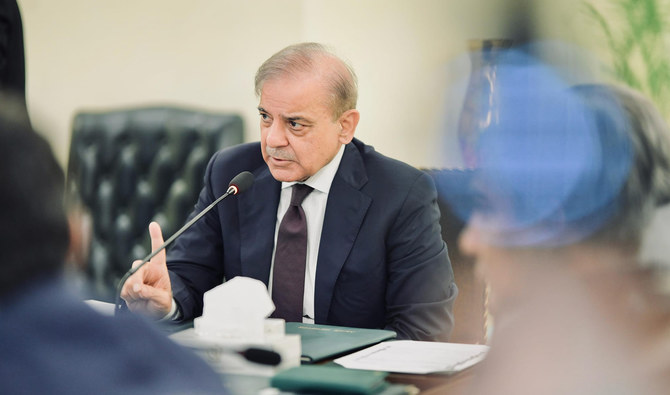
In his message on X, PM Sharif said he was “deeply concerned” over the situation in Azad Jammu and Kashmir (AJK) and had asked AJK PM Anwar-ul-Haq to hold talks with the protesters.
“Unfortunately, in situations of chaos and dissent there are always some who rush in to score political points,” he said. “While debate, discussion and peaceful protests are the beauties of democracy, there should be absolutely no tolerance for taking the law in one’s own hands and damaging government properties.”
Sharif urged all parties to resort to peaceful course of action for the resolution of their demands. “Despite best efforts of detractors, the matter will hopefully be settled soon,” he said.
Separately, the Azad Kashmir government on Sunday invited protesters for talks.
“The situation is currently peaceful and under control, and we are trying to settle issues through talks,” Abdul Majid Khan, a spokesperson of the Azad Kashmir government who is also its finance minister, told Arab News.
“We have invited the action committee to come and sit with us for dialogue on all their demands.”
Khan warned that no one would be allowed to take the law into their hands, emphasizing the government had exercised “significant restraint.”
He noted the government was providing wheat in Azad Kashmir at Rs3,100 [$11.16] per 40kg, which was already heavily subsidized and cheaper than in Pakistan’s most populous Punjab province, the main producer of the crop in the South Asian country.
The Himalayan territory of Kashmir has been divided between India and Pakistan since their independence from Britain in 1947. Both countries rule part of the territory, but claim it in full and have fought three wars over the disputed region.
The western portion of the larger Kashmir region is administered by Pakistan as a nominally self-governing entity.
Pakistan last year narrowly avoided a default on the payment of foreign debts when the International Monetary Fund and several friendly nations came to its rescue by giving it loans.
Pakistan’s monthly inflation rate at one point reached over 40 percent, but authorities say it had come down to 17 percent ahead of talks with the IMF for a new bailout. Islamabad plans to get at least $6 billion from the lender when it reaches a deal expected in the coming months.


![]()

Pakistan PM says ‘no tolerance’ for violence amid Azad Kashmir protests over price hikes
Short Url
https://arab.news/y3d4z
Pakistan PM says ‘no tolerance’ for violence amid Azad Kashmir protests over price hikes
- Clashes erupted in parts of Azad Kashmir Saturday as protesters demanded cheaper wheat flour, electricity
- The violence resulted in the killing of a police officer and injuries to 90 others on both sides, officials say
Latest updates


Recommended


© 2026 SAUDI RESEARCH & PUBLISHING COMPANY, All Rights Reserved And subject to Terms of Use Agreement.