BEIRUT: Israeli strikes on Syria early Thursday targeted facilities belonging to Iraq’s Al-Nujaba armed movement, a war monitor and the pro-Iran group said, with Damascus saying an unidentified building was attacked.
Israel has carried out hundreds of strikes in Syria since the outbreak of the civil war in its northern neighbor in 2011, mainly against army positions and Iran-backed fighters.
But the strikes increased after Israel’s war with Hamas in the Gaza Strip began on October 7, when the Iran-backed Palestinian militant group launched an unprecedented assault on Israel.
The Syrian Observatory for Human Rights said “Israeli air strikes targeted a cultural center” and a “training facility” of the Iraqi Al-Nujaba movement in the Sayyida Zeinab area south of Damascus.
Three members of the group were wounded according to the Britain-based Observatory, which relies on a network of sources inside Syria.
A source within the Iraqi faction, requesting anonymity as they were not authorized to speak to the media, confirmed that a “cultural center” belonging to the group was destroyed in the “Israeli” attack, but reported no casualties.
Al-Nujaba does “not have a declared military base in Syria,” the source added.
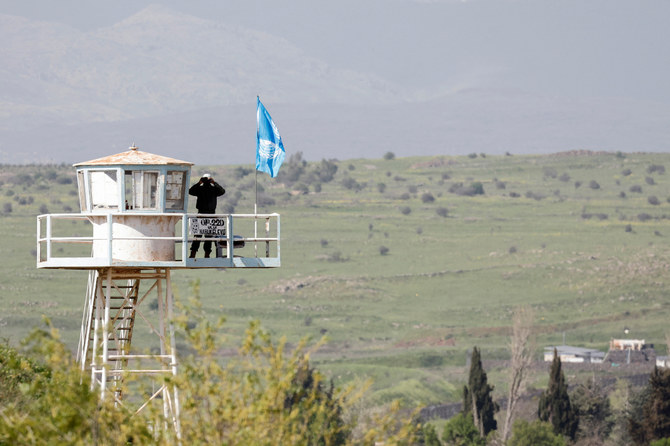
Syria’s defense ministry said that “at around 3:20 am today, the Israeli enemy launched an air attack from the direction of the occupied Syria Golan Heights targeting a building in the Damascus countryside.”
The attack caused “some material damage,” said the statement carried by state media, adding that air defense systems shot down some of the missiles.
The Sayyida Zeinab area is home to an important Shiite Muslim shrine that is protected by pro-Iran groups, including Lebanon’s Hezbollah, alongside the Syrian army, according to the Observatory.
The Al-Nujaba movement is part of a pro-Iran alliance in Iraq that Washington has blamed for numerous attacks on its forces.
Israel rarely comments on individual strikes on Syria, but has repeatedly said it will not allow its arch-enemy Iran to expand its presence there.
An April 1 raid blamed on Israel levelled Tehran’s consulate in Damascus and killed seven Iranian Revolutionary Guards, two of them generals.
That strike prompted Iran to launch a first-ever direct missile and drone attack against Israel on April 13-14 that sent regional tensions spiralling.


![]()

Monitor, Iraqi group say Israel hits facilities in Syria
Short Url
https://arab.news/48x98
Monitor, Iraqi group say Israel hits facilities in Syria
- The Syrian Observatory for Human Rights said “Israeli air strikes targeted a cultural center” and a “training facility” of the Iraqi Al-Nujaba movement
- Three members of the Iraqi group were wounded


Latest updates


© 2026 SAUDI RESEARCH & PUBLISHING COMPANY, All Rights Reserved And subject to Terms of Use Agreement.