


N’DJAMENA: Chadians go to the polls on Monday three years after their military leader seized power, in the first presidential election in Africa’s Sahel region since a wave of coups.
Analysts say Mahamat Idriss Deby, who seized power the day rebels killed his long-ruling father Idriss Deby in April 2021, is most likely to win, although his chief opponent has been drawing larger-than-expected crowds on the campaign trail.
Deby has promised to bolster security, strengthen the rule of law and increase electricity production.
The vote coincides with a temporary withdrawal of US troops from Chad, an important Western ally in a region of West and Central Africa courted by Russia and wracked by jihadism.
Polls open at 7 a.m. and close at 5 p.m., with some 8.5 million people registered to vote.
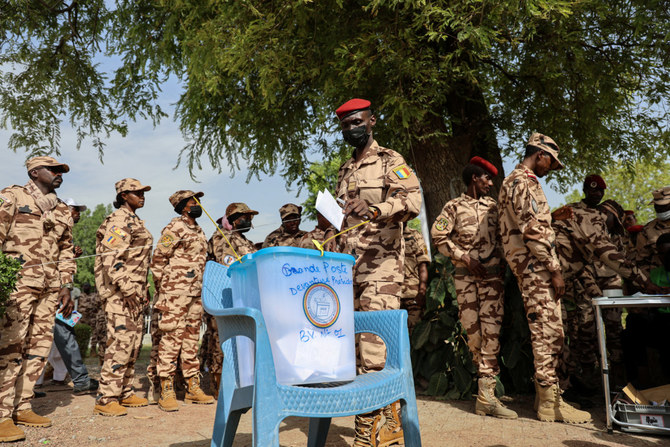
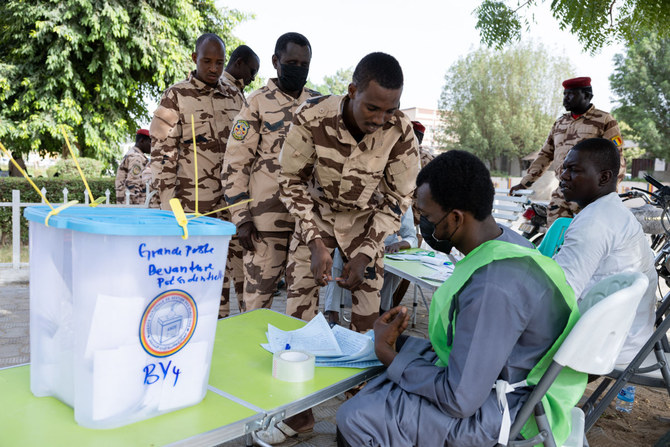
Soldiers began early voting on Sunday.
Provisional results are expected by May 21 and final results by June 5. If no candidate wins more than 50 percent of the votes, a run-off will be held on June 22.
Since replacing his father at the helm of the oil-producing Central African country, Deby has remained close with former colonial power and longtime ally France.
While other junta-ruled Sahel countries including Mali, Burkina Faso and Niger have told Paris and other Western powers to withdraw and turned to Moscow for support, Chad remains the last Sahel state with a substantial French military presence.
The US, however, announced a temporary withdrawal of at least some troops last month, saying it would continue with a review of security operations after the election.
Opposition concerns
Monday’s vote pits Deby against his prime minister Succes Masra, previously a political opponent who fled into exile in 2022 but was allowed back a year later. Also running are former prime minister Albert Pahimi Padacke and seven other candidates.
Yaya Dillo, an opposition politician who had been expected to run against Deby despite coming from the same clan, was shot and killed in the capital N’Djamena on Feb. 28, the day the election date was announced.
Padacke has accused Masra of collaborating with Deby. But Masra has attracted large crowds to his own rallies.
Some opposition members and civil society groups have called for a boycott, citing concerns about possible vote-rigging.
That has raised fears of potential violence.
“This presidential election is of capital importance for the country because an entire people aspires for change,” said Baniara Yoyana, a former minister and magistrate.
“The process must be conducted with transparency to avoid any risk of confrontation.”
One Deby supporter, however, said he expected no problems.
“We want the election to go well and peacefully,” said Abdelkhader Sougui, a 28-year-old student.
“My wish is to go out and vote the morning of May 6 to confirm our victory... in the first round.”


