



N’DJAMENA: Chad voters go to the polls on Sunday for a referendum on a new constitution, in a key step toward elections and the return of civilian rule promised, but postponed, by the ruling military junta.
A large section of the opposition and civil society in the central African country are calling for a boycott.
They argue the plebiscite is designed to pave the way for the election of the current transitional president, General Mahamat Idriss Deby Itno, and the continuation of a “dynasty” begun by his late father 33 years ago following a coup.
The “yes” camp seems assured of victory after a well-financed campaign by the ruling junta against a divided opposition, which has faced arrest, intimidation and threats for more than a year.
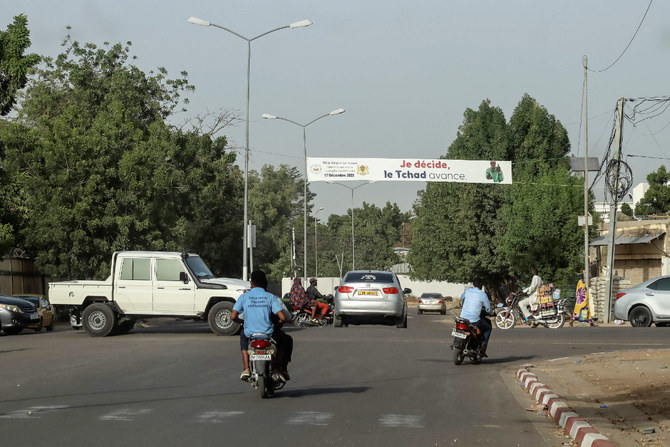
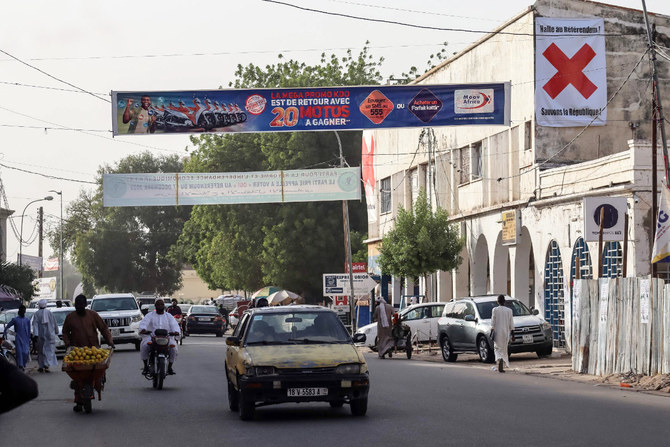
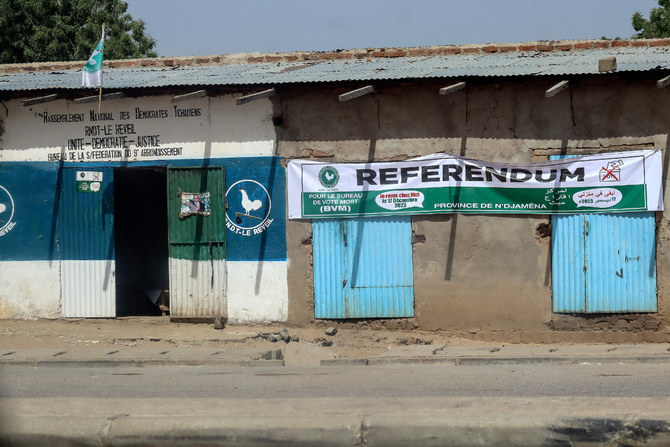
The capital N’Djamena has been plastered with posters championing a “yes” vote to bring in a constitution for a “unitary and decentralized state.”
It is not very different from the constitution that the military repealed in 2021, enshrining a regime in which most of the power is concentrated in the head of state.
The opposition, which advocates federalism, backs the “no” vote.
The “yes” camp retorts that a unitary state is the only way to preserve unity, while federalism would encourage “separatism” and “chaos.”
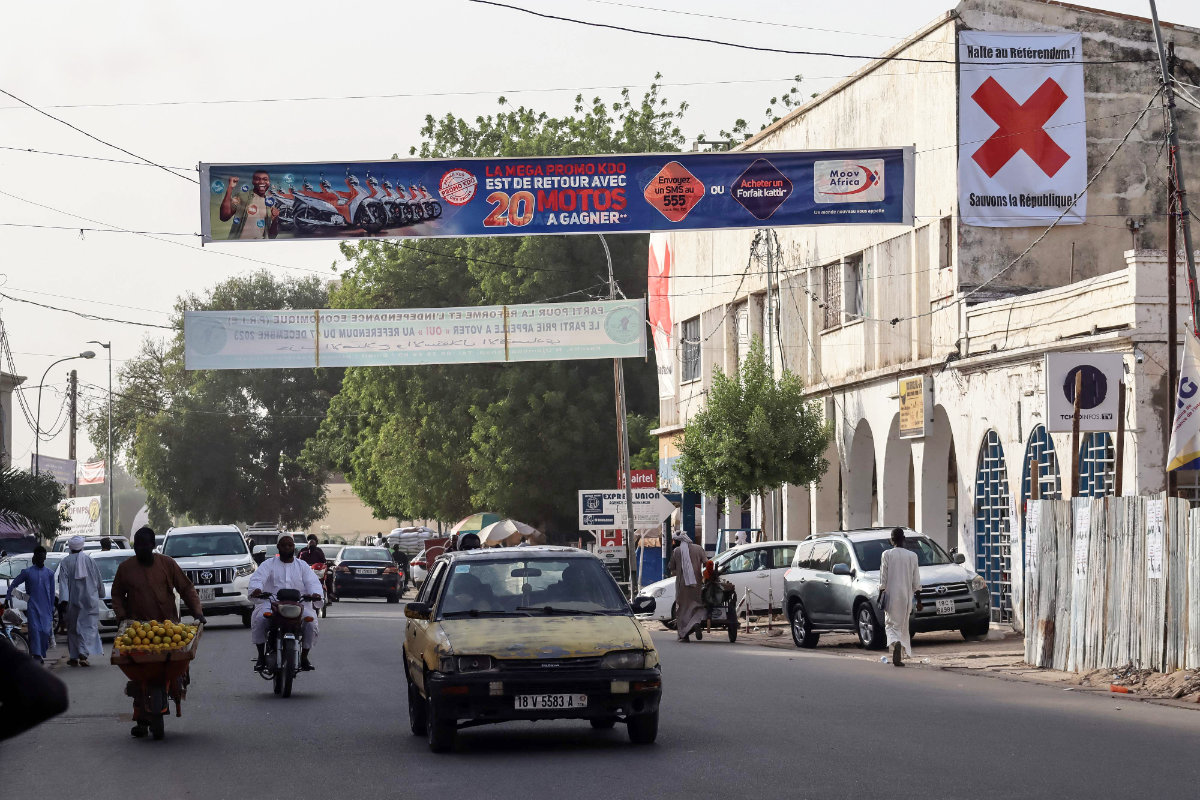
A general view of a poster in a street that says "Halt the Referendum", in N'Djamena on December 13, 2023. (Denis Sassou Gueipeur / AFP)
Provisional results are scheduled to be published in late December, with the Supreme Court due to validate them four days later.
The two main platforms of parties and civil society organizations hostile to the junta have called for a boycott, hoping a low turnout will delegitimize a leader whom they accuse of perpetuating a 33-year “Deby dynasty.”
Where they can find space, they have put up posters with the words “Stop the referendum” and a big red cross.
They are hoping a low turnout will undermine the credibility of the referendum, which is “purely and simply legitimising the dynasty that they want to impose on us,” said Max Loalngar, coordinator of one of the groups, Wakit Tamma.
He was speaking to AFP by telephone from a country of exile that he declined to name.
Some advocates of a boycott were dismissive of both sides.
“They’re all the same, whether they’re campaigning for ‘yes’ or ‘no’. They’ve shared the money out between themselves,” Badono Daigou for the GCAP opposition platform told a rally.
“The result is a foregone conclusion. The ‘yes’ vote will win.”
Mahamat Deby, 37, was proclaimed transitional president by the army in April 2021, following the death of his father Idriss Deby Itno, who was killed by rebels on his way to the front line of the fighting.
Deby senior had ruled Chad, the second least developed country in the world according to the United Nations, with an iron fist for more than 30 years.
When he took power, his son promised elections after a transition period of 18 months and made a commitment to the African Union not to stand in them.
But 18 months later, his regime extended the transition by two years and authorized him to run in the presidential election, now scheduled for the end of 2024.
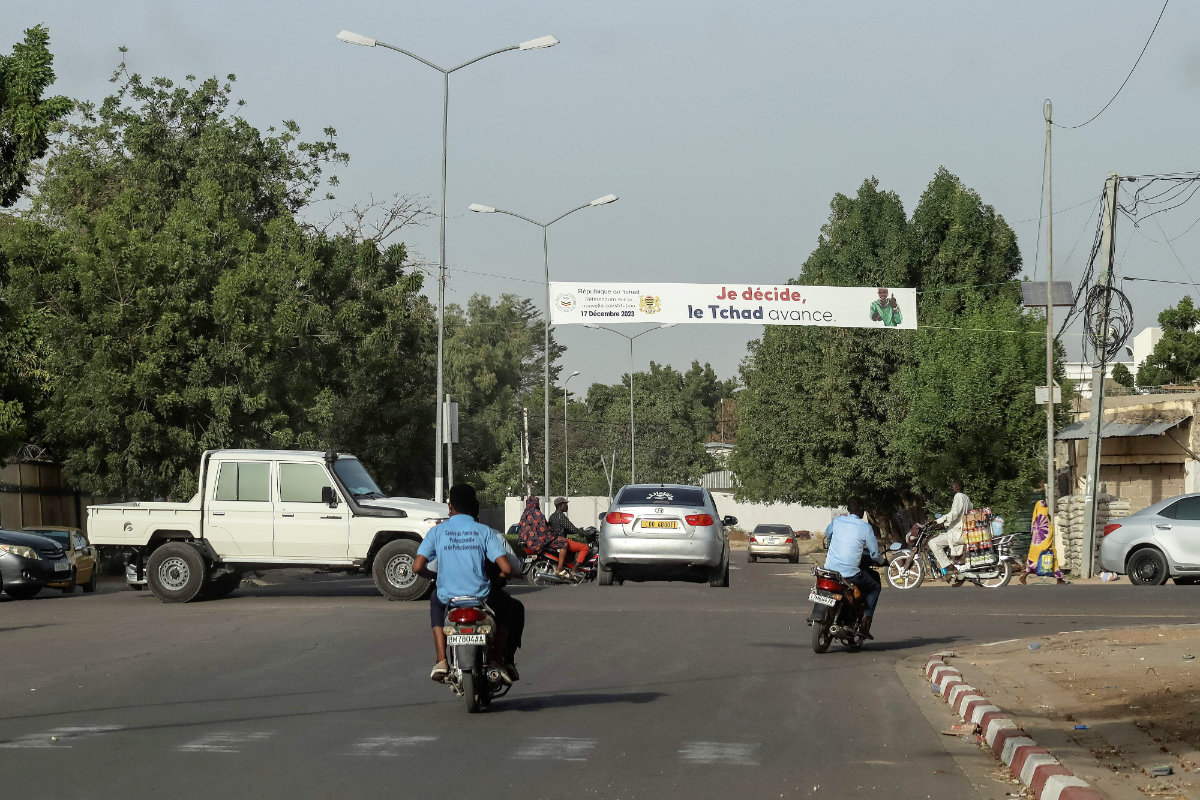
general view of a banner saying: "I decide, Chad advances" of the national commission in charge of organizing the referendum. Chadians vote on December 17, 2023 on a new constitution, in a key step towards elections seen as a test of legitimacy for the Deby dynasty's more than 30-year rule. (AFP)
On the anniversary of the 18-month transition — October 20, 2022 — between 100 and 300 young men and teenagers were shot dead in N’Djamena by police and military, according to the opposition and national and international NGOs.
They had been peacefully demonstrating against the two-year extension of the transitional government.
More than 1,000 others were imprisoned before being pardoned, while dozens more were tortured or disappeared, according to NGOs and the opposition.
Most were supporters of prominent opposition figure Succes Masra, a longtime opponent of the Deby dynasty.
Yet in late October, Masra signed a reconciliation agreement with the regime and went into exile, from where he has been encouraging his followers to vote “yes” on Sunday.
Since what has come to be known as the “Black Thursday” crackdown, demonstrations have been systematically banned and many opposition leaders have fled Chad in fear of their lives.
“For there to be any legitimacy, the opposition parties and their activists must feel free to meet and campaign,” the Human Rights Watch group said in October.
“Otherwise, there is a risk that the referendum will be seen as a means of transforming the transitional government into a permanent one.”


