

Minister says Pakistan’s Hajj 2026 policy ‘effective,’ in line with Saudi guidelines

Muslims visit the Grand Mosque in the Saudi holy city of Makkah on June 8, 2025, at the end of the annual Hajj pilgrimage. (AFP/File)
Short Url
Updated 18 January 2026
Follow

Minister says Pakistan’s Hajj 2026 policy ‘effective,’ in line with Saudi guidelines

  • A large portion of the Pakistan’s private Hajj quota for 2025 remained unutilized due to delays by tour operators
  • While the government fulfilled its full allocation, private operators attributed the shortfall to technical issues

ISLAMABAD: Pakistan’s Minister for Religious Affairs Sardar Muhammad Yousaf has said the government formulated an “effective” Hajj Policy 2026 that is in accordance with guidelines issued by Saudi Arabia.

Pakistan approved the Hajj 2026 policy in July, under which the country has a quota of 179,210 pilgrims. Of which, around 120,000 seats have been allocated for the government scheme and the rest for private tour operators.

The government ensured digitization of Hajj services, electronic monitoring and complaint system, long and short duration Hajj packages, and prioritizing those who could not perform the pilgrimage under the private scheme last year.

Speaking to the state-run Radio Pakistan broadcaster, Yousaf said that the government is trying to expand the “Route to Makkah” facility to Lahore. The initiative allows pilgrims to complete travel formalities at their departure airports.

“Training for the 2026 Hajj is currently underway across the country, with mandatory sessions being conducted in various districts,” the minister was quoted as saying.

A large portion of the Pakistan’s private Hajj quota for 2025 remained unutilized due to delays by tour operators in meeting payment and registration deadlines, while the government fulfilled its full allocation of over 88,000 pilgrims.

Private operators had attributed the shortfall to technical issues, including payment processing problems and communication breakdowns.

Pakistan this month also requested Saudi Arabia to increase its Hajj quota in proportion to the country’s population of 240 million, Radio Pakistan reported.

“Pakistan has formally requested the Saudi government to increase its Hajj quota to 230,000, in proportion to the country’s population, to allow more people to undertake the pilgrimage,” Yousaf was quoted as saying.

Pakistan reports current account surplus in Jan. owing to improved trade, remittances

Updated 17 February 2026
Follow

Pakistan reports current account surplus in Jan. owing to improved trade, remittances

  • Pakistan’s exports crossed the $3 billion mark in Jan. as the country received $3.5 billion in remittances
  • Last month, IMF urged Pakistan to accelerate pace of structural reforms to strengthen economic growth

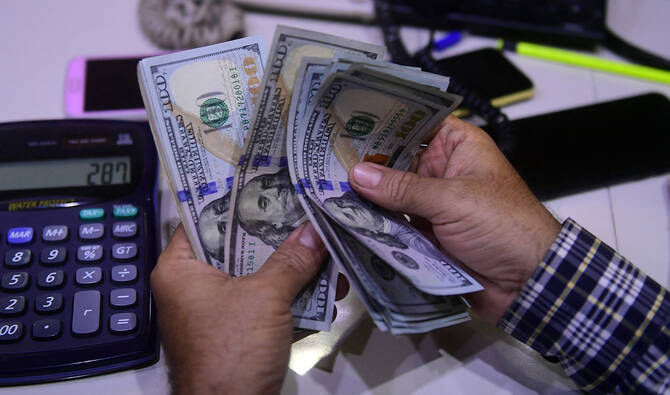
ISLAMABAD: Pakistan recorded a current account surplus of more than $120 million in January, the country’s finance adviser said on Tuesday, attributing it to improved trade balance and remittance inflows.

Pakistan’s exports rebounded in January 2026 after five months of weak performance, rising 3.73 percent year on year and surging 34.96 percent month on month, according to data released by the country’s statistics bureau.

Exports crossed the $3 billion mark for the first time in January to reach $3.061 billion, compared to $2.27 billion in Dec. 2025. The country received $3.5 billion in foreign remittances in Jan. 2026.

Khurram Schehzad, an adviser to the finance minister, said Pakistan reported a current account surplus of $121 million in Jan., compared to a current account deficit of $393 million in the same month last year.

“Improved trade balance in January 2026, strong remittance inflows, and sustained momentum in services exports (IT/Tech) continue to reinforce the country’s external account position,” he said on X.

Pakistan has undergone a difficult period of stabilization, marked by inflation, currency depreciation and financing gaps, and international rating agencies have acknowledged improvements after Islamabad began implementing reforms such as privatizing loss-making, state-owned enterprises (SOEs) and ending subsidies as part of a $7 billion International Monetary Fund (IMF) loan program.

Late last month, the IMF urged Pakistan to accelerate the pace of these structural reforms to strengthen economic growth.

Responding to questions from Arab News at a virtual media roundtable on emerging markets’ resilience, IMF’s director of the Middle East and Central Asia Jihad Azour said Islamabad’s implementation of the IMF requirements had been “strong” despite devastating floods that killed more than 1,000 people and devastated farmland, forcing the government to revise its 4.2 percent growth target to 3.9 percent.

“What is important going forward in order to strengthen growth and to maintain the level of macroeconomic stability is to accelerate the structural reforms,” he said at the meeting.

Azour underlined Pakistan’s plans to privatize some of the SOEs and improve financial management of important public entities, particularly power companies, as an important way for the country to boost its capacity to cater to the economy for additional exports.

“This comes in addition to the effort that the authorities have made in order to reform their tariffs, which will allow the private sector of Pakistan to become more competitive,” the IMF official said.