
CASABLANCA, Morocco: Moroccan officials want to turn the country into an aviation hub, luring investors aiming to spread out their supply chains to more nations with available and affordable workers.
The North African kingdom is among a longer list of countries vying for contracts with big manufacturers looking to speed up production and deliver more planes to meet demand. Companies like Boeing and Airbus — as well as the manufacturers that build their components — are outsourcing design, production and maintenance to countries from Mexico to Thailand.
In Morocco, efforts to grow the country’s $2 billion-a-year aerospace industry are part of a years-long push to transform the largely agrarian economy through subsidizing manufacturers of planes, trains and automobiles. Officials hope it dovetails with efforts to grow Moroccan airlines, including the state-owned Royal Air Maroc.
“The needs are huge and we are in a very good position,” said Hamid Abbou, the airline’s CEO. “Most of the big suppliers in Europe are struggling to get people to work in this industry. We don’t have that issue.”
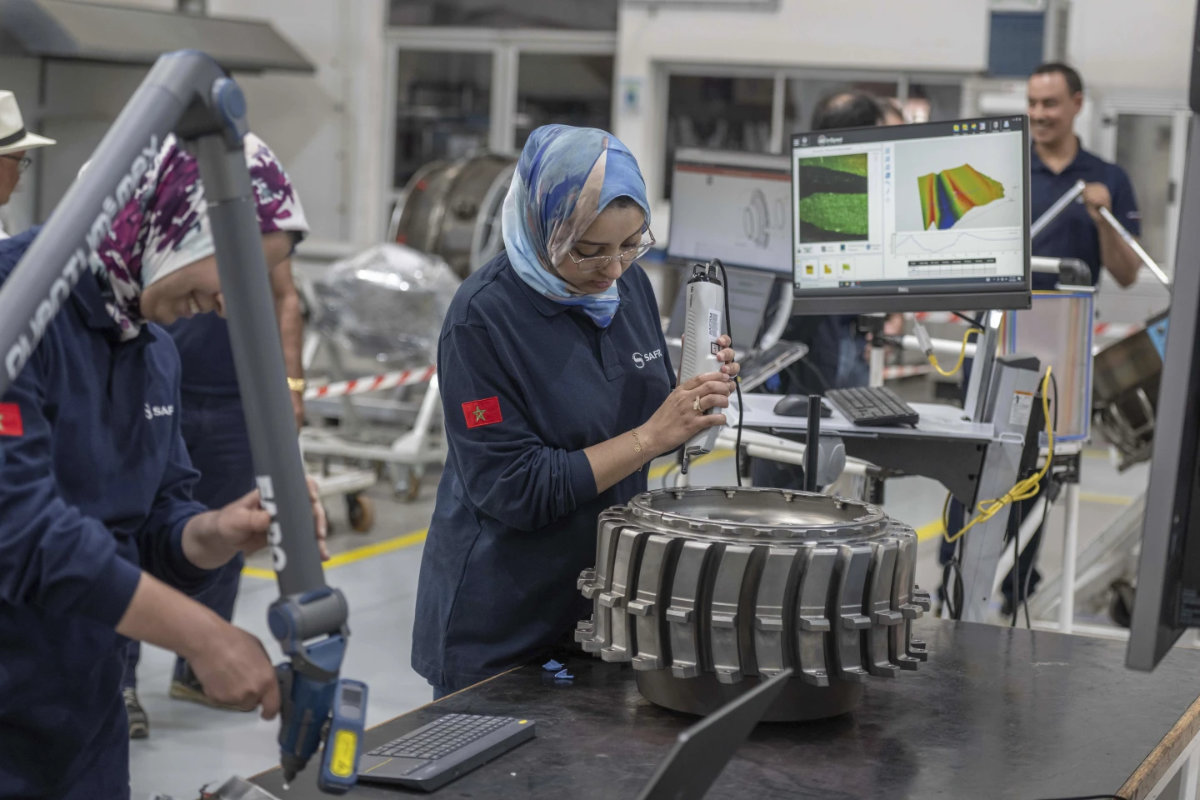
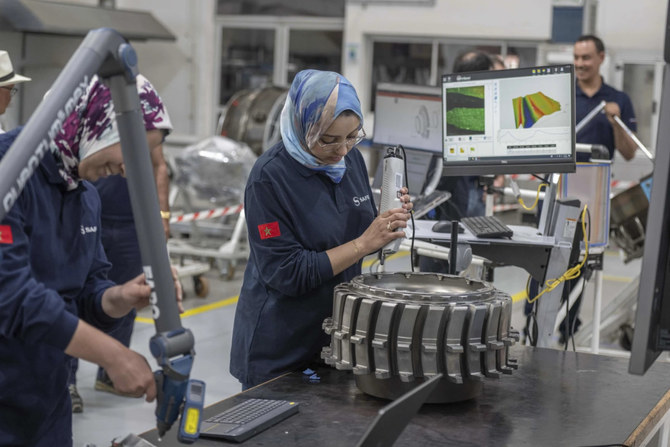
Women workers repair aircraft parts inside Safran Aircraft Engines repair plant outside of Casablanca, Morocco on April 18, 2024. (AP photo)
Despite hopes among its cheerleaders, the air travel industry faces headwinds. When demand rebounded after much air traffic stopped during the pandemic, manufacturers faced challenges building enough planes to meet demand from airlines. For Boeing, delays caused by supply chain issues were compounded by high-profile emergencies and deadly crashes that further curtailed deliveries.
From eastern Europe to southeast Asia, new levels of demand have forced manufacturers to seek out new locations to build and repair parts.
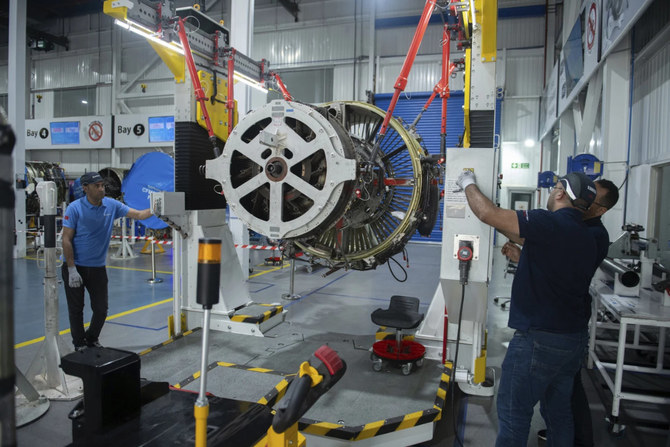
Safran Aircraft Engines, a French manufacturer, sends engines for Boeing 737s and Airbus 320s to a repair plant outside of Casablanca every six to eight years and then sends them back to airlines from countries including Brazil, Saudi Arabia, the United Kingdom and Ireland.
The company is among 130 in the sector active in Morocco, where parts ranging from wings to fuselages are produced in an industry that employs 42% women — a proportion that industry lobbyists say is larger than its European and North American manufacturing industry counterparts.
Though many companies eye Morocco as a source for comparatively cheap labor, the industry and government have worked to train skilled workers at IMA, an institute for aeronautics professions in Casablanca.
At an event celebrating Safran’s 25-year partnership with Royal Air Maroc, Safran CEO Jean-Paul Alary said he hoped Morocco’s aviation industry would continue to expand, particularly as industrywide demand increases and companies face labor shortages in Europe.
“It’s the access to well-qualified talent that’s been well-trained,” Alary said of Morocco. “They are the key players for achieving our goals.”