

Cairns continue to be silent guides in the desert 

1 / 3
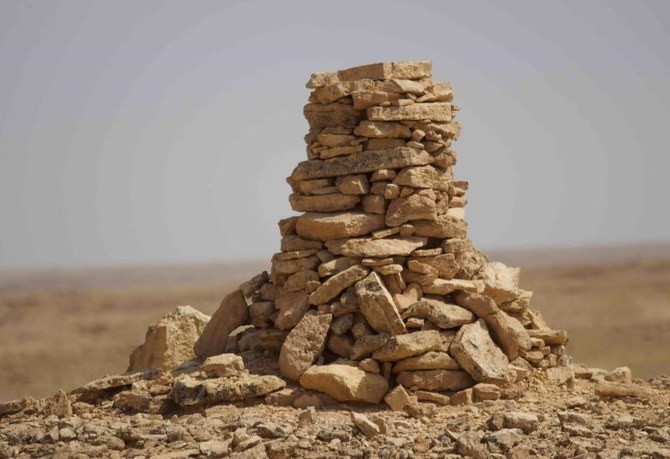
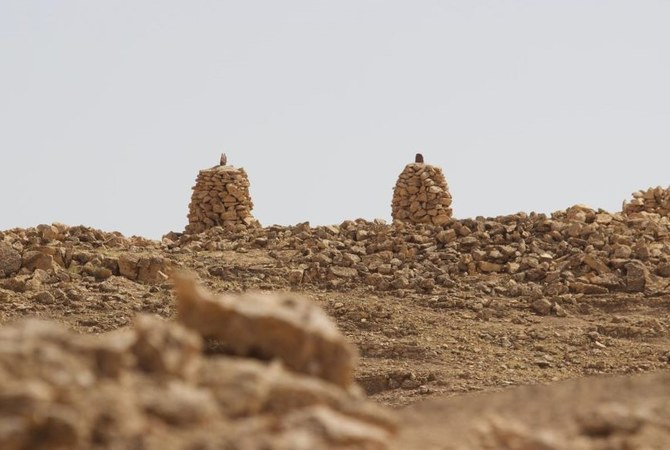
Cairns were typically built on natural hills and elevations to ensure they were visible from a distance. (SPA)
2 / 3
Cairns were typically built on natural hills and elevations to ensure they were visible from a distance. (SPA)
3 / 3
Cairns were typically built on natural hills and elevations to ensure they were visible from a distance. (SPA)
Short Url
Updated 23 April 2024
Follow

Cairns continue to be silent guides in the desert 

  • Used as resting spots, mark water sources for Bedouins, travelers
  • Some documented including for Hajj route from Kufa to Makkah 

RIYADH: Cairns, known as “rjum” in Arabic, are more than just heaps of stones scattered throughout the desert but have served as important landmarks and silent guides for Bedouins and travelers through the years, and will continue to do so, according to a local heritage researcher and archeologist. 

Shaped as pyramidal or circular heaps of stones, cairns mark valleys, ravines and deserts across the region. Their strategic placement atop hills or elevated ground provides a vantage point for hidden landscapes, said Abdulrahman Mohammed Al-Tuwayjiri, from the Rafha governorate, in an interview published by the Saudi Press Agency on Tuesday.

Bedouins revere cairns, which aid in visual exploration and have served as places of contemplation for lovers and poets over the years, said Al-Tuwayjiri.

Each cairn has its unique features, with some bearing names, possibly attributed to their builders or reflective of specific geographical locations. The care and preservation of cairns remain a priority for the Bedouin community, ensuring that their legacy endures for generations to come. 

Al-Tuwayjiri said these landmarks are constructed using stones of varying sizes with diameter, as well as height, between 2 and 3 meters. However, over time many have deteriorated and now measure about 1 to 2 meters in height. Some cairns have become mere piles of fallen stones along the roadside.

Abu Ishaq Ibrahim Al-Harbi, an early geographer, documented the landmarks and mile markers that guided Hajj pilgrims from Kufa to Makkah. These landmarks were spaced approximately 2 km apart, with closer intervals at road intersections and divergences to ensure that travelers maintained their direction.

Cairns were typically built on natural hills and elevations to ensure they were visible from a distance.

Cairns serve a variety of purposes beyond just guiding travelers. These silent stone structures are often designated resting areas for weary explorers on long journeys, function as gathering points for nomadic tribes, and can indicate the presence of water.

Arab, Islamic youth explore Saudi heritage, holy sites, progress 

Updated 31 January 2026
Follow

Arab, Islamic youth explore Saudi heritage, holy sites, progress 

  • Participants in Holy Sites Journey program tour Makkah, Madinah, and Jeddah, witnessing world-class pilgrim services

JEDDAH: The 11th Holy Sites Journey Program recently concluded in Jeddah, with more than 114 youth from 33 Arab and Islamic countries participating.

The 10-day program was organized by the Ministry of Sport, in cooperation with the Organization of Islamic Cooperation and the League of Arab States.

Participants traveled across Makkah, Madinah, and Jeddah, exploring sacred sites, performing Umrah, and witnessing the Kingdom’s exemplary Hajj organizational practices.

They also visited historical landmarks, experienced modern sports facilities, and observed urban development projects, gaining insights into Saudi Arabia’s rich heritage, spirituality, and progress.

At a closing event in Jeddah on Thursday, Ahmed Al-Ghamlas, assistant deputy minister of sports for youth affairs, praised the participants and emphasized the Kingdom’s commitment to hosting programs that empower the next generation.

He also encouraged those taking part to serve, on returning to their home countries, as ambassadors conveying the Kingdom’s advancements in services for pilgrims.

Al-Ghamlas added: “The program aimed to strengthen cultural and youth communication between Arab and Islamic countries, highlight the Kingdom's leading role in serving Islam and Muslims, and empower youth by building their capabilities.”

Ambassador Tarig Ali Bakheet, assistant secretary-general for humanitarian, cultural, and social affairs at the Organization of Islamic Cooperation, praised Saudi Arabia's efforts in organizing the program for young people from Arab and Muslim countries, noting it as a step to promote cultural dialogue among youth from Islamic nations.

Participants expressed their appreciation and gratitude for the opportunity to be part of the journey, witness the Kingdom’s transformative projects and world-class facilities, and pledged to share the knowledge, experiences, and insights they gained with peers in their home countries.

Bilal Jabiro, head of the Syrian Ministry of Youth delegation, told Arab News: “It was a great journey, and I enjoyed every minute of it. We sincerely thank Saudi Arabia for giving us this opportunity to strengthen our ties with youth from other Islamic nations and to see firsthand the great services and facilities the Kingdom offers to visitors and pilgrims.”

Youssef Issa Al-Sharifi, a member of the Supreme Council for Algerian Youth, praised the program’s objectives, saying: “Participation is an opportunity for every Arab Muslim.”

Meanwhile, Hussain Saeed from Oman told Arab News that he was happy to see the expansion of the Two Holy Mosques, adding: “It was a very informative and educational journey.”

Syrian influencer Azam Al-Khaldi said the program combined worship, knowledge, and history.

“It was an amazing journey, and I had the pleasure of showing my followers every step of the 10-day program,” he added.