


Saudi children find joy in Al-Hawwamah tradition

1 / 3
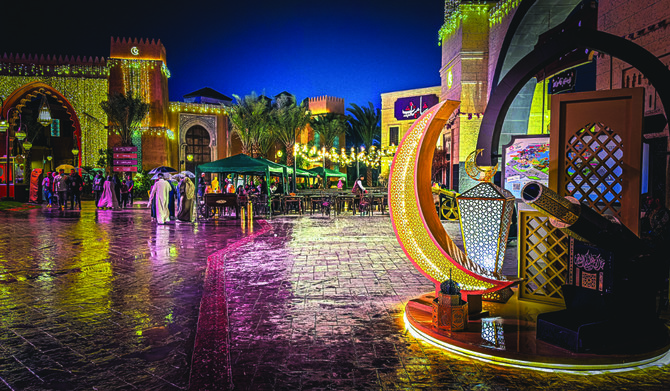
During Al-Hawwamah, children — excited to receive biscuits and candies — don their best garments and stroll around their neighborhood singing folk songs. (AN photo by Huda Bashatah/Supplied)
2 / 3
During Al-Hawwamah, children — excited to receive biscuits and candies — don their best garments and stroll around their neighborhood singing folk songs. (AN photo by Huda Bashatah/Supplied)
3 / 3
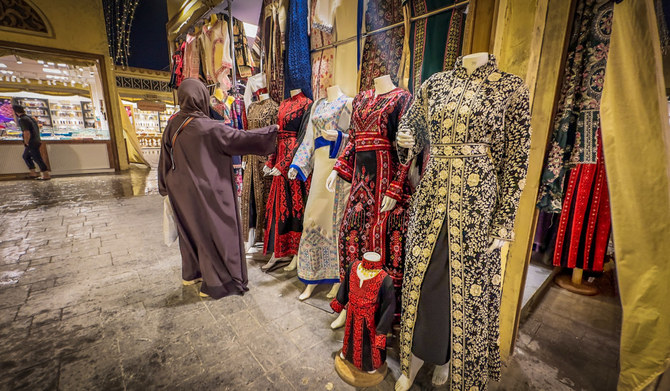
People nowadays, have mixed traditional garments and modern outfits when celebrating the night of Al-Hawwamah, combining old textiles and clothes with modern fashion styles. (AN photo by Huda Bashatah/Supplied)
Short Url
Updated 08 April 2024
Follow

Saudi children find joy in Al-Hawwamah tradition

  • Henna painting and storytelling are part of this candy-fueled festivity in the Najd region

RIYADH: Like the Gargee’an festival on the east coast of the Kingdom, children in the Najd region run around illuminated neighborhoods in traditional outfits, spreading holiday cheer for Al-Hawwamah. It is a time of joy and community bonding, as families open their doors and share in the festivities.

The ritual is celebrated during the month of Ramadan or on Eid Al-Fitr, depending on the family’s traditions, and is a popular custom in many parts of Riyadh, for example.


During Al-Hawwamah, children — excited to receive biscuits and candies — don their best garments and stroll around their neighborhood singing folk songs. (AN photo by Huda Bashatah/Supplied)

Al-Hawwamah means “wandering around” in English. During Al-Hawwamah, children — excited to receive biscuits and candies — don their best garments and stroll around their neighborhood singing folk songs.

Eid Al-Fitr, one of two Islamic holidays, marks the end of the holy month of Ramadan, during which Muslims fast from dawn to dusk, focusing on prayer and supplication throughout the day.

HIGHLIGHTS

• Al-Hawwamah means ‘wandering around’ in English.

• During Al-Hawwamah, a variety of group activities take place such as traditional dances, storytelling sessions, and henna painting.

• The celebration may extend beyond the neighborhood, with festivities being held in public places such as shopping malls.

While Eid Al-Fitr is celebrated differently across the world, with local cultures bringing their own flair to the holiday, Al-Hawwamah is a uniquely Saudi tradition.


During Al-Hawwamah, children — excited to receive biscuits and candies — don their best garments and stroll around their neighborhood singing folk songs. (AN photo by Huda Bashatah/Supplied)

“Al-Hawwamah in our neighborhood was amazing and simple. The imam of the mosque gathered the children. It was organized well,” said Rana Waleed, a local from Riyadh.

Sometimes, the celebration extends beyond the neighborhood, with some organizing festivities in public places such as shopping malls.

Families prepare Eid gifts for visitors, including candy, chickpeas, snacks, sugared almonds, and money. Gift money is usually distributed among relatives to younger children to save or spend on more Eid goodies.


During Al-Hawwamah, children — excited to receive biscuits and candies — don their best garments and stroll around their neighborhood singing folk songs. (AN photo by Huda Bashatah/Supplied)

During Al-Hawwamah, a variety of group activities take place such as traditional dances, storytelling sessions, and henna painting.

“When they announce Eid, the imam gathers people to collect zakat in the masjid’s area. During this time, he educates the children about zakat … Once they are done collecting zakat, they start Al-Hawwamah” said Eman Al-Abdulrahman, a Saudi mother from Riyadh.

Al-Hawwamah is not only a celebration of abundance but also a time to teach children about the values of generosity and community bonding.

The festival in Najd promotes meaningful connections between people and remains an important element of Saudi cultural identity, preserving its traditions while embracing the spirit of modernization and inclusion.


Threat to Kingdom’s security is ‘red line’ that will be ‘addressed and neutralized,’ Saudi envoy says

Updated 14 January 2026
Follow

Threat to Kingdom’s security is ‘red line’ that will be ‘addressed and neutralized,’ Saudi envoy says

  • Abdulaziz Alwasil tells UN Security Council the situation in southern Yemen is ‘a just cause with social and historic dimensions’ that can only be resolved through dialogue
  • Recent military activity in the south was unilateral, resulting in an escalation that harms the interests of Yemeni people and undermines efforts to address issues in the south, he said

NEW YORK CITY: Any attempt to threaten Saudi Arabia’s national security is a “red line” and will be met with decisive action, the Kingdom’s ambassador to the UN told the Security Council on Wednesday.

Speaking during a meeting of the council to discuss Yemen, Abdulaziz Alwasil said the situation in the south of the country is “a just cause with social and historic dimensions” that can only be resolved through dialogue.

“We stress that any attempt to threaten our national security is a red line, and we will not hesitate to take the necessary actions and steps to address it and neutralize it,” he added.

Alwasil reaffirmed Saudi Arabia’s support for Yemeni President Rashad Al-Alimi, the Presidential Leadership Council, and the Yemeni government in their efforts to achieve security, stability, development and peace while preserving national unity.

He said military activity by Southern Transitional Council forces in Hadramout and Al-Mahra on Dec. 2, 2025, was unilateral, did not have the approval of the Presidential Leadership Council, and was not carried out in coordination with the Coalition to Restore Legitimacy in Yemen.

It had resulted in an unjustified escalation that harmed the interests of the Yemeni people, undermined efforts to address the issues in the south, and ran counter to the coalition’s objectives, Alwasil added.

The Kingdom, working with its coalition partners, the Presidential Leadership Council and the Yemeni government, had moved to contain the situation by dispatching a military force to coordinate arrangements with the Southern Transitional Council in Aden, he said.

The aim was to ensure the return of the southern council’s forces to their previous positions outside of Hadramout and Al-Mahra, and the handover of camps to legitimate government forces and local authorities in line with agreed procedures, Alwasil added.

He expressed regret over the military operations that took place in Hadramout and Al-Mahra, close to Saudi Arabia’s southern border, which he said posed a direct threat to the Kingdom’s national security, as well as the security of Yemen and regional stability. Such steps were extremely dangerous, he added, and contradicted the principles on which the Coalition to Restore Legitimacy in Yemen had been founded.

Alwasil welcomed a prisoner and detainee exchange agreement signed in Muscat on Dec. 23, which he described as an important humanitarian measure to alleviate suffering and build confidence.

He praised Oman for hosting and sponsoring the consultations and supporting negotiations, and commended the efforts of UN’s special envoy for Yemen, Hans Grundberg, the International Committee of the Red Cross and all others that has played a part.

Regarding the political efforts to resolve the crisis, Alwasil said Saudi Arabia welcomed President Al-Alimi’s call for an inclusive conference in Riyadh to bring together all stakeholders to discuss just solutions to the situation in southern Yemen.

Preparations for the conference have begun, he added, in cooperation with the Yemeni government and southern representatives, reflecting the close ties between the two countries and their shared interests in stabilizing Yemen.

He urged all southern stakeholders to participate actively and constructively in the talks, to help find comprehensive and just solutions that meet the legitimate aspirations of the people of southern Yemen.

Alwasil called on all Yemeni forces and stakeholders to cooperate and intensify their efforts to reach a lasting political settlement that would ensure security and stability.

He described the southern issue as “a just cause with social and historic dimensions,” adding that “the only way to address it is through dialogue that leads to a comprehensive political solution” based on nationally and internationally agreed terms of reference.