



RIYADH: Sanad Hourani was raised on philanthropic values from a young age which has inspired him to do more for his community.
Hourani and his friend Yousef Amjad established Subha, a Jeddah-based non-profit organization bringing the city’s youth together through charitable initiatives.
Hourani told Arab News recently: “I realized the need for it. As much as Saudi is a great country with all of its livelihood and blessings, there are some areas that still need that help and a lot of people are willing to give back.”
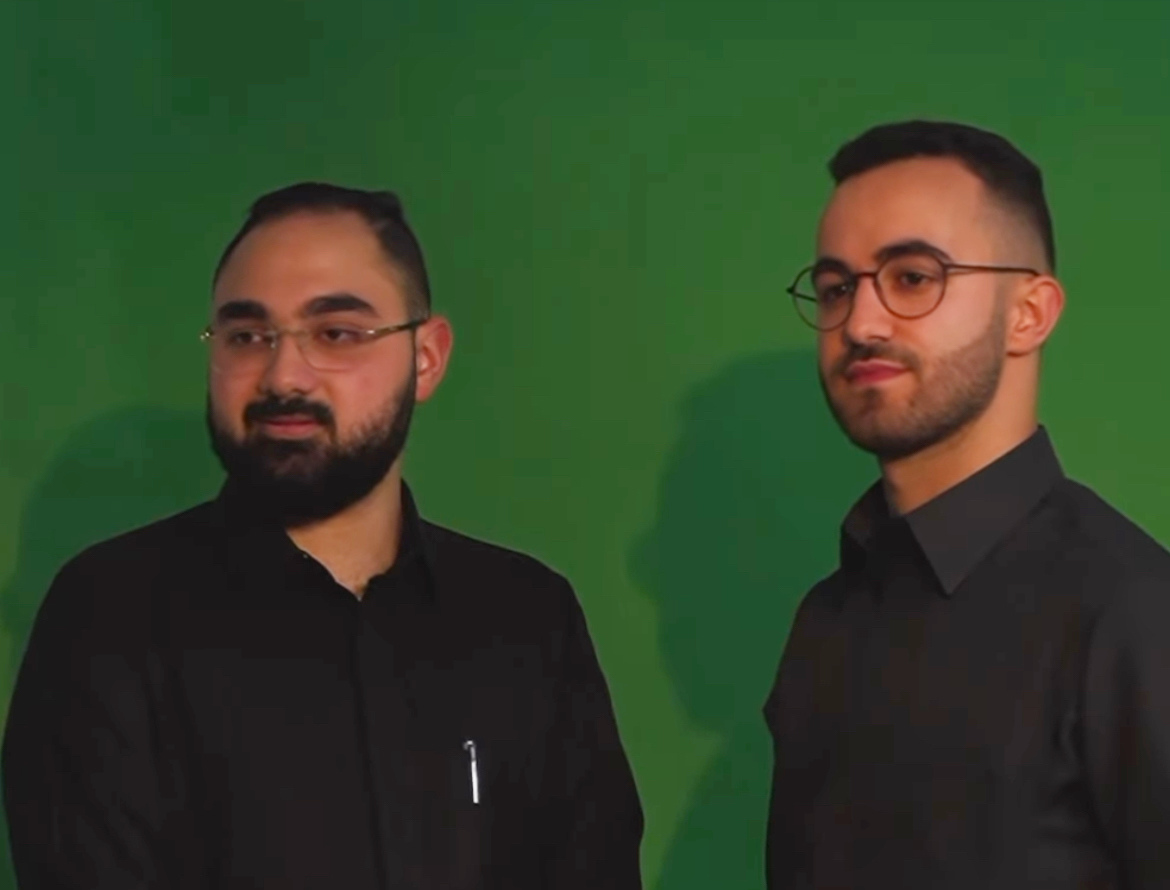
Yousef Amjad (left) and Sanad Hourani (right) established Subha, a Jeddah-based non-profit organization bringing the city’s youth together through charitable initiatives. (Supplied)
This year they set up a one-year partnership with AlOula, the Kingdom’s first non-profit organization, that has worked for over 60 years building the local community.
Dania Al-Maeena, CEO of AlOula, told Arab News: “The Subha community and individual volunteers help us distribute the iftar meals to the beneficiaries across the city, which set an example of giving during this holy month.”
Subha, a Jeddah-based non-profit organization, was born three years ago as a venture involving friends and family. Amjad and Hourani met in 2021 while they were both organizing different Iftar Saem initiatives. They decided to establish the Subha community together, as a way to complement their respective strengths and weaknesses.
Iftar Saem is an annual initiative under AlOula’s social and financial support program, which provides basic needs for 2,500 beneficiaries. Throughout the years AlOula has helped thousands of families.
Hourani said it was gratifying helping others. “The impact of it has been incredible. Last year, we helped feed around 7,000 individuals … one of my friends described it perfectly: ‘You know Sanad, humans are greedy by nature, so when you go against your nature, you get this indescribable feeling.’”
They are now recognized across Jeddah communities. “It’s such a great feeling to be someone that can help people,” he said.
Rather than taking a traditional approach to charity, the organization has focused on building a base of young adults to help out.
In previous years, the group would distribute Ramadan essentials which included rice, oil, sugar, salt, canned foods, and readymade meals.
Eid would also feature some fun festivities. Last year, they hosted a large celebration in Jeddah’s Al-Ruwais district with ice cream trucks and Eid gifts for the children attending.
Al-Maeena said: “Ramadan is the month of giving and it’s the time for the family to gather and enjoy the meal of iftar, and with this initiative we aspire to engage the community to give back to the less fortunate families so they can enjoy this Ramadan not only with the iftar meals but we, as AlOula, also provide rent for their housing, food baskets, Eid clothes and entertainment activities for the kids to ensure a quality of life for all.”
AlOula has partnered with multiple entities throughout the month, including the Middle School Happiness Club from the American International School of Jeddah, initiated by 13-year-old Aya Shata. The club aims to enhance well-being through giving and community service, evident in several Ramadan food drives and Eid clothing activities in collaboration with Aloula and others.
The organization has bigger plans for the future. “We wanted to start with Ramadan, because that’s what we know best and have the operation laid out for that, but the goal is to go beyond this month,” Hourani said.
The stereotype for charities in the region is large intimidating buildings and older employees, but Subha hopes to be a charity “built by the young, for the young,” Hourani said.
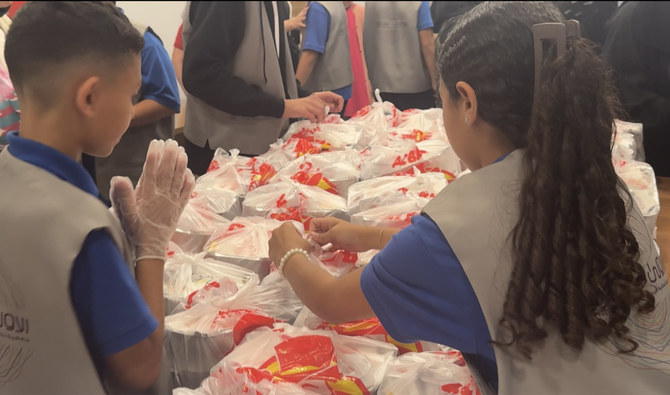
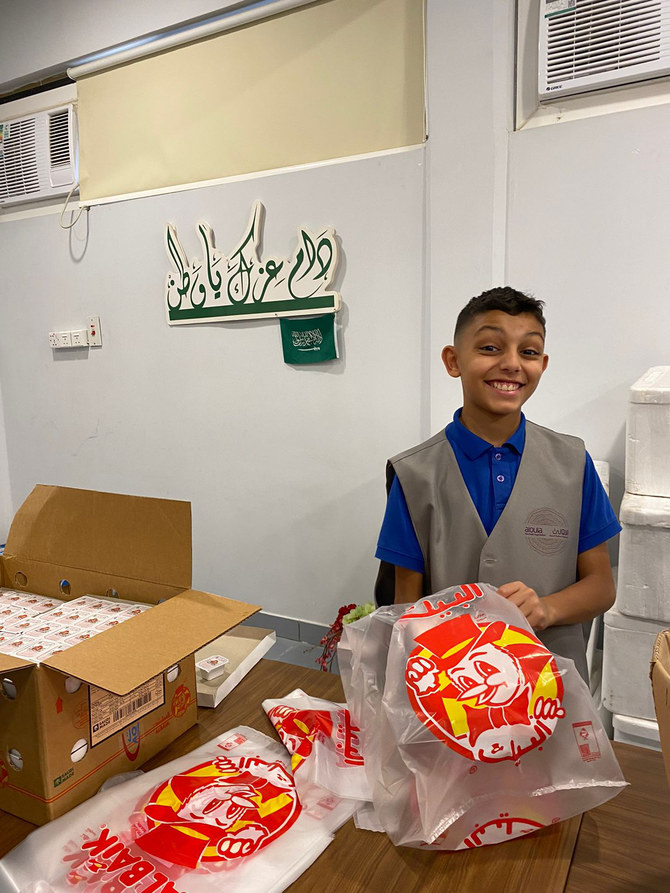
The initiative encourages children to join and help out with the packaging process.
“I joined Subha because I wanted to join a community that spreads happiness with every meal,” one of their volunteers said. “One thing we have in common is that we love to cultivate goodness without return. This is something in us and from us,” another said.
Over 400 individuals are currently part of the Subha community, 50 of whom take turns volunteering every day to distribute the packages. They plan to feed 12,000 people by the end of the holy month.
“With AlOula, we have the chance to promote this much more, which means we have the ability to talk to influencers or advertisers on Instagram. Now we’re collecting donations online, so we made it easier on everyone,” Hourani added.
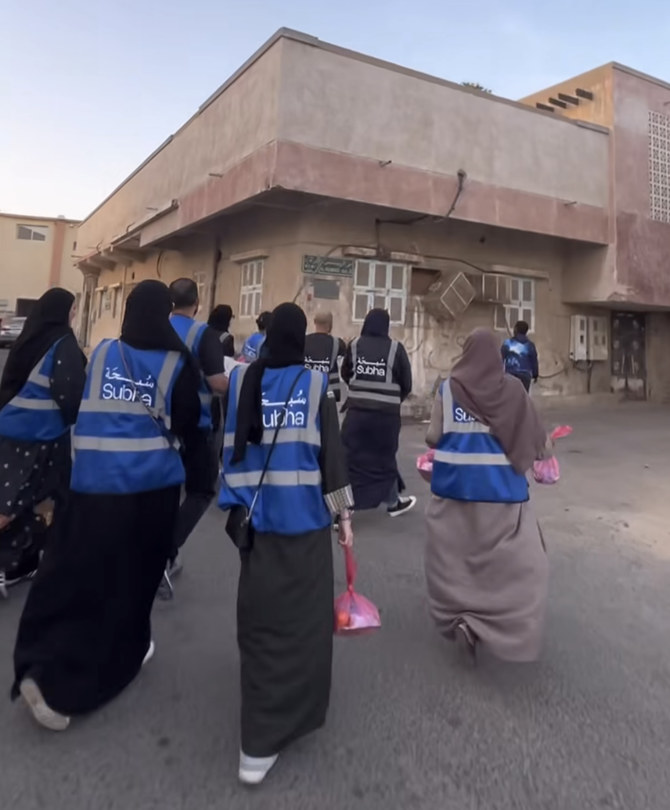
After a quality assurance check, the “maouna,” or iftar meals, are distributed to people in the underserved Al-Ruwais district in Jeddah.
Al-Maeena said: “This year we collaborated with Chicken & Chops and ICTC to provide nutritional meals that cover every meal group with fruits, dates, water, and main course of rice and chicken or fish and of course some of Ramadan specialties like sambosa.”
One truck is dedicated to passersby and another drops off packages to specific individuals, including fathers with health issues and widows in need. Around 700 meals are distributed daily.
One beneficiary, Yousef Mohammed Abdulrahman, thanked the young philanthropists: “God bless you. You made this month easier, especially for the families of Al-Ruwais district. There’s no lack of food provisions and we thank you and those helping out.”
The initiative is dependent on donations, so Subha relies on volunteers and members of the community with money to spare. Eight people can be fed with SR100 ($27).
“Without donations, we can’t do anything. Yes, we’re young men and women wanting to volunteer and move — we have the energy, power, and financial stability — but we need the help of other people to continue doing this,” Hourani said.
The collaboration is still welcoming, through AlOula’s website, donations to help those who need it for Ramadan and Eid.


