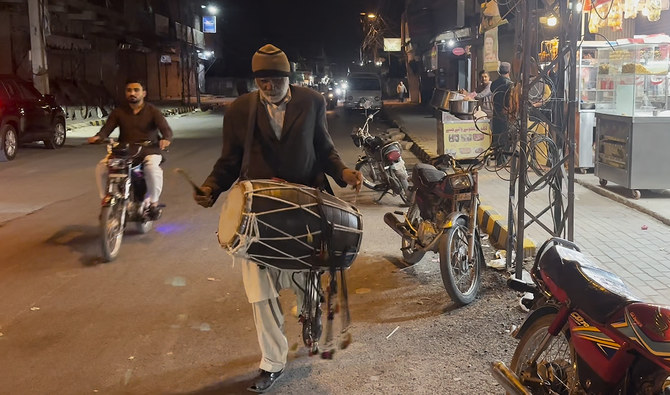
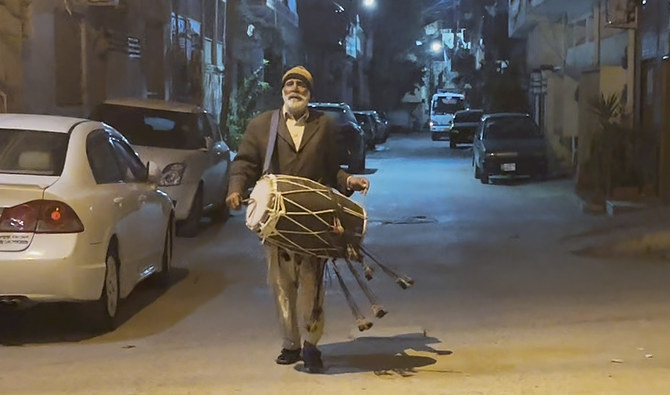
ISLAMABAD: The streets of Satellite Town, an old and upscale neighborhood in the Pakistani garrison city of Rawalpindi, reverberated with loud beats around 2am earlier this week as Imam Buksh pounded his colorful barrel drum with wooden sticks.
Houses and shops lit up behind the drummer and residents peeked out of their homes to catch a glimpse of the 63-year-old who daily roams the streets of Rawalpindi after midnight during the holy month of Ramadan, urging worshipers with his drum beats to wake up for the fast-keeping suhoor meal.
For decades a Ramadan tradition, the nocturnal practice finds itself at odds with modernity as old neighborhoods in the vast garrison city have made way for more modern housing colonies, and the drumbeaters’ usefulness has been eclipsed by TV, mobile phones and alarm clocks.
But Buksh is resolved to preserve the practice and continues his daily drum pounding from 2:30am until the Fajr prayers throughout Ramadan. For him, it’s a way to earn Allah’s blessings.
“I have been doing this here for approximately 16 years, to awaken people [for suhoor] which pleases Allah,” Buksh, who moved to Rawalpindi from the nearby Jhang district to work as a drum-beater at weddings, told Arab News on Monday.
“I fulfill my duty for Allah during the holy month of Ramadan and after completing my daily duty, I return to my place for rest every day … I used to do drum-beating in Rawalpindi back when there were only a few houses, and people used to give a rupee or a few coins as reward.”
Ramadan marks the month in which the Qur’an was revealed on Prophet Muhammad. Fasting, by abstaining from food and water from sunrise to sunset, is one of the five pillars of Islam, a grueling routine the devout repeat every day for a month.
In much of the Muslim world, particularly the Middle East, suhoor drummers call for people to wake up. Often people offer them money for their services.
“If someone gives something I accept it, otherwise I will keep going on my way as it makes me as well as people in the area happy,” Buksh said. “Many people are happy because of my drum-beating and request me from their rooftops to beat it more.”
He said he often got calls from people if he skipped a neighborhood.
“Just the other day, I received a call from someone in a colony where I used to beat the drum last year,” he said. “They asked why I had stopped coming to their area, and I explained that I cannot travel as much now.”
Buksh has four sons who have all followed in his footsteps. Two are drummers in the southern port city of Karachi, while two work from their hometown of Jhang.
Asked about his future plans, he said he wished to perform Umrah or a pilgrimage to the Muslim holy sites.
“I wish that someone would help me go to Umrah or pilgrimage to the holy places,” he said. “Wherever they can send me, I will pray for them and ask for more blessings for them from Allah.”


![]()
![]()

In Rawalpindi, 63-year-old drummer defies modernity to keep Ramadan suhoor spirit alive
Short Url
https://arab.news/2sms2
In Rawalpindi, 63-year-old drummer defies modernity to keep Ramadan suhoor spirit alive
- Imam Buksh roams Rawalpindi streets at night during Ramadan, waking up believers for pre-dawn meals
- Drummer says modern technology has threated the tradition but people still appreciate his suhoor wake-up calls
Latest updates


© 2026 SAUDI RESEARCH & PUBLISHING COMPANY, All Rights Reserved And subject to Terms of Use Agreement.