- Barrick Gold owns 50 percent stake in mine, remaining 50 percent owned by federal government, provincial government of Balochistan
- In out of court agreement in 2022, Barrick Gold ended long-running dispute with Pakistan and agreed to restart development
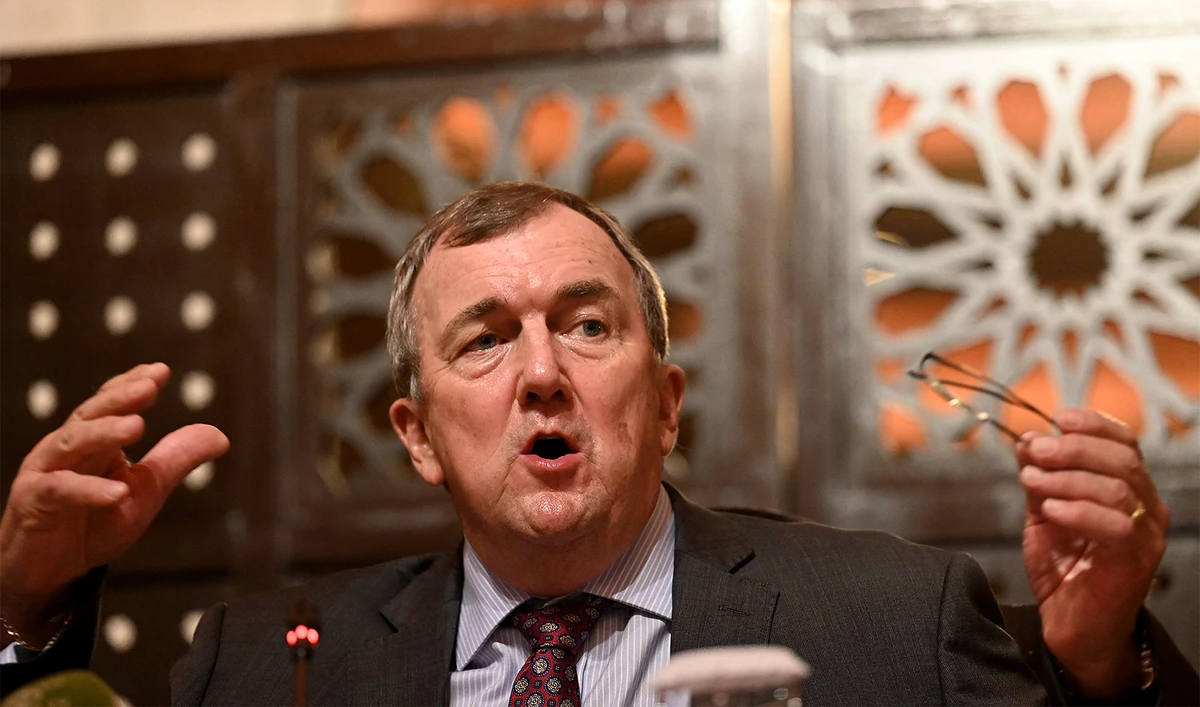
ISLAMABAD: Dennis Mark Bristow, the president and CEO of Barrick Gold Corporation, has said the Reko Diq mining project in southwestern Pakistan was “absolutely on track” and would be able to put out its first production by 2028.
Barrick Gold owns a 50 percent stake in Pakistan’s Reko Diq mine, with the remaining 50 percent owned by the central government of Pakistan and the administration of the remote and impoverished province of Balochistan, where the mine is located. Barrick considers the mine one of the world’s largest underdeveloped copper-gold areas.
In an out of court agreement in 2022, Barrick ended a long-running dispute with Pakistan and agreed to restart development. Under the deal, the company withdrew its case in an international arbitration court, which had slapped a penalty of $11 billion on Pakistan for suspending the contracts of the company and its partners in 2011.
The company’s license to mine the untapped deposits was canceled after the Supreme Court had ruled as illegal the award granted to it and its partner, Chile’s Antofagasta. Antofagasta has since left the project, saying its growth strategy was focused on production of copper and by-products in the Americas.
“Absolutely it’s on track, the team is working really well,” Bristow said in an interview to Pakistan’s ARY News, speaking about progress on the mine project.
“It’s a pioneering project. We are opening up a new frontier in mining where we are delivering something that should have been delivered in Balochistan a long time ago and it’s a privilege to be part of it.”
Bristow said Reko Diq was an “enormous project” in which the company would be investing $10 billion.
“We are going to build a mine that will last, on what we know today, at least 45 years, and what we believe that the potential is past a 100 years. So this is a big engine,” the CEO said.
“It’s going to process about 45 million tons of copper and gold bearing material every year and that’s phase one. Phase two, it will be 90 million tones. And then to get those 90 million tons you have got to mine another 50 percent of waste material to actually build this big open pit.”
He said currently the focus of the work was on making sure Barrick was able to produce the best designs and had employed the most qualified advisers and engineers in the world:
“So that when we put it all together, we will be able to make it work and therefore get our first production in 2028.”
Speaking about employment generation through the project, the Barrick CEO said the company wanted to make sure that a majority of Pakistanis and people from Balochistan were given jobs at the mine.
He said the company’s strategy was to look at the project as a “multi-generational investment,” saying it wanted all children under the age of 10 in the Reko Diq region to be in school by the end of this year.
“At the same time, we need to start developing the managing structure to be able to lead this big organization,” he said, explaining that the company had interviewed over 3,000 applicants from universities across Pakistan and selected 9 Baloch citizens, four women and five mean.
“And they are now working on our mines in Argentina and they will go through a program of development and gaining experience from all our different operations around the world,” Bristow said, saying 30 such graduates would be employed in training programs with the company by the end of the year.
By Jan-Feb next year, he said, 1,200 people would be employed, which would increase to 6,000 by 2026.
“By the time we peak production, we will have employed 10,000 people,” Bristow added.
Pakistan’s mineral-rich province of Balochistan is home to both religiously motivated militants and separatist Baloch insurgents, who have engaged in insurgency against the government for decades, demanding a greater share of the region’s resources and complicating investment and development efforts.