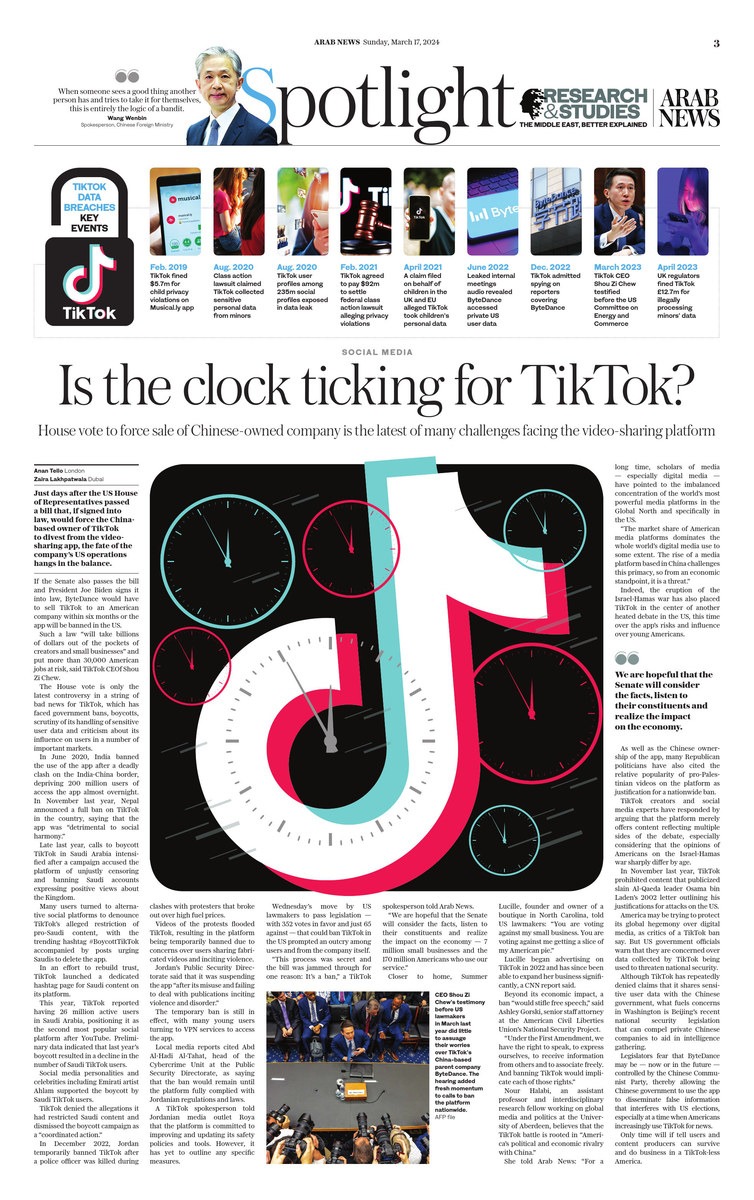

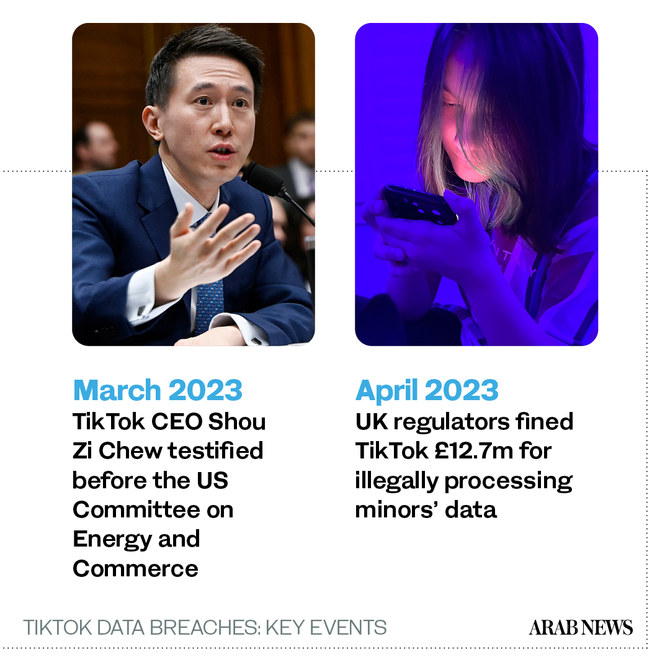

LONDON/DUBAI: Just days after the US House of Representatives passed a bill that, if signed into law, would force the China-based owner of TikTok to sell the video-sharing app, the fate of the company’s US operations hangs in the balance.
If the Senate also passes the bill and President Joe Biden signs it into law, ByteDance would have to sell TikTok to an American company within six months or the app will be banned in the US.
Such a law “will take billions of dollars out of the pockets of creators and small businesses” and put more than 30,000 American jobs at risk, said TikTok CEO Shou Zi Chew.
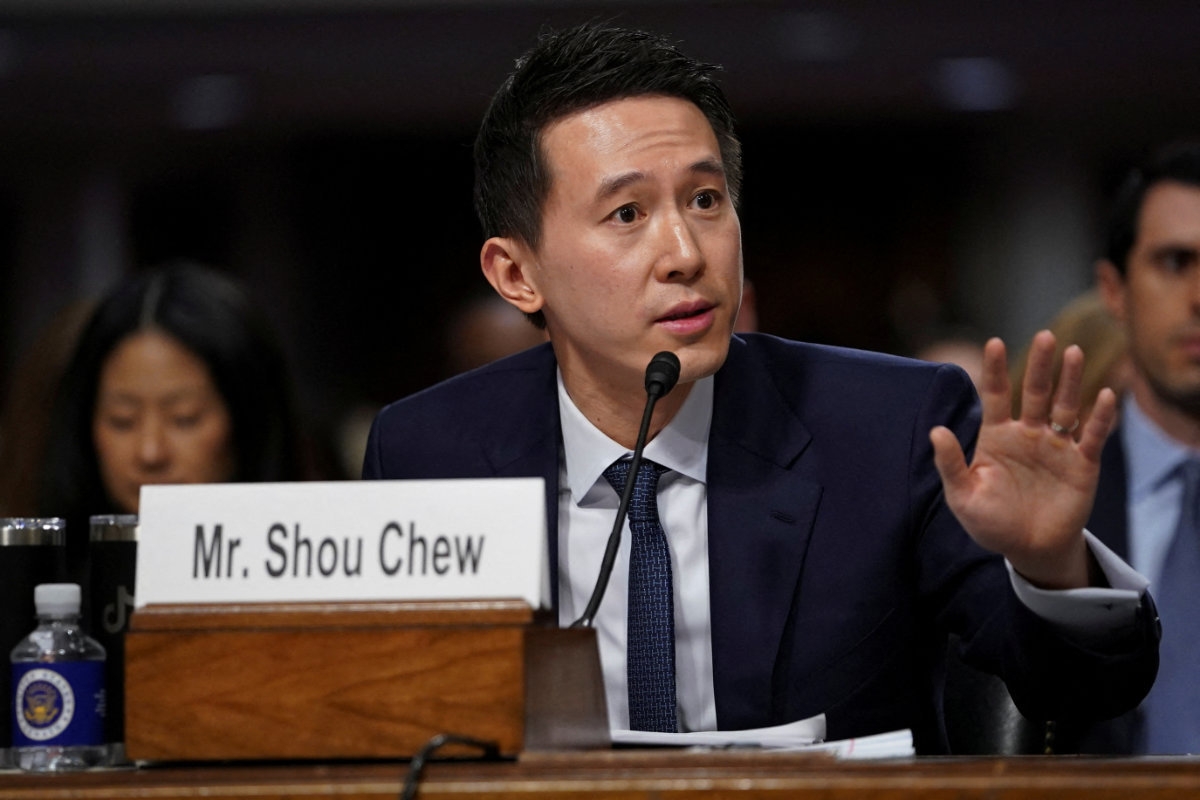
CaptionTikTok's CEO Shou Zi Chew testifies during the Senate Judiciary Committee hearing on online child sexual exploitation at the US Capitol in Washington, D.C., January 31, 2024. (REUTERS)
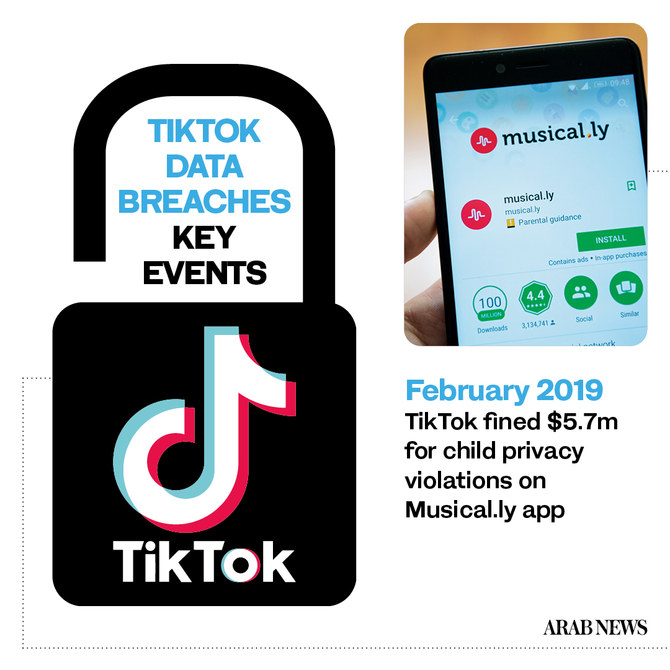
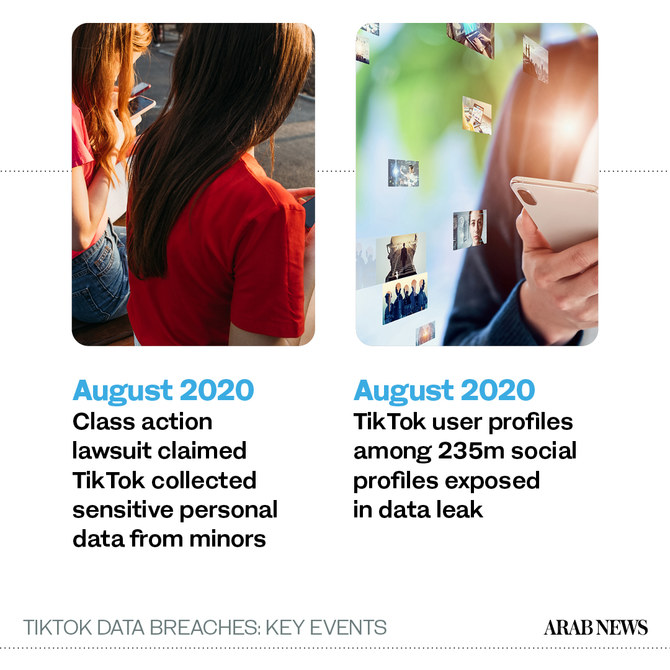
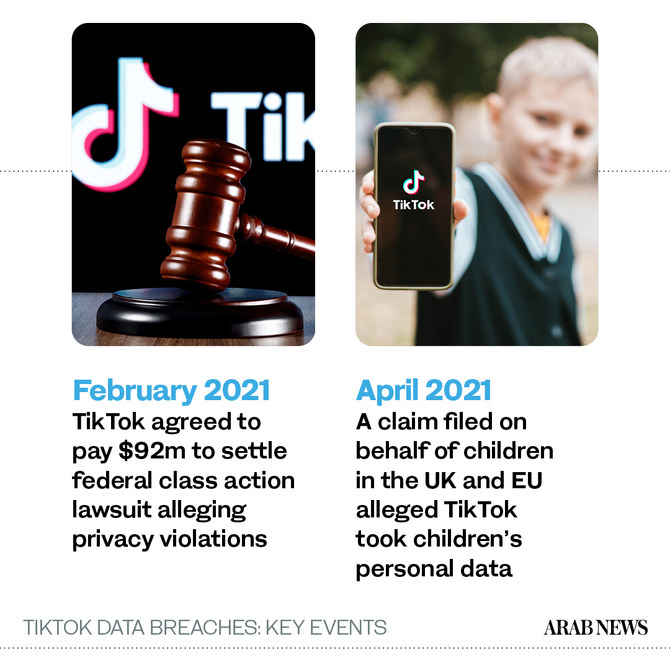
The House vote is only the latest setback in a string of bad news for TikTok, which has faced government bans, boycotts, scrutiny of its handling of sensitive user data and criticism about its influence on users in a number of important markets.
Many countries, including the UK, Australia, Canada, New Zealand, France and Taiwan, have prohibited the use of TikTok app on the work phones of government employees over privacy and cybersecurity concerns.
INNUMBERS
• US has the largest TikTok audience by far, with almost 150 million users engaging with it as of January 2024.
• Indonesia has around 126 million TikTok users.
• Brazil comes in third with almost 99 million users.
Source: Statista
In June 2020, India banned the use of the app nationwide after a deadly clash on the India-China border, depriving 200 million users access to the app almost overnight. In November last year, Nepal announced a full ban on TikTok in the country, saying that the app was “detrimental to social harmony.”
Late last year, calls to boycott TikTok in Saudi Arabia intensified after a campaign accused the platform of unjustly censoring and banning Saudi accounts expressing positive views about the Kingdom.
Many users turned to alternative social platforms to denounce TikTok’s alleged restriction of pro-Saudi content, with the trending hashtag #BoycottTikTok accompanied by posts urging Saudis to delete the app.
In an effort to rebuild trust, TikTok launched a dedicated hashtag page for Saudi content on its platform.

This year, TikTok reported having 26 million active users in Saudi Arabia, positioning it as the second most popular social platform after YouTube. Preliminary data indicated that last year’s boycott resulted in a decline in the number of Saudi TikTok users.
Social media personalities and celebrities including Emirati artist Ahlam supported the boycott by Saudi TikTok users. The private sector joined in as well, with social media news channel The Saudi Post closing its accounts on the platform.
Citing a source close to the Saudi First Division League earlier in November 2023, Asharq Al-Awsat newspaper reported that the second tier of professional football in Saudi Arabia had severed its relationship with TikTok due to the platform’s alleged actions against Saudi content.
TikTok denied the allegations it had restricted Saudi content and dismissed the boycott campaign as a “coordinated action.”
The company said in a statement: “The rumors regarding TikTok removing content related to Saudi Arabia are not true. We strongly reject these allegations that are inconsistent with our policies and values.”
In December 2022, Jordan temporarily banned TikTok after a police officer was killed during clashes with protesters that broke out over high fuel prices.
Videos of the protests flooded TikTok, resulting in the platform being temporarily banned due to concerns over users sharing fabricated videos and inciting violence.

Jordanian military personnel walk on December 16, 2022 in the southern city of Jerash in the funeral procession of a senior police officer who was killed in riots the previous day in southern Jordan. (AFP/File)
Jordan’s Public Security Directorate said that it was suspending the app “after its misuse and failing to deal with publications inciting violence and disorder.”
The temporary ban is still in effect, with many young users turning to VPN services to access the app.
Local media reports cited Abd Al-Hadi Al-Tahat, head of the Cybercrime Unit at the Public Security Directorate, as saying that the ban would remain until the platform fully complied with Jordanian regulations and laws.
During a talk at Yarmouk University titled “Visions of Modernization: Youth is the Focus of Concern,” the country’s prime minister, Bisher Al-Khasawneh, said one of the conditions for TikTok’s reactivation in the country is for the company to establish an office in Jordan or elsewhere in the region.
A TikTok spokesperson told Jordanian media outlet Roya that the platform is committed to improving and updating its safety policies and tools. However, it has yet to outline any specific measures.
Wednesday’s move by US lawmakers to pass legislation — with 352 votes in favor and just 65 against — that could ban TikTok in the US prompted an outcry among users and from the company itself.
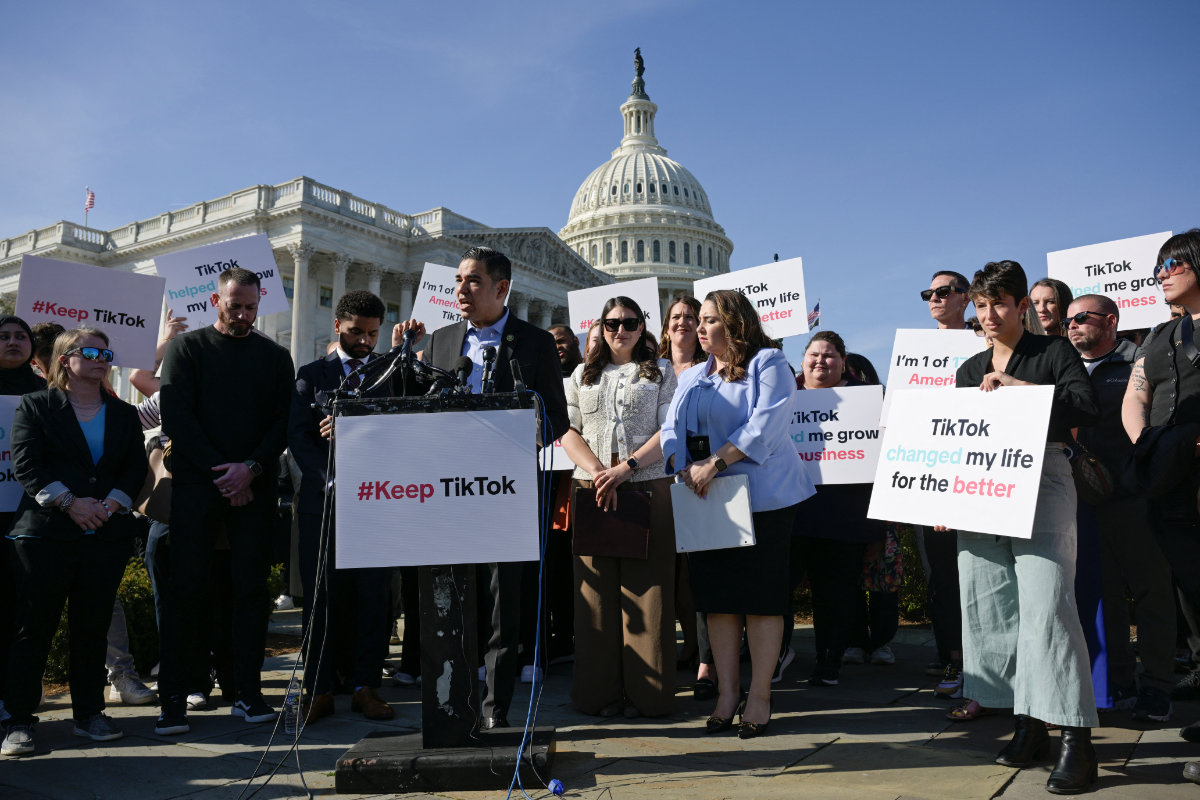
Rep. Robert Garcia of California speaks outside Capitol Hill in Washington, D.C., on March 12, 2024, as he is joined by fellow Democratic congressmen and TikTok creators during a press conference to voice their opposition to the "Protecting Americans from Foreign Adversary Controlled Applications Act," which woul,d effective ban TikTok in the US. (REUTERS)
“This process was secret and the bill was jammed through for one reason: It’s a ban,” a TikTok spokesperson told Arab News.
“We are hopeful that the Senate will consider the facts, listen to their constituents and realize the impact on the economy — 7 million small businesses and the 170 million Americans who use our service.”
Denouncing the arguments behind the bill as “bandit logic,” Chinese Foreign Ministry spokesperson Wang Wenbin said on Thursday that the US decision “runs contrary to the principles of fair competition and justice.”
He added: “When someone sees a good thing another person has and tries to take it for themselves, this is entirely the logic of a bandit.”

A man walks past a Tiktok booth during the Appliance & Electronics World Expo (AWE) in Shanghai on March 14, 2024. China on March 14, 2024 slammed the approval of a US bill that would ban TikTok unless it severs ties with its Chinese parent company, blasting Washington's "bandit" mentality and vowing Beijing would "take all necessary measures" to protect the interests of its companies overseas. (AFP)
Closer to home, Summer Lucille, founder and owner of a boutique in North Carolina, told US lawmakers: “You are voting against my small business. You are voting against me getting a slice of my American pie.”
Lucille began advertising on TikTok in 2022 and has since been able to expand her business significantly, a CNN report said.
Several other American business owners have echoed the sentiment. “Banning TikTok would shut down a lot of small businesses, including mine,” Brandon Hurst, a plant shop owner, told The Washington Post.
Gigi Gonzalez, a financial educator from Chicago, said that the ban would remove her biggest revenue source — a video host for brand deals, speaking opportunities and digital course sales.
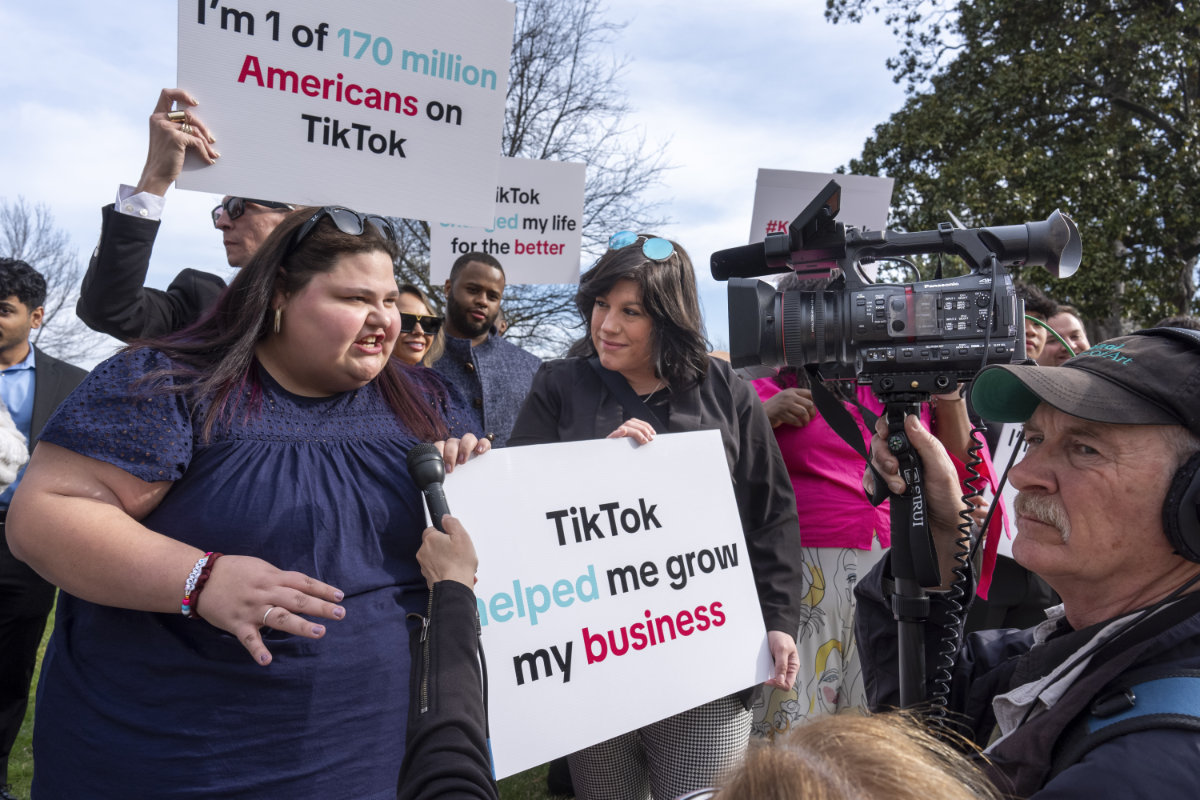
Supporters of TikTok do a TV news interview at the Capitol in Washington, D.C. on March 13, 2024, as the House of Representatives passed a bill that would lead to a nationwide ban of the popular video app if its China-based owner doesn't sell to an American owner. (AP Photo)
Before using TikTok, she had tried to reach people — unsuccessfully — through webinars. Now, Gonzalez reaches millions of people through TikTok, The Post was told.
Beyond its economic impact, a ban “would stifle free speech,” said Ashley Gorski, senior staff attorney at the American Civil Liberties Union’s National Security Project.
“Under the First Amendment, we have the right to speak, to express ourselves, to receive information from others and to associate freely. And banning TikTok would implicate each of those rights.”
She added that the US government cannot impose such a ban unless it is the only way to “prevent extremely serious, significant and immediate harm to national security.”
However, “there’s no public evidence of that type of harm,” Gorski said, adding that even if national security is threatened, there are better options than an outright ban.
Nour Halabi, an assistant professor and interdisciplinary research fellow working on global media and politics at the University of Aberdeen, believes that the TikTok battle is rooted in “America’s political and economic rivalry with China.”
She told Arab News: “For a long time, scholars of media — especially digital media — have pointed to the imbalanced concentration of the world’s most powerful media platforms in the Global North and specifically in the US.
“The market share of American media platforms dominates the whole world’s digital media use to some extent. The rise of a media platform based in China challenges this primacy, so from an economic standpoint, it is a threat.”

Marcus Bridgewater tends to his backyard herbs and flower garden in Spring, Texas, on March 14, 2024. The TikTok content creator speaks with The Associated on how TikTok has transformed his life and the adverse effect a TikTok ban iwill have on his online space for gardening. (AP)
She added: “From a geopolitical standpoint, the conversation on TikTok echoes the political discourse around the ‘Al Jazeera effect’ in the 2000s, when American politicians showed concern that Americans would turn to foreign media outlets to get insight on political issues, and therefore the US would lose control of strategic narratives on key debates on domestic matters and foreign policy issues.”
Indeed, the eruption of the Israel-Hamas war in Gaza in October last year has also placed TikTok at the center of another heated debate in the US, this time over the app’s perceived influence over young Americans.
As well as the Chinese ownership of the app, many Republican politicians have also cited the relative popularity of pro-Palestinian videos on the platform as justification for a nationwide ban.
TikTok creators and social media experts have responded by arguing that the platform merely offers content reflecting multiple sides of the debate, especially considering that the opinions of Americans on the Israel-Hamas war sharply differ by age.
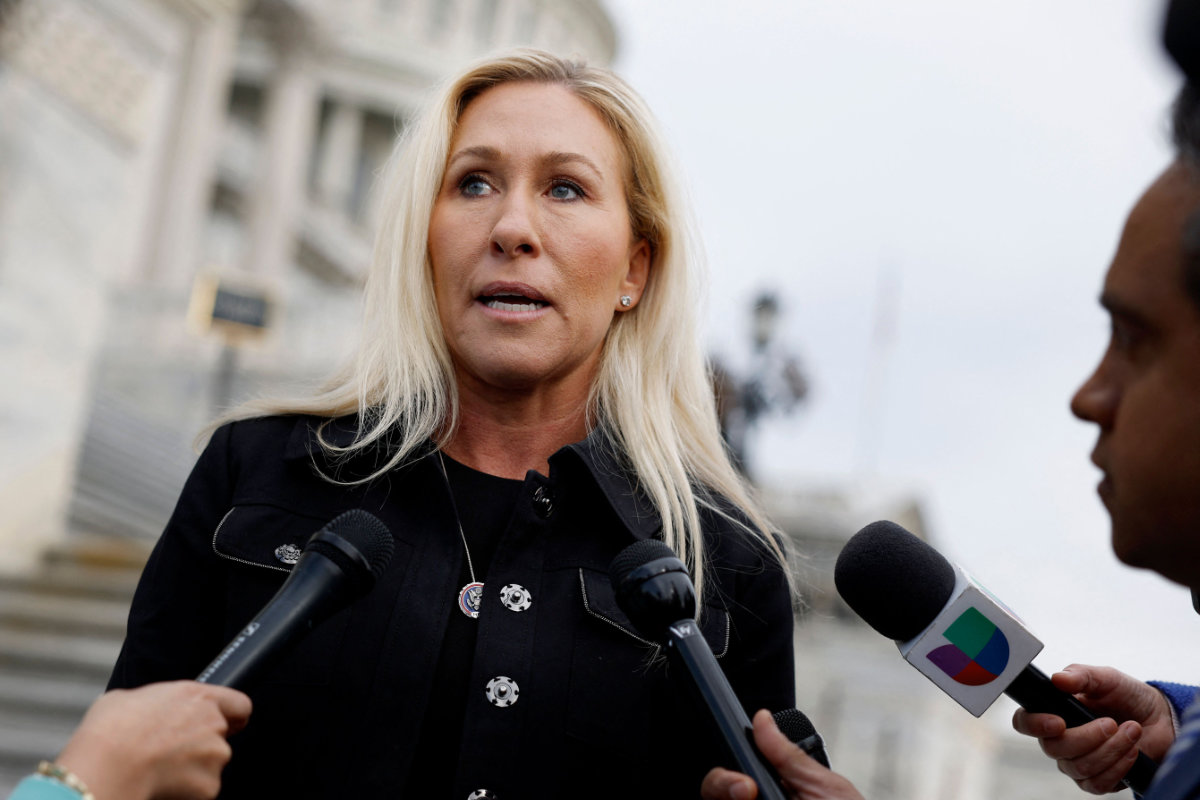
Republican Congresswoman Marjorie Taylor Greene says she voted for a bill seeking to ban TikTok in the US unless the Chinese-owned parent company ByteDance sells the popular video app within the next six months. (Getty Images/AFP)
In November last year, TikTok prohibited content that publicized slain Al-Qaeda leader Osama bin Laden’s 2002 letter outlining his justifications for attacks on the US.
“Content promoting this letter clearly violates our rules on supporting any form of terrorism,” TikTok said in a statement, but described reports that the 20-year-old letter was “trending” on the platform as inaccurate.
America may be trying to protect its global hegemony over digital media, as critics of a TikTok ban say. But US government officials warn that they are concerned over data collected by TikTok being used to threaten national security.
Although TikTok has repeatedly denied claims that it shares sensitive user data with the Chinese government, what fuels concerns in Washington is Beijing’s recent national security legislation that can compel private Chinese companies to aid in intelligence gathering.
Legislators fear that ByteDance may be — now or in the future — controlled by the Chinese Communist Party, thereby allowing the Chinese government to use the app to disseminate false information that interferes with US elections, especially at a time when Americans increasingly use TikTok for news.
A view shows the office of TikTok in Culver City, California. (REUTERS/File Photo)
Also, as TikTok’s critics frequently cite, internet users in China cannot access US-owned platforms like YouTube, X, Instagram, WhatsApp, Snapchat and Facebook.
Only time will if tell users and content producers can survive and do business in a TikTok-less America.
During previous attempts by the US government to force a sale of TikTok, when Donald Trump was in the White House, several American companies reportedly entered into talks with ByteDance to acquire TikTok’s US operations, only for the deals to stall.
Mamdouh Al-Muhaini, general manager of Saudi Arabia’s Al-Arabiya and Al-Hadath news channels, sees US lawmakers’ battle against TikTok as a “political drama” of their own creation, based on two arguments that “do not make sense and are not based on conclusive evidence.”
In a recent post on X, Al-Muhaini argued that TikTok is not alone among social media companies in collecting user data to inform algorithms.
“This is what all platforms do, including Facebook, Twitter (X) and Instagram,” Al-Muhaini said, adding that no evidence has been provided to back the claim that the Chinese government has used TikTok to spy on US or Western government institutions.