

Curiosity, honesty, trust: TikTok reveals key 2024 MENA marketing insights

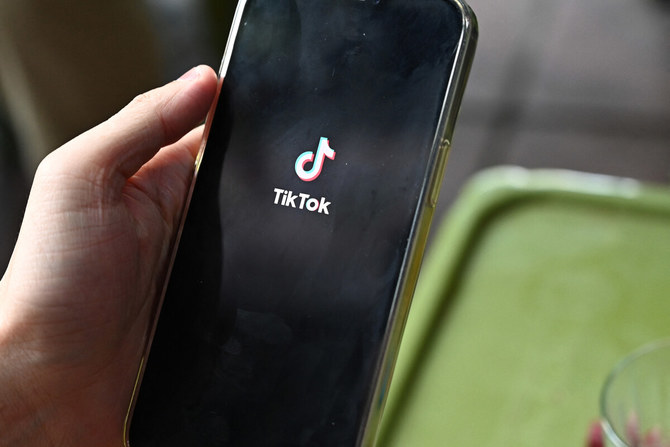
In its fourth edition, the TikTok report highlighted “the most practical and enduring trends,” categorized as Trend Signals. (AFP/File)
Short Url
Updated 31 January 2024
Follow

Curiosity, honesty, trust: TikTok reveals key 2024 MENA marketing insights

  • Report offers key business insights for engaging new customers
  • Saudi users show interest in exploring new topics and ideas

LONDON: Curiosity, honesty and trust are key to brand engagement on TikTok in the Middle East, a new report by the platform has found.

TikTok’s annual “What’s Next” report offers insights into prevailing user trends across the Middle East and North Africa region, presenting insights that marketers can use to grow their presence on the platform.

In its fourth edition, the TikTok report highlighted “the most practical and enduring trends,” categorized as Trend Signals. These encompass Curiosity Peaked, Storytelling Unhinged and Bridging the Trust Gap.

As part of Curiosity Peaked, the platform revealed that users are drawn to TikTok “out of curiosity about their world, popular culture, trends and brands,” adding that users in Saudi Arabia are 1.3 times more likely to acknowledge that the platform introduces them to new topics and expands their interests.

As a result, brands capable of eliciting curiosity are better placed to engage users with their advertisements, the report found.

Addressing what it defines as “a growing trust gap between consumers and brands,” TikTok revealed that MENA users favor brands that lead positive societal change and transparency, and which are able to establish “clear brand trust” and “have an open line of communication with their consumers and community.”

Shadi Kandil, general manager of Global Business Solutions for the Middle East, Turkiye, Africa, Central and South Asia at TikTok, hailed the platform’s journey of pushing creative boundaries.

He said: “Communities on TikTok are redefining traditional storytelling, fueled by a blend of curiosity, imagination, vulnerability and courage.

“For brands, this presents a huge opportunity to embrace creative bravery, build deeper community connections and engage with relevant audiences.”

TikTok said the report is based on data from the Global TikTok Marketing Science team, which used information from third parties, including online surveys, exposure to mock TikTok environments and advanced analytics.


Malaysia, Indonesia become first to block Musk’s Grok over AI deepfakes

Updated 5 sec ago
Follow

Malaysia, Indonesia become first to block Musk’s Grok over AI deepfakes

  • Authorities in both countries acted over the weekend, citing concerns about non-consensual and sexual deepfakes
  • Regulators say existing controls cannot prevent fake pornographic content, especially involving women and minors
KUALA LUMPUR: Malaysia and Indonesia have become the first countries to block Grok, the artificial intelligence chatbot developed by Elon Musk’s xAI, after authorities said it was being misused to generate sexually explicit and non-consensual images.
The moves reflect growing global concern over generative AI tools that can produce realistic images, sound and text, while existing safeguards fail to prevent their abuse. The Grok chatbot, which is accessed through Musk’s social media platform X, has been criticized for generating manipulated images, including depictions of women in bikinis or sexually explicit poses, as well as images involving children.
Regulators in the two Southeast Asian nations said existing controls were not preventing the creation and spread of fake pornographic content, particularly involving women and minors. Indonesia’s government temporarily blocked access to Grok on Saturday, followed by Malaysia on Sunday.
“The government sees non-consensual sexual deepfakes as a serious violation of human rights, dignity and the safety of citizens in the digital space,” Indonesia’s Communication and Digital Affairs Minister Meutya Hafid said in a statement Saturday.
The ministry said the measure was intended to protect women, children and the broader community from fake pornographic content generated using AI.
Initial findings showed that Grok lacks effective safeguards to stop users from creating and distributing pornographic content based on real photos of Indonesian residents, Alexander Sabar, director general of digital space supervision, said in a separate statement. He said such practices risk violating privacy and image rights when photos are manipulated or shared without consent, causing psychological, social and reputational harm.
In Kuala Lumpur, the Malaysian Communications and Multimedia Commission ordered a temporary restriction on Grok on Sunday after what it said was “repeated misuse” of the tool to generate obscene, sexually explicit and non-consensual manipulated images, including content involving women and minors.
The regulator said notices issued this month to X Corp. and xAI demanding stronger safeguards drew responses that relied mainly on user reporting mechanisms.
“The restriction is imposed as a preventive and proportionate measure while legal and regulatory processes are ongoing,” it said, adding that access will remain blocked until effective safeguards are put in place.
Launched in 2023, Grok is free to use on X. Users can ask it questions on the social media platform and tag posts they’ve directly created or replies to posts from other users. Last summer the company added an image generator feature, Grok Imagine, that included a so-called “spicy mode” that can generate adult content.
The Southeast Asian restrictions come amid mounting scrutiny of Grok elsewhere, including in the European Union, Britain, India and France. Grok last week limited image generation and editing to paying users following a global backlash over sexualized deepfakes of people, but critics say it did not fully address the problem.