

Saudi authorities urge public to avoid food waste during Ramadan

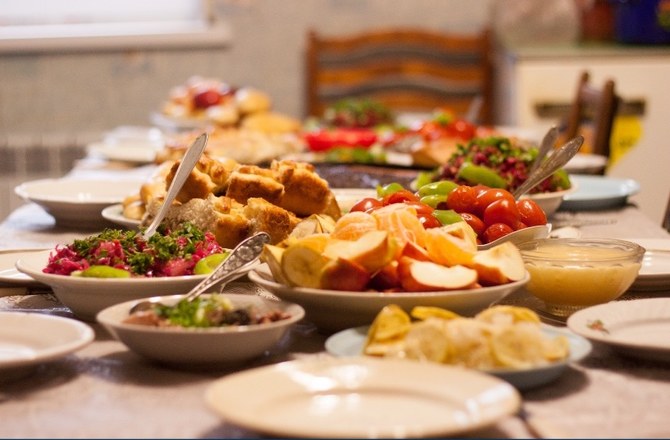
Saudi Arabia witnesses the loss and waste of large quantities of meat annually. (X/@MEWA_KSA)
Short Url
Updated 14 March 2024
Follow

Saudi authorities urge public to avoid food waste during Ramadan

  • Ministry of Environment, Water and Agriculture says large amount of meat ends up in trash during Ramadan and the waste creates challenges for the agricultural sector
  • The average person in the Kingdom wastes more than 184 kg of food each year, amounting to a total of 4 million tons nationwide, worth $10.7 billionThe average person in the Kingdom wastes more than 184 kg of food each year, amounting to a total of 4 milli

RIYADH: Authorities in Saudi Arabia have called for “rational behavior” when people break their fast during Ramadan, to help reduce the amount of meat that is wasted in the Kingdom during the holy month.

The Ministry of Environment, Water and Agriculture said large quantities of meat end up in landfill and dumps during Ramadan, and this waste creates challenges for the agricultural sector.

Studies have found that the average person in the Kingdom wastes more than 184 kilograms of food each year, amounting to a total of about 4 million tons nationwide. This represents the loss of 18.9 percent of all food, at a cost of more than SR40 billion ($10.7 billion) a year. Experts say one of the main reasons for this is declining public awareness of food waste.

Ministry figures show that 444,000 tons of poultry meat are wasted each year in Saudi Arabia, 22,000 tons of lamb, 13,000 tons of camel meat, 69,000 tons of fish, and 41,000 tons of other kinds of meat.

Officials urged the public to be more aware of the important need to reduce meat waste and to adopt more rational patterns of consumption to address the challenge, help achieve sustainable development goals, and preserve natural resources.

They highlighted the importance of proper planning before buying food, taking into account the number of people to be fed, and of not serving excessive amounts of food in a single meal. It also recommended saving leftovers to use in subsequent meals, or donating uneaten food.

The ministry also said it has introduced several initiatives designed to raise awareness of the issues surrounding food waste and encourage the public to adopt more sustainable consumer behaviors. These include campaigns to educate people about ways to reduce and preserve meat and reduce waste, including through improved storage and refrigeration.


Saudi Arabia advances in Universal Health Coverage index

Updated 12 December 2025
Follow

Saudi Arabia advances in Universal Health Coverage index

  • Life expectancy in Kingdom rose from 74 in 2016 to 79.7 in 2025

RIYADH: Saudi Arabia has made notable progress in the Universal Health Coverage Service Coverage Index, reinforcing its position among leading nations in global health indicators, according to the latest data released by the World Health Organization and the World Bank.

The Kingdom recorded a score of 83 points in the latest UHC update, marking a nine-point increase within two years and placing Saudi Arabia among countries classified as having high-level health service coverage.

The steady rise reflects sustained improvements over the past two decades and underscores the impact of the Kingdom’s Health Sector Transformation Program under Saudi Vision 2030.

The UHC Service Coverage Index is one of the internationally recognized Sustainable Development Goal indicators and measures access to essential health services across key areas, including preventive care, treatment, and system capacity.

Progress in the index is closely linked to broader development outcomes such as improved quality of life, reduced disease burden, and enhanced social well-being.

Saudi Arabia’s advancement has been driven by a strategic focus on preventive healthcare, strengthened primary care services, expanded early screening programs, and increased health system readiness.

The transformation has also been supported by rapid digitalization, including platforms such as Sehhaty and the Seha Virtual Hospital, which have expanded access to care and improved service efficiency nationwide.

These reforms have translated into measurable public health gains. Life expectancy in Saudi Arabia rose from 74 years in 2016 to about 79.7 in 2025, bringing the Kingdom close to its Vision 2030 target of 80 years and highlighting the effectiveness of preventive and treatment programs.

Health Minister Fahad Abdulrahman AlJalajel said the progress reflected the tangible outcomes of Vision 2030 and sustained leadership support.

He said: “The improvements we see today in international health indicators demonstrate the real impact of the Kingdom’s health transformation, which prioritizes prevention, primary care empowerment, and digital health solutions. Raising life expectancy to 79.7 years is the result of an integrated effort focused on improving people’s health and quality of life.”

Saudi Arabia’s progress in the UHC index further strengthens its standing among G20 countries and underscores the Kingdom’s commitment to building a more efficient, resilient, and sustainable health system, with people at the center of national development.