ISTANBUL: Top Turkish officials including the foreign minister and intelligence chief will attend a security meeting in Iraq on Thursday, a Turkish ministry spokesman said.
Turkiye’s Foreign Minister Hakan Fidan, Defense Minister Yasar Guler and spy chief Ibrahim Kalin will all attend the meeting in Baghdad, spokesman Oncu Keceli told reporters Wednesday.
Turkiye often carries out ground and air operations in northern Iraq against positions of the outlawed Kurdistan Workers’ Party (PKK), which has waged a decades-long insurgency against the Turkish state.
“Security and military cooperation will be a priority during the talks,” said Keceli, adding that joint counter-terror steps would also be discussed.
“We see Iraqi authorities’ portrayal of the PKK as a common security threat as a sign that Iraq has started to show the resolve to fight the PKK,” the spokesman said.
Over the past 25 years Turkiye has operated several dozen military bases in northern Iraq in its war against the PKK, which Ankara and its Western allies consider a “terrorist” group.
Last week, Turkish President Recep Tayyip Erdogan said Turkiye would have permanently resolved problems related to the Iraq border “this summer.”
Keceli also said he hoped an oil pipeline between Turkiye and Iraq that was shut down in March 2023 would reopen “as soon as possible.”
The details would be discussed during Erdogan’s coming visit to Iraq, he added.


Turkish officials due at security meeting in Iraq Thursday

https://arab.news/8mkts
Turkish officials due at security meeting in Iraq Thursday

- Turkiye’s Foreign Minister Hakan Fidan, Defense Minister Yasar Guler and spy chief Ibrahim Kalin will all attend the meeting in Baghdad
- Security and military cooperation will be a priority during the talks


Can citizen-led clinics fill the void left in Sudan’s shattered health system?
- Grassroots initiatives like Nubia Health are filling critical gaps, as Sudan’s health system collapses and international aid remains minimal
- Diaspora-backed models are emerging as resilient alternatives, offering sustainable, community-based care in place of state structures
LONDON: As Sudan’s war forces millions to flee, the remote frontier town of Wadi Halfa, near the Egyptian border, has become a bottleneck for displaced families — and a focal point of the country’s spiraling public health crisis.
Where trauma, hunger, and war wounds converge daily, one clinic is offering desperate families much-needed respite. Grassroots health initiatives like this are filling the gaps where state and international aid agencies have fallen short.
Since April 2023, when a violent power struggle between the Sudanese Armed Forces and the paramilitary Rapid Support Forces plunged the country into civil war, Sudan has faced a multi-layered catastrophe.
More than 12 million people have been displaced, and the conflict between the SAF and RSF — which some estimates suggest has killed over 150,000 — has triggered the world’s largest humanitarian crisis.
In Northern State, Wadi Halfa has transformed from a sleepy border town into a safe haven for thousands of people on the move.

Here, a grassroots, diaspora-supported facility — Nubia Health — is offering a community-based model of care built to withstand the collapse of the national health system.
Dr. Majdi Osman, a doctor and scientist at the University of Cambridge and the founder of Nubia Health, recently returned from Sudan and noted that the city’s population had “grown so much” since his last visit.
“So many of the people who were there have come from other parts of Sudan, from Khartoum and from Darfur and Blue Nile, the Nuba Mountains. The city itself has become much more diverse,” he said.
Many new arrivals, including doctors, had originally intended to reach Egypt, which now hosts the largest share of Sudanese refugees. Instead, they remained in Wadi Halfa, giving the town newfound status as a place of refuge.
Despite the sanctuary it offers, signs of war are everywhere. Osman said that while the conflict has not reached Wadi Halfa directly, a heavy military presence is felt through checkpoints and a 10 p.m. curfew.

Even here, he said, “you do feel like life is very different to how it once was before the war, where it was much freer and people could congregate and move around freely.”
The new arrivals carry the hidden scars of a brutal conflict, but it is often medical emergencies — chronic, unmanaged, and severe — that finally force families to flee.
Osman described one family who stayed in Khartoum for months despite the violence, only moving north when a dire health crisis struck. One of their children appeared to have leukemia and was deteriorating rapidly, while the mother, who had severe kidney disease, needed dialysis.
“Eventually they were able to transfer their son through to Egypt to get treatment, but the rest of the family stayed in Sudan because they couldn’t move over,” he said.
Such trauma is widespread. Health emergencies are “triggering their need to move to Wadi Halfa,” he said, leading to “families separated because of the medical needs of one or two members of the family.”

Maternal health has also suffered devastating blows. Osman recounted the story of an expectant mother who “unfortunately went into labor early and lost her child” while fleeing to Wadi Halfa. Now pregnant again, her hope is simply to deliver safely and raise her baby with access to basic child healthcare.
Beyond injuries and chronic illness, the collapse of supply chains has produced severe, preventable health crises. Osman recalled meeting a teacher whose student had gone blind from untreated Vitamin A deficiency — “something that you only hear or read about in the UK in medical textbooks.”
He said the health effects of the war are “very obvious,” and that the absence of medical support appears in “every conversation.”
The tragedies unfolding in Wadi Halfa reflect a national health system in free fall. Even before the war, decades of underinvestment left Sudan’s system fragile, with 70 percent of healthcare providers concentrated in Khartoum, which serves just 20 percent of the population.
Since fighting began, fewer than 30 percent of health facilities remain functional.

The World Health Organization has verified 198 attacks on health infrastructure since April 2023, resulting in 1,735 health workers and patients killed, and 438 wounded.
Hospitals have been looted, bombed, and militarized, including the occupation of Al-Nuhud Hospital in West Kordofan. WHO Director-General Tedros Adhanom Ghebreyesus has said such attacks “must stop.”
The public health crisis is now spiraling. Medecins Sans Frontieres teams report extreme levels of acute malnutrition, finding that more than 70 percent of children under 5 who fled El-Fasher were acutely malnourished.
Malnutrition is also widespread in Khartoum and Blue Nile, driven by “inadequate food, disease, insecurity, lack of livelihoods and unsafe living conditions.”
Cholera, measles, and malaria are spreading rapidly. Since cholera’s resurgence in July 2024, more than 83,000 cases and 2,100 deaths have been reported. Immunization coverage has fallen to its lowest level in 40 years.

Women and children are bearing the heaviest burden. Maternal, newborn, and child health services typically collapse early in conflict, and pregnant women are increasingly giving birth without skilled attendants.
Even before the war, the UN Children’s Fund estimated that 78,000 children under 5 were dying annually from preventable causes — a number expected to triple.
Gender-based violence is also surging, with reports of rape used systematically as a weapon of war, including against very young girls. Survivors have almost no access to mental health or protection services.
In this vacuum, grassroots initiatives such as Nubia Health are emerging as resilient new models.
Osman described his shock upon returning to Sudan last month expecting a major international humanitarian presence responding to “the largest humanitarian disaster in the world at the moment.” Instead, he found “there’s nothing.”
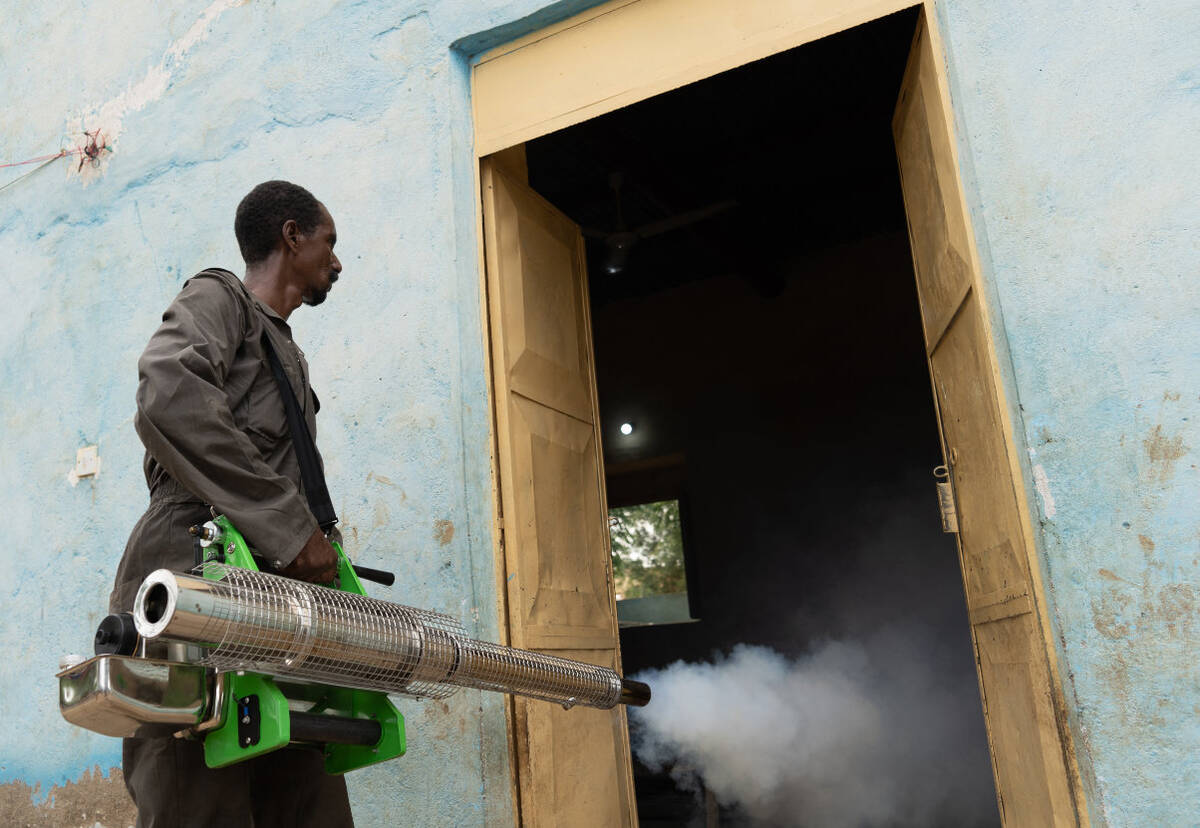
Support was instead coming from ordinary Sudanese. “It’s just people in the neighborhoods providing support to each other. Many houses in Wadi Halfa were just hosting refugees.”
This reality underscores the importance of the Nubia Health model, centered on community ownership and long-term sustainability.
Though based in Wadi Halfa, the organization aims to scale community health programs nationwide, ensuring people can access basic care with dignity and safety.
Dr. Khalil, the director of Nubia Health, highlighted the effectiveness of the model.
“Sudanese-run and diaspora-supported clinics like ours play an important role in expanding access to reliable, community-based healthcare,” he said.

“We combine local knowledge and trust with the technical and financial support of our diaspora colleagues.”
The clinic provides a vital range of services, from managing chronic conditions such as hypertension and diabetes to treating respiratory infections, diarrheal disease, and seasonal malaria.
Khalil said many pregnant women face anemia, delayed antenatal visits, and limited follow-up. The clinic provides antenatal care throughout pregnancy and is establishing pathways to ensure safer deliveries.
Recognizing widespread depression and post-traumatic stress disorder linked to the war, the center also employs a psychologist.
Osman said they will work with the International Organization for Migration and UNICEF to support survivors of gender-based violence, offering both medical and psychological care.

Nubia Health is also expanding its community health worker program. They are “training community health workers, scaling that to reach several hundred thousand people, meet them at their homes, provide education and early diagnosis and screening and treatment of diseases like malnutrition, early lung infections, malaria.”
Still, the challenges are immense. Khalil said the main obstacles include “achieving stable funding and securing essential equipment and supplies. We also need to adapt to logistical and security constraints in the region.”
Meanwhile, the UN’s Humanitarian Needs and Response Plan for Sudan is just 23 percent funded, despite nearly 26 million people needing assistance.
Yet Osman remains motivated by the dedication of Sudanese staff.
His greatest hope, he said, comes not from the facility itself but from the 50 workers who have rallied around it — an “amazing group of young people” who have built a health center in the middle of a war and are becoming “pillars of the community.”

“The one thing that diaspora can have is that commitment to always try and do everything possible to support people back home in this,” he said.
Sudan, he stressed, does not lack doctors — it lacks the systems that allow them to serve. Nubia Health aims to provide that missing infrastructure.
In a final reflection, Osman emphasized their commitment to evidence-based practice.
“Research isn’t necessarily something that should be restricted to lofty academic institutions,” he said, “but we also have a commitment, we believe, to understand whether what we’re doing is improving health outcomes.”
For now, the Nubia Health Center stands as a beacon of dignity and care — a community-driven model offering a fragile but vital safety net for a people whose suffering has been largely sidelined by the world.


