



ISLAMABAD: Pakistan’s National Assembly on Friday elected Pakistan Muslim League-Nawaz’s (PML-N) Sardar Ayaz Sadiq as its 23rd speaker amid protest in the lower house of parliament by lawmakers backed by former prime minister Imran Khan’s Pakistan Tehreek-e-Insaf (PTI) party.
Sadiq secured 199 votes in the speaker’s election, while his opponent, Malik Muhammad Amir Dogar of the Sunni Ittehad Council (SIC), backed by ex-PM Khan, got 91 votes.
Members of Khan’s PTI joined the SIC after entering the electoral contest as independents since their party lost its symbol in a legal battle days ahead of the national polls.
The outgoing speaker, Raja Pervaiz Ashraf, announced the result, after which Sadiq was seen walking to opposition benches where he greeted Dogar and other opposition members. Soon after that, Sadiq took oath to his office, which was administered by Ashraf.
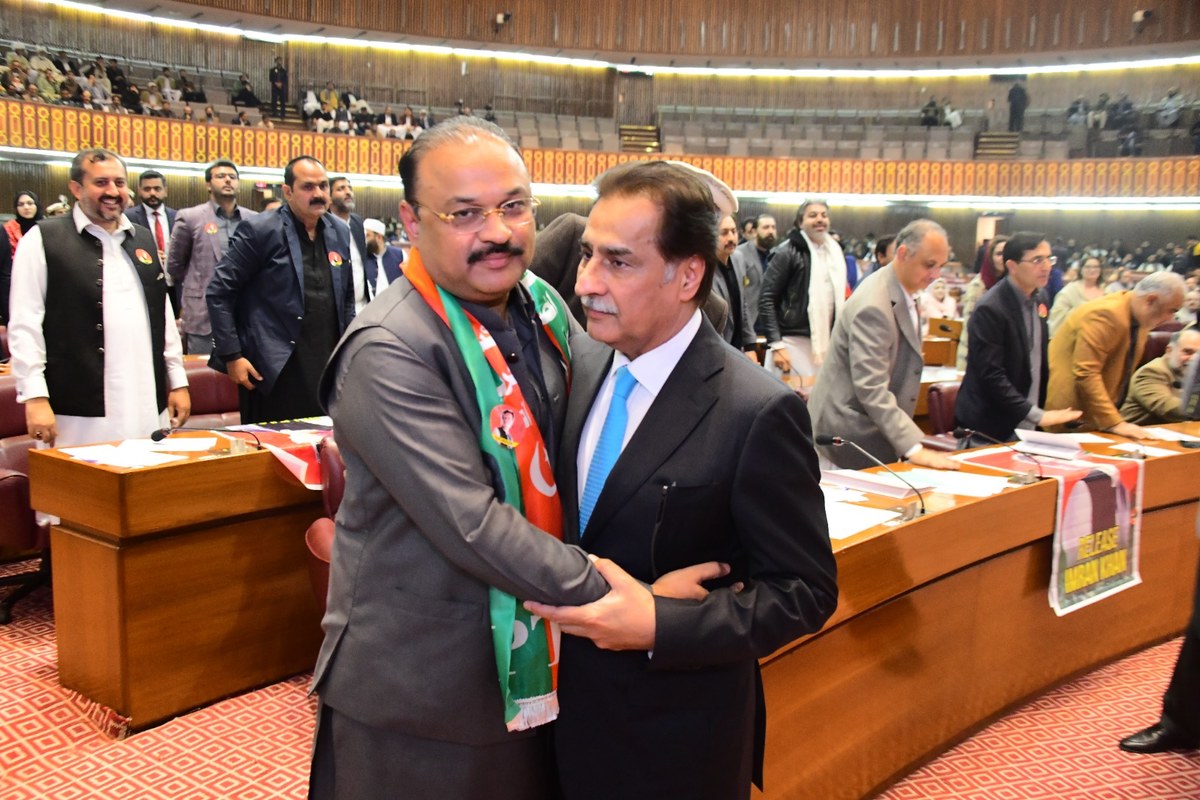
In this handout photo, taken and released by the Government of Pakistan, Parliament’s newly-elected speaker Sardar Ayaz Sadiq (right) meets his opponent, Malik Muhammad Amir Dogar, after the voting process for speaker’s office in Islamabad on March 1, 2024. Lawmakers in the lower house of parliament elected Sadiq as the 23rd speaker of Pakistan’s National Assembly. (Photo courtesy: Facebook/ NationalAssemblyOfPakistan)
Sadiq urged both the treasury and opposition benches to develop a “national consensus” to bridge their differences for the “betterment of the country.”
Speaking on the floor of the house, Dogar raised objections over the transparency and fairness of the February 8 national polls.
“This was not an election but a selection, rather it was an auction,” he said while alleging vote fraud.
He claimed that his party-backed candidates should have got 225 seats, but the results were altered and they were now being deprived of the reserved seats for women and religious minorities.
“I took part in the election [for speaker] without the reserved seats,” he continued. “We have a strength of 91 members in the house now and I got all the 91 votes.”
“Our eighty seats have been stolen, and had they not been stolen, the PTI would have been the single largest party in the assembly,” Dogar said, urging the speaker to play his role to get the PTI “stolen mandate” back.
Sadiq’s election came amid protests on the floor of the house by the supporters of former premier Khan.
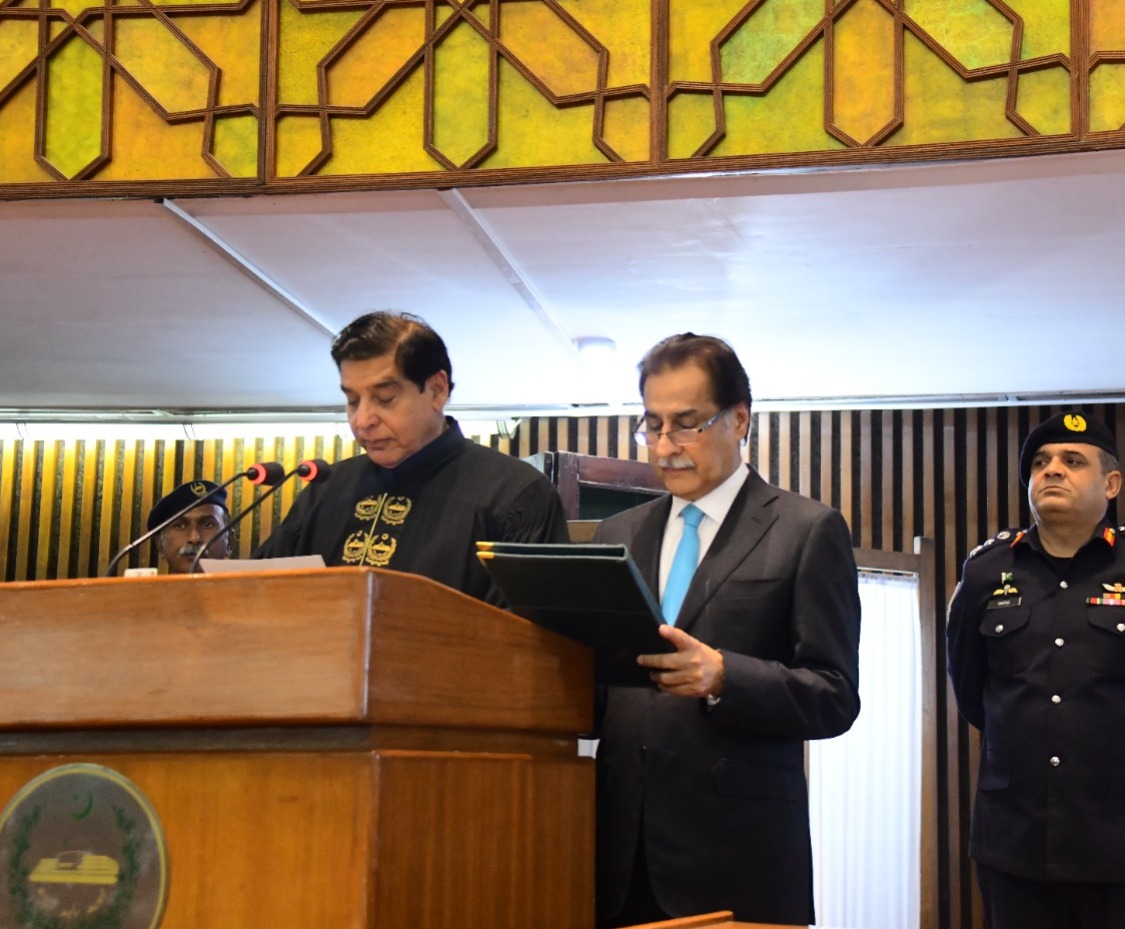
In this handout photo, taken and released by the Government of Pakistan, Parliament’s newly-elected speaker Sardar Ayaz Sadiq (right) takes oath as the 23rd speaker of Pakistan’s National Assembly from outgoing speaker, Raja Pervaiz Ashraf, in Islamabad on March 1, 2024. (Photo courtesy: Facebook/ NationalAssemblyOfPakistan)
After taking over as the custodian of the house, Sadiq supervised the election proceedings for the post of deputy speaker that was contested by Syed Ghulam Mustafa Shah of the Pakistan Peoples Party (PPP) and Junaid Akbar of the SIC.
Shah won the position by securing 197 votes against the SIC candidate who bagged 92 votes in the 336-member house. Sadiq administered the oath to the new deputy speaker before adjourning the hearing till Sunday.
No single party won a majority in the February 8 general elections in which independent candidates, most of them loyal to Khan, gained the highest number of seats, but the PML-N and the PPP reached a power-sharing agreement to form the next coalition government.
The election for the prime minister will be held on March 3, the National Assembly Secretariat said in a statement.
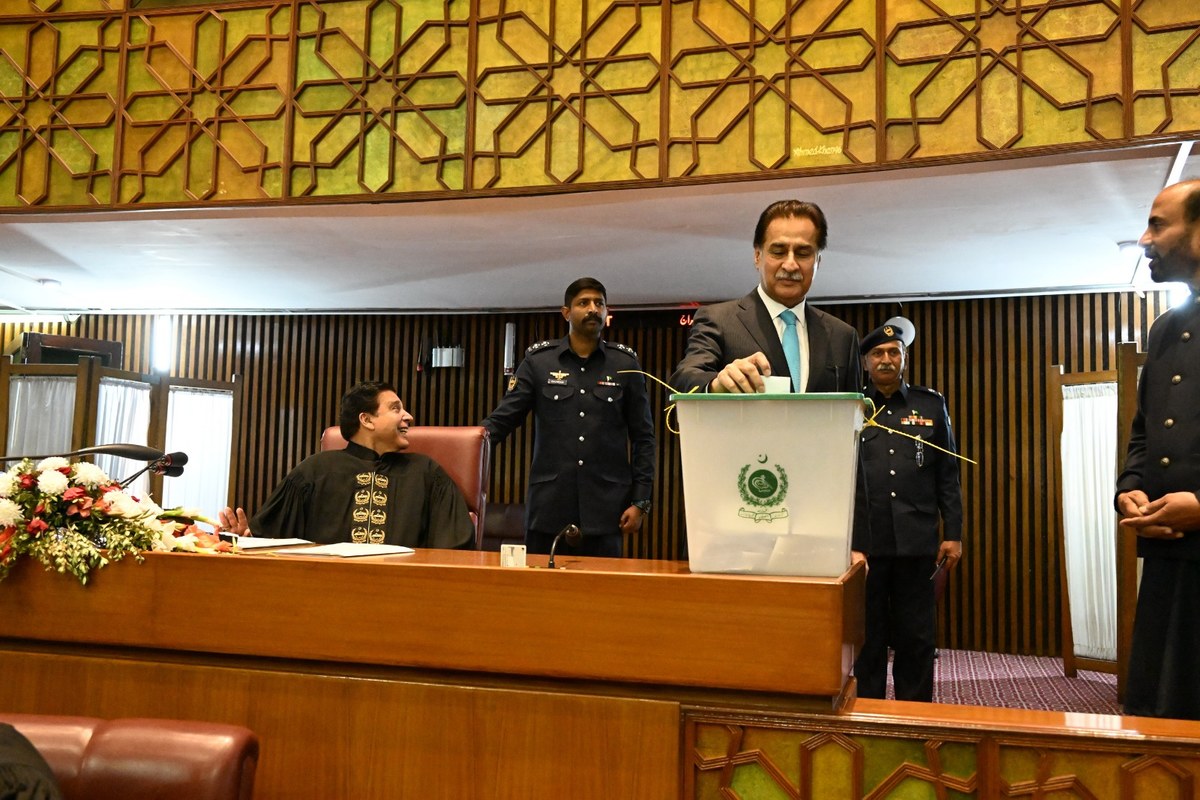
In this handout photo, taken and released by the Government of Pakistan, Pakistan Muslim League-Nawaz party's nominated candidate Sardar Ayaz Sadiq (right) takes part in the voting process for speaker's office in Islamabad on March 1, 2024. Sadiq secured 199 votes in the speaker’s election, becoming the 23rd speaker of Pakistan’s National Assembly. (Photo courtesy: Facebook/ NationalAssemblyOfPakistan)
Speaking on the floor of the house prior to the session’s adjournment, Pashtoonkhwa Milli Awami Party chief Mahmood Khan Achakzai suggested the speaker to develop a consensus among all parliamentary parties to pass resolutions to declare those judges heroes of the nation who opposed military dictators.
He also suggested to declare all those political workers killed during the struggle for the supremacy of the constitution as martyrs of democracy.
“People voted for Imran Khan and it is tantamount to treason to Pakistan and the public to change that mandate,” he continued.
“This parliament should pass a resolution to release Imran Khan and his companions,” he added. “Form a national government with the inclusion of all [parties] and release Imran Khan.”.


