

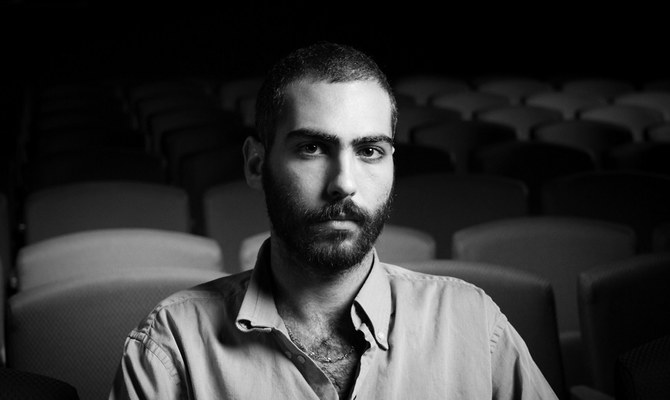

DUBAI: Through an open-call competition, Palestinian director Saleh Saadi was selected by MENA-based broadcasting network OSN as one of its six winners to take part in a residency program organized in conjuction with The Arab Fund for Arts and Culture that aims to support aspiring filmmakers and writers from the region.
Saadi is taking part in OSN’s Writer’s Room mentorship program with a project titled “Dyouf” (meaning “guests” in Arabic). The mentorship program designed by OSN and The Arab Fund for Arts and Culture offers creators in the Arab region the opportunity to pitch their projects for potential development and distribution.
Originally from the bedouin village of Basmat Tab’un, Saadi has previously created two social-themed short films that dealt with his native Palestine: “Borekas” (2020) and “A’lam” (2022).
The filmmaker says that he did not grow up in an environment that had a film institute, let alone an overall industry, but that didn’t stop his creativity, which began at home with simple means.
“My family doesn’t have an artistic background. Their focus was to give us a good life, but they used to take pictures of us with a small camera,” Saadi told Arab News. “My siblings would film with a video camera and make little plays. . . I don’t know why it stuck with me.”
From a young age, he taught to edit and filmed sketches with his family members, who acted in his creations. “To them it was good fun, but I took it seriously,” he recalls. Saadi grew up “glued to the television set,” watching sitcoms. He also admires the work of notable Palestinian director Elia Suleiman, whose films have been shown at the Cannes Film Festival and the Venice Film Festival.
Saadi was selected as one of the six winners from the Writer’s Room Open Call. His dramedy submission “Dyouf” centers around the protagonist Shadi, who returns to his homeland after living abroad and feels lonely. His mother has set up a guesthouse that is being frequented by tourists.
Each episode, delving into the themes of relationships and identities, will focus on one tourist. “Through these guests, we understand the country more. One of the main characters is the country,” Saadi explains. “It shows a certain reality, the day-to-day life and little moments of the day. I think different people will be able to relate to the show in different ways.”
Saadi adds that shooting in Palestine comes with its own set of tricky challenges, from funding to on-site disturbances. “Things are more and more difficult. I don’t want to be cheesy, but it’s also become more and more important. There are difficulties from start to finish, where anything can happen.”
Despite the ongoing bombardment of Gaza, Saadi is heartened by how Palestinian cinema is slowly on the rise in the region and abroad, through film festivals and cultural events. “I am very happy because I feel like there are more films on Palestine. They tell our stories,” he said
“We have so much love for our people, our family and our land. All kinds of art have an important role to play. Through art, we are showing that, despite all difficulties, the love is still there.”


