Brazil sends largest ever delegation to Gulfood

Animal protein was one of Brazil’s highlights at Gulfood 2024. (Twitter @Gulfood)
Short Url
Updated 24 February 2024
Follow

Brazil sends largest ever delegation to Gulfood

  • 117 Brazilian companies attend Mideast’s largest food, beverage trade fair in Dubai
  • ‘Our expectation is to surpass $2.5bn in business deals,’ trade agency manager tells Arab News

SAO PAULO: Brazil sent its biggest ever delegation to the Middle East’s largest food and beverage trade fair this year.

From Feb. 19-23, 117 Brazilian companies conducted business with buyers from all over the world at the 29th edition of Gulfood in Dubai.

Andre Muller, agribusiness manager at the Brazilian Trade and Investment Promotion Agency, told Arab News: “This year we had record participation, the largest ever for Brazil at this fair, with 117 companies. Our expectation is to surpass $2.5 billion in business deals.”

The mission of the agency, which is linked to the Foreign Ministry, is to promote Brazilian exports and attract investments to the country. It has been responsible for the Brazilian delegation at Gulfood since 2009.

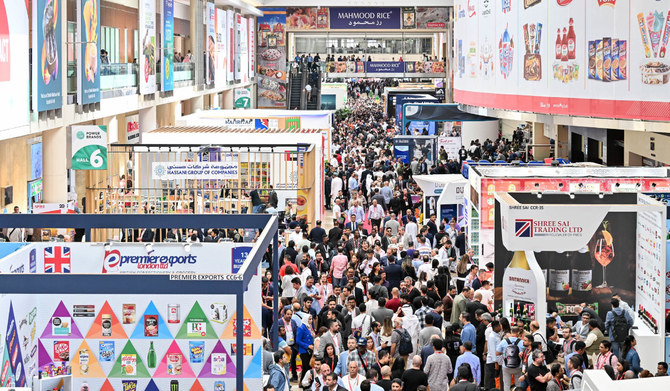
Showcasing their products to some 150,000 visitors from around the world, the Brazilian companies were organized in six pavilions: a multisector pavilion; a beverage pavilion; a spices, grains and cereals pavilion; and three animal protein pavilions.

The delegation represented small, medium and large companies, a third of which are led by women.

“This fair is one of the most important in the world because in addition to covering the entire Middle East, we also noticed this year many buyers from Europe, Africa, India and some from Asia, mainly China,” said Muller.

“So it’s a fair that in addition to having this important market in the Arab region, ends up being almost a global fair.

“This is very important for Brazilian companies because they can, in just one event, access and connect with clients from different regions and continents.”

He added: “We have a waiting list to participate in the fair. We’ve been asking for more space from the fair organizers for a few years now, but unfortunately there’s none. This shows that Brazilian companies are really very interested.”

Ricardo Santin, president of the Brazilian Association of Animal Protein, told Arab News: “Gulfood is a strategic event for the Brazilian poultry industry. Brazil is the world’s largest exporter of chicken meat and nearly half of its shipments are halal products, making our sector the largest exporter of poultry products to Islamic nations.”

He added: “In this edition of the fair, we promoted tastings, held meetings with clients and potential importers, and consolidated advances in business prospects between Brazilian exporters and partners from Islamic nations such as Saudi Arabia, which is one of the main destinations for our products.”

Muller highlighted the relevance of the Arab world for Brazilian food and beverage exports.

For the poultry meat sector, for example, the Middle East is the destination for more than a third of the total exported. “It’s a very important region for Brazilian agribusiness exports,” said Muller.

The pavilion’s opening ceremony was attended by the business director of the Brazilian Trade and Investment Promotion Agency, Ana Paula Repezza; the director of the Department of Trade Promotion, Investments and Agriculture at the Foreign Ministry, Alex Giacomelli; and the deputy secretary of international relations at the Ministry of Agriculture, Livestock and Supply, Julio Cesar Ramos.

The Arab-Brazilian Chamber of Commerce also participated with a pavilion, bringing 11 companies to Gulfood.

Halal market

Animal protein was one of Brazil’s highlights at Gulfood 2024. The country is recognized for its reliable and high-quality halal meat production, and has been gaining ground in this rapidly expanding market.

“In food and beverages alone, the halal market represents $1.6 trillion, and Brazil has a growing share,” said Muller.

“We’re talking about more than 2.2 billion people who have this consumption habit, and Brazil is positioning itself very well in this segment.”


First EU–Saudi roundtable on critical raw materials reflects shared policy commitment

Updated 16 January 2026
Follow

First EU–Saudi roundtable on critical raw materials reflects shared policy commitment

RIYADH: The EU–Saudi Arabia Business and Investment Dialogue on Advancing Critical Raw Materials Value Chains, held in Riyadh as part of the Future Minerals Forum, brought together senior policymakers, industry leaders, and investors to advance strategic cooperation across critical raw materials value chains.

Organized under a Team Europe approach by the EU–GCC Cooperation on Green Transition Project, in coordination with the EU Delegation to Saudi Arabia, the European Chamber of Commerce in the Kingdom and in close cooperation with FMF, the dialogue provided a high-level platform to explore European actions under the EU Critical Raw Materials Act and ResourceEU alongside the Kingdom’s aspirations for minerals, industrial, and investment priorities.

This is in line with Saudi Vision 2030 and broader regional ambitions across the GCC, MENA, and Africa.

ResourceEU is the EU’s new strategic action plan, launched in late 2025, to secure a reliable supply of critical raw materials like lithium, rare earths, and cobalt, reducing dependency on single suppliers, such as China, by boosting domestic extraction, processing, recycling, stockpiling, and strategic partnerships with resource-rich nations.

The first ever EU–Saudi roundtable on critical raw materials was opened by the bloc’s Ambassador to the Kingdom, Christophe Farnaud, together with Saudi Deputy Minister for Mining Development Turki Al-Babtain, turning policy alignment into concrete cooperation.

Farnaud underlined the central role of international cooperation in the implementation of the EU’s critical raw materials policy framework.

“As the European Union advances the implementation of its Critical Raw Materials policy, international cooperation is indispensable to building secure, diversified, and sustainable value chains. Saudi Arabia is a key partner in this effort. This dialogue reflects our shared commitment to translate policy alignment into concrete business and investment cooperation that supports the green and digital transitions,” said the ambassador.

Discussions focused on strengthening resilient, diversified, and responsible CRM supply chains that are essential to the green and digital transitions.

Participants explored concrete opportunities for EU–Saudi cooperation across the full value chain, including exploration, mining, and processing and refining, as well as recycling, downstream manufacturing, and the mobilization of private investment and sustainable finance, underpinned by high environmental, social, and governance standards.

From the Saudi side, the dialogue was framed as a key contribution to the Kingdom’s industrial transformation and long-term economic diversification agenda under Vision 2030, with a strong focus on responsible resource development and global market integration.

“Developing globally competitive mineral hubs and sustainable value chains is a central pillar of Saudi Vision 2030 and the Kingdom’s industrial transformation. Our engagement with the European Union through this dialogue to strengthen upstream and downstream integration, attract high-quality investment, and advance responsible mining and processing. Enhanced cooperation with the EU, capitalizing on the demand dynamics of the EU Critical Raw Materials Act, will be key to delivering long-term value for both sides,” said Al-Babtain.

Valere Moutarlier, deputy director-general for European industry decarbonization, and directorate-general for the internal market, industry, entrepreneurship and SMEs at European Commission, said the EU Critical Raw Materials Act and ResourceEU provided a clear framework to strengthen Europe’s resilience while deepening its cooperation with international partners.

“Cooperation with Saudi Arabia is essential to advancing secure, sustainable, and diversified critical raw materials value chains. Dialogues such as this play a key role in translating policy ambitions into concrete industrial and investment cooperation,” she added.