KARACHI: The Arab Monetary Fund (AMF) and the State Bank of Pakistan (SBP) are engaged in technical level talks to integrate their payment systems and facilitate cross-border remittances between the Arab region and Pakistan, the deputy governor of the SBP said.
The chairman of AMF and the governor of Pakistan’s central bank signed an agreement last year to establish a framework of cooperation between Buna, a cross-border payment system operated by Arab Regional Payments Clearing and Settlement Organization (ARPCSO) and owned by AMF, and Raast, a Pakistani instant payment system for real-time settlement of small-value retail payments, including inter-bank peer-to-peer and person-to-merchant transactions.
Technical talks are now on to integrate the two systems and facilitate millions of Pakistanis living in the Gulf region by enabling them to send remittances in real time at a lower cost. The integration will also benefit businesses through instant, safe and cost-effective cross border payments and aims to strengthen economic, financial, and investment ties between Arab countries and Pakistan.
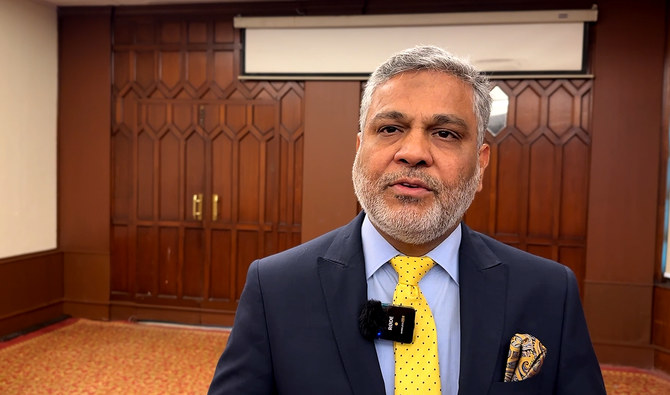
“After signing the MoU, the negotiations are on with the technical teams, and at the technical level, the modalities and the developments needed at the end of Buna and at the end of Raast, they are being worked out,” Saleem Ullah, the deputy governor of the State Bank of Pakistan, told Arab News on Wednesday.
After the completion of the technical level talks, details would be shared with the vendor for execution, he added.
“Fortunately, the vendor is same for Buna and Raast. Once we are able to finalize the requirements, then those would be shared with the vendor, and then the vendor would be able to give us the timeline within which that development would be possible,” he added.
He said the execution of the project would take at least a year “but it would depend on the vendor estimates with respect to the developments that are to be developed for the purpose of developing this interface.”
Financial experts believe the initiative would benefit about five million Pakistanis living in the Gulf region and help Pakistan boost its remittance inflows through legal channels.
“The benefit for 5 million plus Pakistanis living in the Gulf would be lesser hassle in remitting money to Pakistan because the dependency on other international similar platforms see longer transaction turnaround time as these platforms either exist in the US or other markets,” Danish Kazi, financial and political analyst based in UAE, told Arab News.
Kazi said both affordability and access for common Pakistanis to encourage remitting through legal channels would increase with the new initiative.
“This would also help business transactions which means more export opportunities for Pakistani goods and services in the region,” he added.
The aim was to regulate remittances through SBP instead of them moving via non documented sectors.
“Further, these remittances through Buna to Pakistan may also assist SBP to raise funds from Gulf markets using these as collateral or toward payments of such financing via commercial or government banks,” Kazi said.


![]()

Arab Monetary Fund, Pakistan central bank in talks to integrate cross-border remittance platforms
Short Url
https://arab.news/cpjtk
Arab Monetary Fund, Pakistan central bank in talks to integrate cross-border remittance platforms
- Buna is a cross-border payment system supported by Arab central banks and fully owned by Arab Monetary Fund
- AMF and Pakistan’s central bank signed agreement last year to integrate Buna and Pakistani platform Raast
Latest updates





© 2026 SAUDI RESEARCH & PUBLISHING COMPANY, All Rights Reserved And subject to Terms of Use Agreement.