- Pakistani industrialists demand reduction in electricity prices by 43 percent to compete with regional countries
- Pakistan has increased electricity, gas prices to comply with key conditions of an International Monetary Fund program
KARACHI: Pakistani industrialists warned on Wednesday that if energy prices are not slashed by approximately 43 percent, various industries may not survive as high input costs would lead to the loss of export markets, and eventually trigger industrial closures.
Pakistan, already reeling from skyrocketing inflation, has increased gas prices twice since November 2023. The latest increase was notified on Feb. 15, 2023, to meet the conditions of a $3 billion International Monetary Fund (IMF) bailout program.
The IMF has pointed out that liquidity conditions in Pakistan’s power sector were acute, with a buildup of arrears and frequent power outages. The arrears, a form of public debt that builds up due to subsidies and unpaid bills, were a major issue in the eight months of negotiations between the lender and Islamabad before a deal was reached last year for the bailout package.
However, Pakistani industrialists say the international competitiveness of Pakistan’s textiles and apparel exports is being continuously eroded by ever-increasing energy prices that, on average, are over twice than those of competing countries.
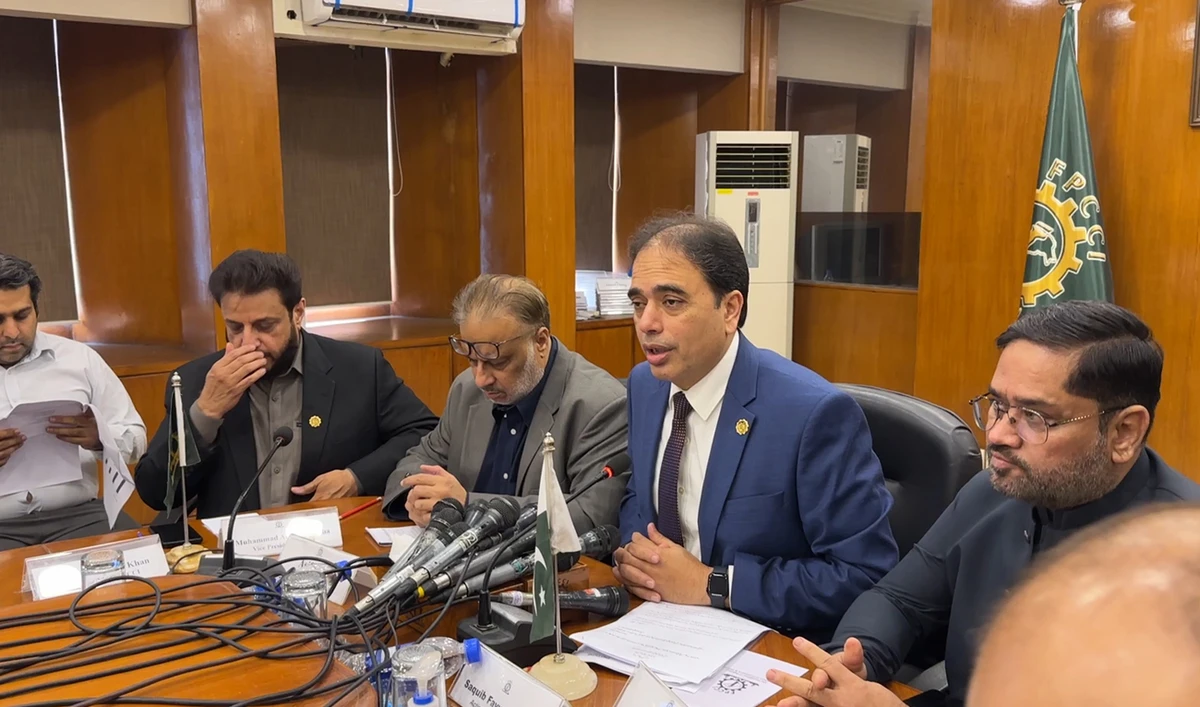
“Energy, electricity or gas is the raw material of the product and it makes about 20 percent to 25 percent, and up till now, within two years, it has almost increased to double,” Saquib Fayyaz Magoon, acting president of the Federation of Pakistan Chambers of Commerce and Industry (FPCCI) said at a press conference in Karachi.
He said the price hikes have made Pakistani exporters “uncompetitive” in the export markets by a large margin.
Magoon said electricity prices for consumers are hovering at 16.7 cents per kilowatt, adding that the prices of gas for industries have been jacked by over 222 percent from Rs.852 ($3.05) per mmBtu to Rs. 2,750 ($9.83) per mmBtu.
The acting FPCCI head reiterated that this month, Pakistan’s cabinet approved a significant increase in gas prices, hiking them up to 67 percent for residential users and by 700 percent for fertilizer plants.
“At the current energy rates, the survival of the industries is at stake,” Magoon said. “We are demanding an immediate reduction of the electricity rate from the current 16.7 cents to 9 cents (43 percent) because our regional competitors are getting electricity at half of that price.”
Asif Inam, chairman of the All Pakistan Textile Mills Association (APTMA), said the industry is paying cross-subsidy, which means that industries are paying for losses of other industries that are non-productive.
“If the government is not coming up with the right set of policies to keep the industrial wheel in motion, a large chunk of the country’s industries would eventually fall victim to high input cost and close down,” Inam said.
“So cross-subsidization must end to protect trade and industry.”
Pakistan’s exports have increased by 7.8 percent to $17.8 billion during the seven months of the current fiscal year, FY24. The textile sector contributed $9.7 billion or 54.4 percent to the overall exports of the country, as per official data.
However, FPCCI officials warned that the country’s exports will decline after the rise in the energy rates due to the factor of regional competitors, where power tariffs were still lower. In Vietnam, Bangladesh, and India, the power tariff stands at 7.2 US cents, 6 US cents, and 8.6 US cents per kilowatt.
The APTMA head noted that while the country has a 47,000 megawatt-installed generation capacity, its transmission and distribution capacity is only 28,000 megawatts.
“Independent power producers (IPPs) on take-or-pay basis are causing enormous financial burden on consumers across the board, be it households, commercial or industrial [users],” Inam said.