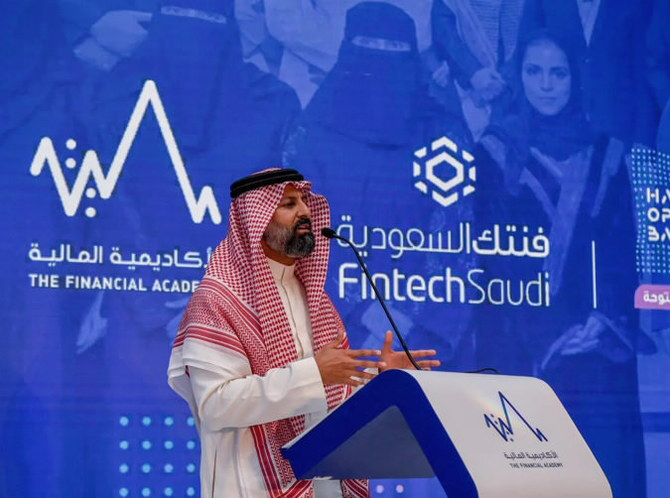


RIYADH: The open banking market has expanded significantly and is expected to grow to $43 billion by 2026 from $7 billion in 2018, the chairman of Saudi Arabia’s Capital Market Authority said on Sunday.
Speaking at the conclusion of the Open Banking Hackathon 2024 in Riyadh, Muhammad bin Abdullah Al-Quwaiz said this growth reflects the increasing acceptance and integration of open banking frameworks around the world, according to a report in state media.
The hackathon was held to empower the participants with knowledge of the relatively new technology used for open banking services. As a part of the program, there were expert coaches and mentors who guided participants on how to pitch their projects.
Open banking practice allows banks and financial institutions to give third-party financial service providers access to consumer banking, transaction, and other financial data through the use of application programming interfaces.
Al-Quwaiz said: “It is also evidence of the crucial role that open banking plays in shaping the future of financial services, thanks to its ability to enhance transparency, improve the experience of customers, and encourage fair and effective competition between financial institutions,” Al-Quwaiz was quoted by Al Ekhbariya as saying.
Al-Quwaiz, who also chairs the board of trustees of the Saudi Financial Academy, spoke in the presence of leaders and experts of the financial sector in the Kingdom.
The hackathon is “the first qualitative innovative initiative presented by the financial academy after announcing its new strategy.” This includes building a national cadre “specialized in future technologies, with the aim of making the Kingdom a global center for financial technology in line with the financial sector development program of the Kingdom’s vision 2030,” Al Al-Quwaiz said.
A separate report by the Saudi Press Agency, or SPA, quoted Al-Quwaiz as saying that a 2023 study has projected that spending on training would rise from SR788 million ($210 million) to about SR1 billion ($266.5 million) by 2026.
The report said the number of people targeted for training is expected to increase to more than 130,000.
Mana Al-Khamsan, the CEO of the financial academy, said the hackathon was aimed at giving the organization the opportunity to learn the basics of open finance, the SPA report said.
The academy needed to understand the technological infrastructure behind open banking systems, regulatory frameworks and compliance requirements, and the impact on financial institutions and consumers.
Al-Khamsan said the hackathon targeted professionals in the banking and financial services sector, as well as from financial technology companies in Saudi Arabia. This was in addition to software developers who have two or more years’ experience in financial services and financial technology.
The participants received training and guidance from professional experts, in addition to a certificate from the financial academy and accredited international bodies Silicon Valley Innovation Center at the Lebanese American University and Ozone API, a technology company focusing on financial services based in the UK.