


RIYADH: Multiple agreements were signed during the second day of the Public Investment Fund’s Private Sector Forum to enhance the local economy, tourism, and telecommunication sectors.
These deals included contracts awarded by King Abdullah Financial District Development and Management Co., which is wholly owned by PIF, the soverign wealth fund’s subsidary Asfar.
stc Group also signed several new agreements with local partners with the aim of enriching the local economy, the Saudi Press Agency reported.
The contracts inked covered a range of objectives, spanning from sustainability to digital transformation.
They included an agreement with Gazal, a PIF portfolio company, to provide eco-friendly mobility movement at its headquarters.
Al-Jazea Contracting and Trading Co. also signed with stc Group to establish a grey hydro treatment plant that aims to reduce water consumption and achieve broader sustainability goals.
An additional deal was inked with Master Works to enhance the customer experience by expanding stc Group’s capabilities to monitor new key performance indicators.
During the forum, the group also signed contracts with Middle Sea for Telecommunication Establishment, Prime Gate Co., and Awnas Contracting Co. to modernize infrastructure and advance sustainability efforts, particularly focusing on offloading stc Group’s outside plant infrastructure.
Commenting on the company’s participation at the forum, stc Group CEO Olayan Al-Wetaid told SPA: “We welcome the opportunity to participate once again at the PIF Private Sector Forum – a brilliant space to reaffirm our commitment to driving forward the Kingdom’s economic agenda. At stc Group, we are dedicated to providing world-class connectivity, driving digital transformation, and empowering sustainable growth.”
Capping stc Group’s involvement, an agreement was also signed with Simah to develop a system for integration and validation of partner data, enhancing the onboarding process, in an initiative called “Partner Hub Enhancement.”
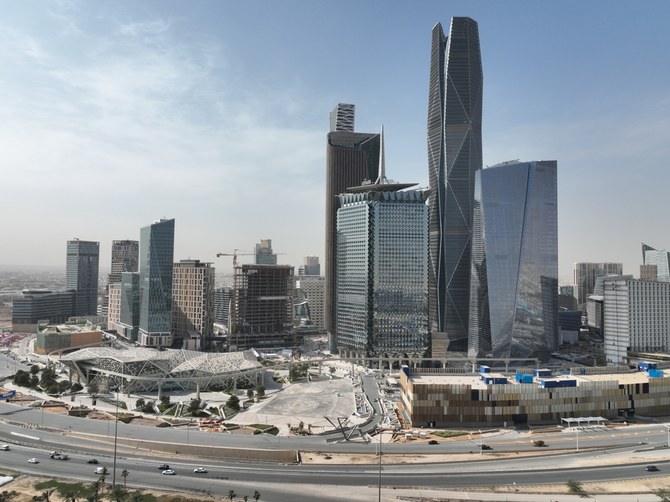
For their part, KAFD DMC announced a series of partnerships and collaborations at the second edition of the PIF forum.
KAFD awarded several contracts for five private enterprises across diverse sectors, from construction to hospitality and technology solutions, marking a milestone in the ongoing development and renovation works of the district, a release by the company said.
During the two-day forum, KAFD DMC, the company that oversees the development, signed an agreement with Advanced Communications & Electronic Systems Co., known as ACES.
The contract entails the implementation of state-of-the-art 4G and 5G telecom infrastructure in KAFD, in order to support all mobile operators and provide connectivity for all residents, visitors, and businesses.
Continuing its development trajectory, the entity also awarded three design and build contracts to the Mohammed Al-Rashid Trading and Contracting Co., which will design, build and handover works for Buildings 3.01, 3.02, 3.06, and the rooftop area of Building 3.11, in addition to two sky bridges in the district.
Meanwhile, MID Arabia Contracting Co. will be stepping in to complete the fit-out for a new lifestyle hotel in KAFD.
Similarly, Source Machinery was awarded two contracts to embark on the development of Phases 1, 2, 3, and 4 of KAFD’s Area 6, laying the groundwork for future expansion plans, the release noted, while JASH TECHNICAL Services was commissioned to provide comprehensive community services for the district’s common use facilities.
Commenting on these latest collaborations, Gautam Sashittal, CEO of KAFD DMC, said in a release: “The partnerships announced represent a powerful testament to the power of collaboration between the public and private sectors in Saudi Arabia.”
Finally, a release stated that PIF subsidiary Asfar announced the signing of a partnership agreement with IHCC to establish a health resort in the city of Taif, which will encompass over 94 thousand sq. meters.
According to the release, the project seeks to embody the essence of medical tourism through entertainment, luxury and tranquility.
It aims to attract visitors seeking wellness and adventure to a distinctive experience of weaving local and international treatments, complemented by tailored nutrition plans and an array of other services and amenities, all designed to provide a sense of rejuvenation and tranquility.
Fahad bin Mushayt, CEO of Asfar, said in the release that this partnership aims to provide an innovative and integrated approach to health and wellness, set a new standard of excellence and enrich the lives of both residents and visitors to the region.
This project embodies the commitment to promoting progress, well-being, and prosperity in the Kingdom.
He pointed out that the project offers a range of health and entertainment services and amenities, including cafes, retail options, suites and rooms, villas, as well as specialized restaurants, cinemas, a spa, a clinic, and an advanced laboratory.


