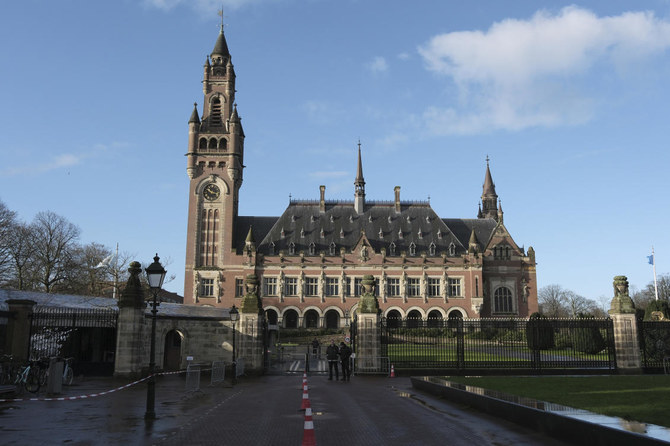
THE HAGUE: The United Nations’ top court is ruling Wednesday in a case in which Ukraine accuses Russia of bankrolling rebels in 2014 and discriminating against Crimea’s multiethnic community since its annexation of the region.
It is the first of two decisions by the International Court of Justice linked to the decadelong conflict between Russia and Ukraine that exploded into a full-blown war nearly two years ago.
Wednesday’s legally binding final ruling comes in a case filed in 2017, accusing Moscow of breaching conventions against discrimination and the financing of terrorism. Kyiv wants the court to order Moscow to pay reparations for attacks and crimes in eastern Ukraine, including the downing of Malaysia Airlines Flight 17, which was shot down by Russia-backed rebels on July 17, 2014, killing all 298 passengers and crew.
At hearings last year, a lawyer for Ukraine, David Zionts, said that pro-Russia forces in eastern Ukraine “attacked civilians as part of a campaign of intimidation and terror. Russian money and weapons fueled this campaign.”
Among the attacks was the downing of MH17. A Dutch domestic court convicted two Russians and a pro-Moscow Ukrainian in November 2022 for their roles in attack and sentenced them in their absence to life imprisonment. Also, the Netherlands and Ukraine are suing Moscow at the European Court of Human Rights over MH17. Russia denies involvement.
Another lawyer for Ukraine, Harold Koh, said that in Crimea, Russia “sought to replace the multiethnic community that had characterized Crimea before Russia’s intervention with discriminatory Russian nationalism.”
Lawyers for Russia urged the world court to throw out the case, saying that the actions of pro-Moscow rebels in eastern Ukraine do not amount to terrorism.
On Friday, the court is ruling on Russia’s objections to its jurisdiction in a case filed by Ukraine shortly after the invasion, alleging that Moscow launched its attack based on trumped-up genocide allegations. The court already issued an interim order for Russia to halt its invasion which Moscow has flouted.
The International Court of Justice in recent weeks has heard a case brought by South Africa accusing Israel of committing genocide in Gaza. Judges issued provisional measures last week calling on Israel to do all it can to prevent death, destruction and any acts of genocide in the conflict.


![]()

UN’s top court to rule on Ukraine case accusing Russia of backing terrorists
Short Url
https://arab.news/m6txj
UN’s top court to rule on Ukraine case accusing Russia of backing terrorists
- First of two decisions by the International Court of Justice linked to the decade-long conflict between Russia and Ukraine


Latest updates


Recommended


© 2026 SAUDI RESEARCH & PUBLISHING COMPANY, All Rights Reserved And subject to Terms of Use Agreement.