



KARACHI: As political activity in the country gains steam ahead of national polls on Feb. 8, electoral battles in some constituencies will be more closely fought than in others, with Pakistan’s southern Sindh province being no exception.
Arab News visited four key constituencies in Sindh where multiple political heavyweights will be locking horns and the contest will most definitely go down to the wire.
NA-241 Karachi
The NA-241 constituency in Karachi — a city of over 18 million people that is home to Pakistan’s main port, stock exchange and central bank — consists of the upscale Defense Housing Authority (DHA) and Clifton areas, and part of the Old City area. Pakistan Tehreek-e-Insaf’s (PTI) Khurram Sherzaman, Muttahida Qaumi Movement-Pakistan’s (MQM-P) Dr. Farooq Sattar, Pakistan Peoples Party’s (PPP) Dr. Ikhtiar Baig and Jamaat-e-Islami’s (JI) Naveed Ali Baig will be locking horns for the National Assembly 241 seat.
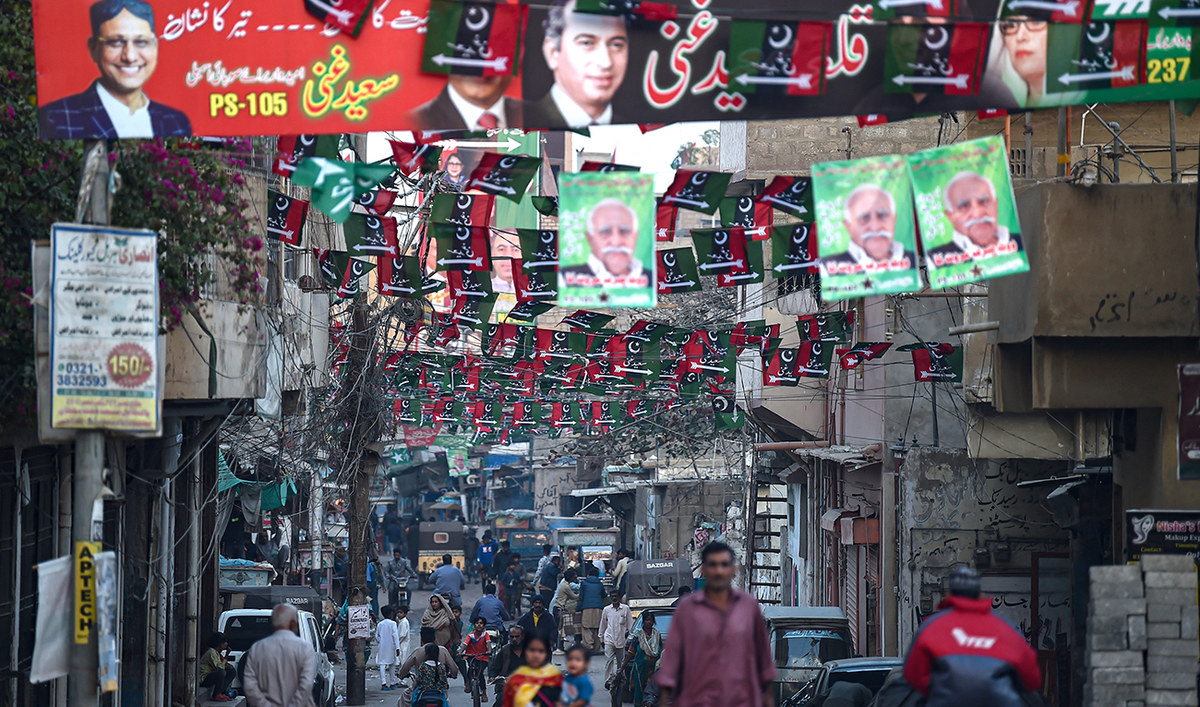
Commuters move past the Pakistan People's Party (PPP) flags hung over a street in Karachi on January 12, 2024, ahead of the upcoming general elections. (AFP)
Pakistan’s incumbent president, PTI’s Dr. Arif Alvi, won NA-241 in the 2013 national elections, securing 76,305 votes, and again in the 2018 election with 91,020 votes, but resigned from the seat after he was nominated for the Pakistani presidency.
After Alvi’s resignation, PTI’s Aftab Siddiqui won the by-election in the constituency with 32,456 votes. In the past, JI’s Abdul Sattar Afghani and MQM’s Khushbakht Shujaat had won the seat in 2002 and 2008 elections, respectively.
Muzzamil Aslam, a senior PTI member, said the party had a strong position in the constituency despite the election regulator’s move last month to strip the party of the bat election symbol, meaning its candidates now had to contest as independents, each with a different election symbol.
In Pakistan, election symbols appear on ballot papers, with voters able to put a stamp on their symbol of choice. The ballot paper also has names, but over 40 percent of Pakistan’s 241 million population are illiterate, making the pictures extra important for recognition.
A majority of Pakistan’s constituencies are in rural areas where the literacy rate is around 50 percent, according to the economic survey of 2022-23, but in Karachi, a major urban center, PTI leaders hope the loss of the bat symbol won’t be a decisive factor.
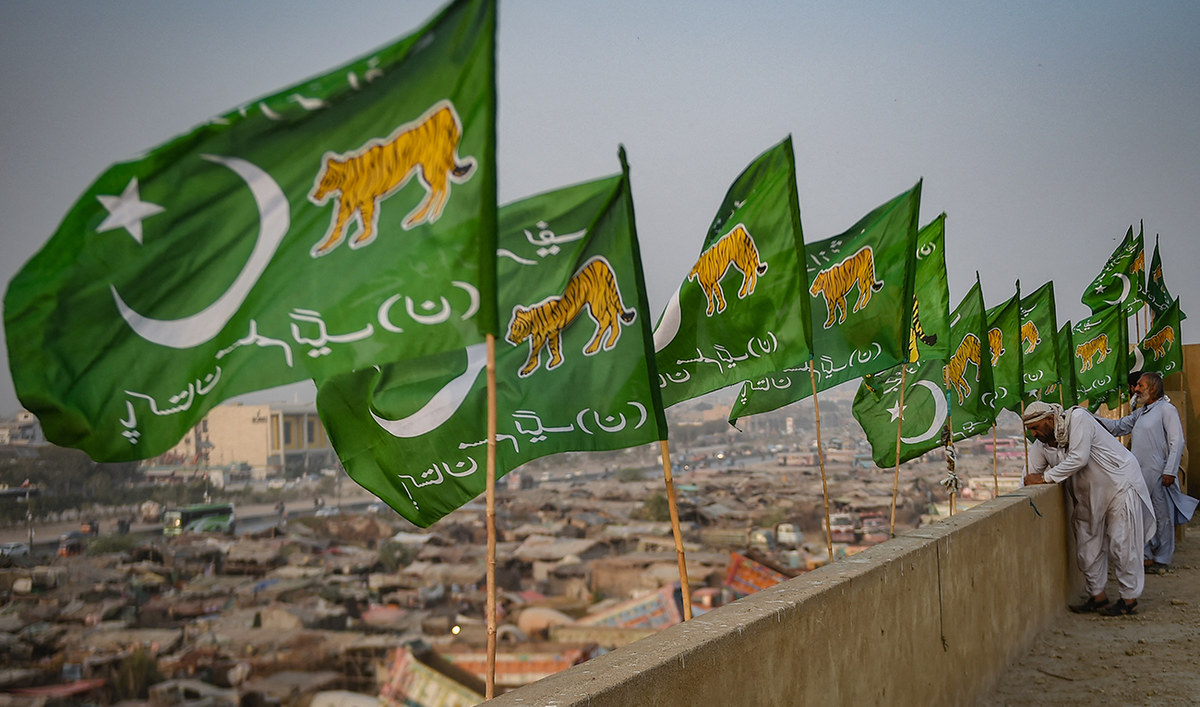
Workers install flags of Pakistan Muslim League (PML-N) Party on the rooftop of a building, ahead of the upcoming general elections, in Karachi on January 24, 2024. (AFP)
“The bat has gone, which has diluted the impact, but interestingly, our opponents have not been able to estimate things,” Aslam said, hoping that PTI supporters would once again vote for the party.
Taj Haider, a senior PPP leader, said his party’s candidate had been assured by residents they would vote for the PPP.
“The people are not happy with the PTI and are now supporting us,” Haider said.
Dr. Khalid Maqbool Siddiqui, who heads the MQM-P, said the party’s candidate Dr. Farooq Sattar, who has previously served as mayor of Karachi and been elected to the National Assembly multiple times, was the best choice.
“He’s served Karachi many times,” Siddiqui said. “He is one of the most educated and grassroots leaders of the MQM.”
Siddiqui said the MQM-P had a better chance at winning this election than the PTI due to the “conditions” that the PTI had been facing, referring to a crackdown against the party since May last year, when its supporters staged violent demonstrations in the country over Khan’s brief detention in a graft case. The crackdown has seen several senior PTI figures defect, be arrested or go into hiding. Khan is himself currently in jail in a graft case and faces multiple other legal cases in courts across the country.
Still, Nadia Naqi, a Karachi-based analyst, said the MQM-P would face a “challenge” in winning the battle for NA-241.
“It constitutes the majority of those areas where people have more of a liking for PTI, it has a huge support of PTI, we must not forget that,” she told Arab News.
“So, I think it will be a lesser challenge to PTI right now and more of a challenge to Farooq Sattar.”
NA-194 Larkana
The NA-194 constituency is the hometown of the Bhutto dynasty, which has ruled Sindh for decades and given the nation two prime ministers. However, its Pakistan Peoples Party is expected to witness a tough contest here between PPP Chairman Bilawal Bhutto-Zardari and Rashid Mehmood Soomro, a senior member of the Jamiat Ulama-e-Islam (JUI) religious party.
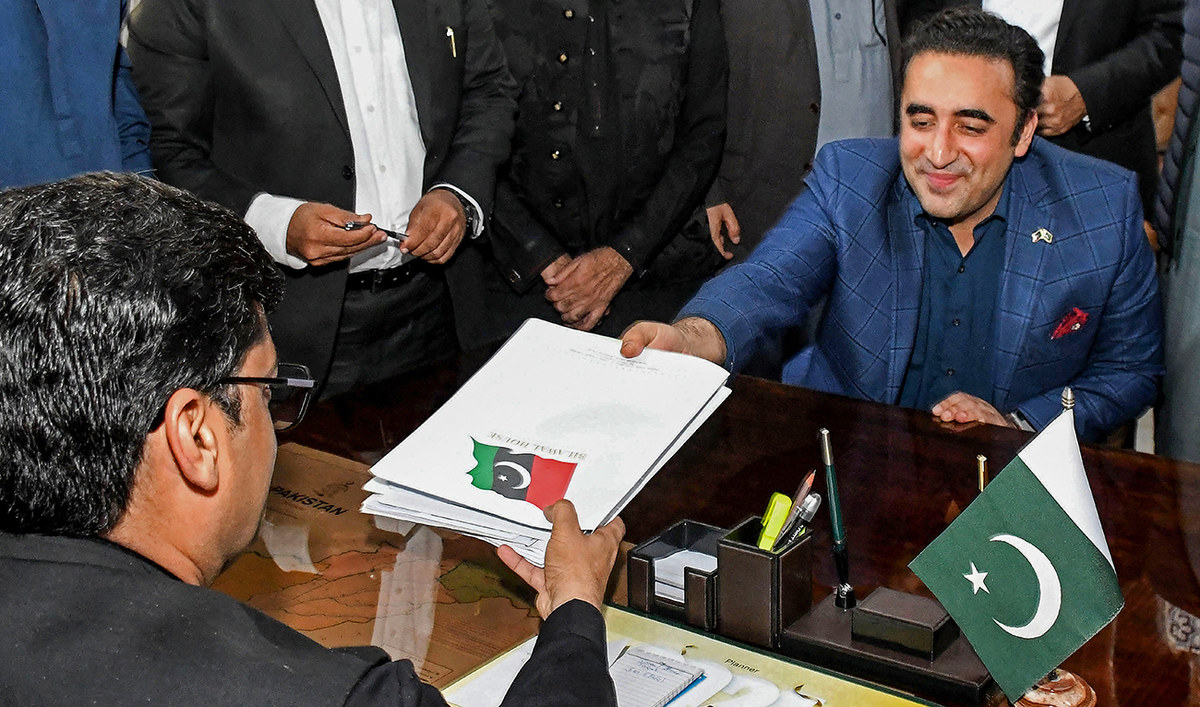
Pakistan Peoples' Party (PPP) chairman Bilawal Bhutto Zardari (R) submits his nomination papers to the returning officer in Larkana of Sindh province on December 24, 2023, ahead of the upcoming 2024 general elections. (AFP/File)
Primarily comprising Ratodero Taluka and parts of Larkana Taluka, NA-194 also includes a portion of Larkana city, the hometown of PPP founder and former premier Zulfikar Ali Bhutto.
In the last election, Bhutto-Zardari won in Larkana with 84,426 votes, while JUI’s Soomro stood second with 50,200 votes.
The PPP had done its homework and like the previous elections, its candidate would win the election despite the opponents forming an alliance, PPP’s Haider said.
However, Shahzeb Jilani, an analyst who belongs to the same constituency, said the PPP would face tough competition in Larkana, as the JUI candidate had run a formidable campaign against the PPP in 2018 even though the PPP eventually won the election.
“It is certainly not an easy ride for Bilawal Bhutto to win the seat,” he told Arab News. “The only problem in Sindh is that the threshold of opposition is not that high to defeat a [PPP] candidate.”
NA-246 Karachi
This constituency includes Mominabad town and parts of Karachi West district and will be hotly contested between JI Karachi chief Naeem-ur-Rehman and MQM-P’s Ameenul Haque, a former federal minister for IT.
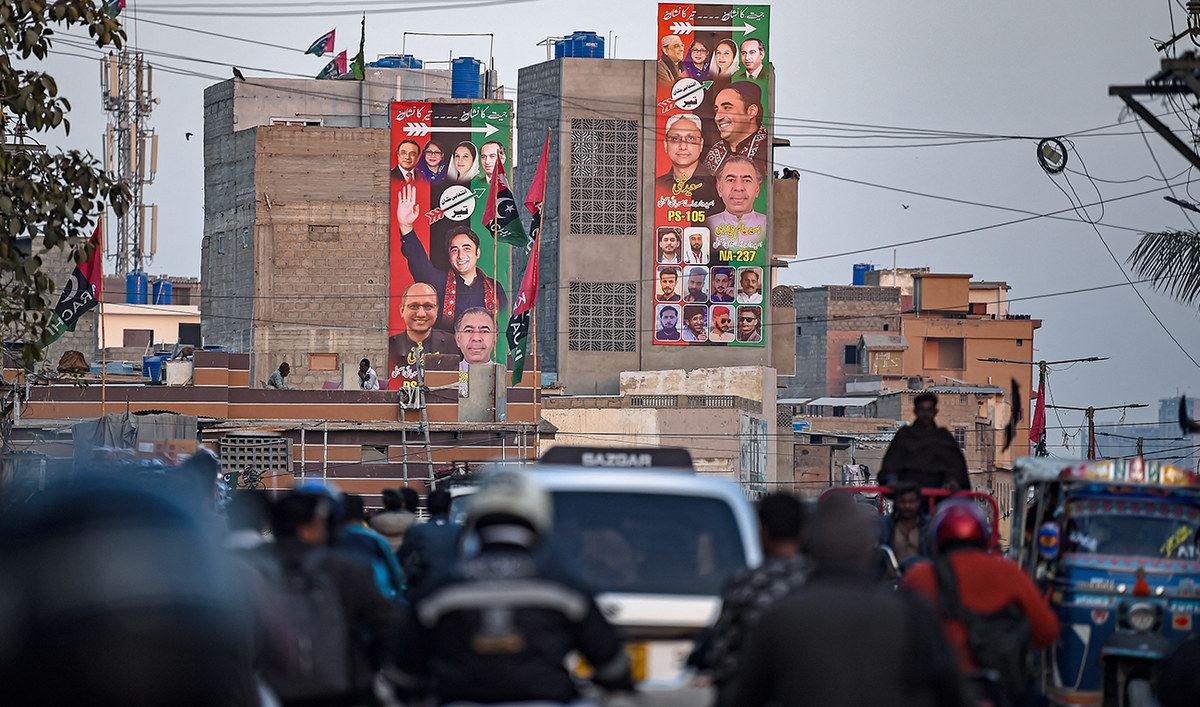
A billboard of Pakistan People's Party (PPP) featuring their leader Bilawal Bhutto Zardari, along a road in Karachi on January 12, 2024, ahead of the upcoming general elections. (AFP)
In 2002, MQM’s Muhammad Abdul Rauf Siddiqui won this seat with 62,690 votes, while Dr. Abdul Qadir Khanzada was the winner in 2008. In 2013, MQM’s Mehboob Alam emerged victorious in the constituency with 166,836 votes, whereas Haque won the seat in 2018 by defeating PTI’s Muhammad Aslam and JI’s candidate secured third position with 21,812 votes.
“The MQM will completely sweep and there has never been a challenge for the MQM [in NA-246],” MQM-P chief Siddiqui said, adding that the seat had consistently been won by his party since 1980s.
Rehman said the JI was a better option as it had spoken up for the resolution of various public issues in Karachi in recent months.
“No one else held their hand but the Jamaat-e-Islami resolved 80 percent of their issues,” he said.
Naqi agreed that Rehman was a candidate who had been highlighting Karachi’s issues, including of electricity and gas tariff hikes, issuance of national identity cards and water shortage.
“Jamaat-e-Islami, in that manner, has had a very good presence in terms of connecting with the people,” she said. “If he really loses that seat, then there’s something that is wrong, the Jamaat e Islami has to put that right ingredient. And if the MQM really wins that seat, we’ll have to see the margin also.”
NA-203 Khairpur
The Pakistan Muslim League-Functional’s (PMLF) Pir Sadaruddin Shah consistently won the seat in the 2002, 2008, and 2013 general elections with 63,520, 97,347, and 86,982 votes, respectively. However, PPP’s Pir Syed Fazal Ali Shah Jilani defeated Shah by bagging 95,972 votes in the last election in 2018.
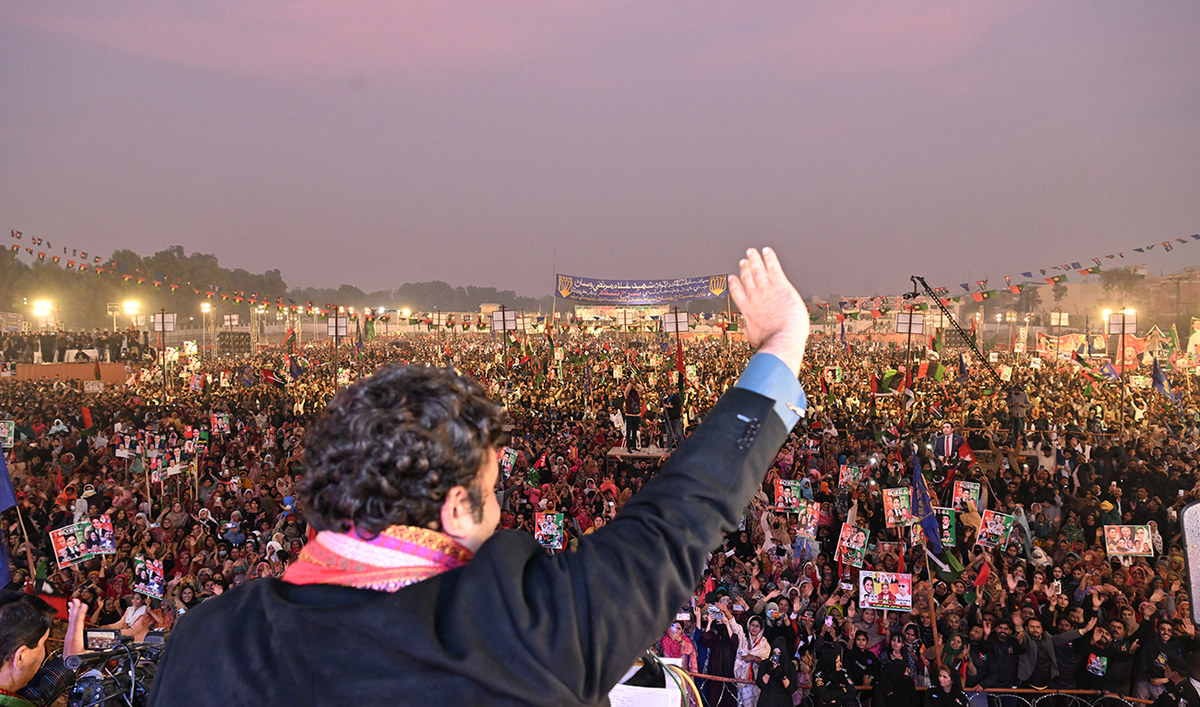
Pakistan Peoples' Party (PPP) chairman and Prime Ministerial candidate Bilawal Bhutto Zardari waves toward supporters during a campaign rally for the 2024 general elections in Khairpur in Sindh province on January 14, 2024. (AFP/File)
They will now be facing off against each other again.
“This seat originally belongs to us and we will reclaim it,” said Sardar Raheem, PML-F’s general secretary.
But Jilani, the analyst, said the PPP had been seen consolidating its position in constituencies where it did not win previously.
“For Sadruddin Rashidi, he’s been winning that seat because they have their own set of spiritual followers,” he said, adding that Fazal banked on the PPP vote and his own planning to win the seat in the last election and he would be trying to pull the same feat once again.


