


Abha festival in Saudi Arabia shines spotlight on world’s mountain cultures

1 / 24
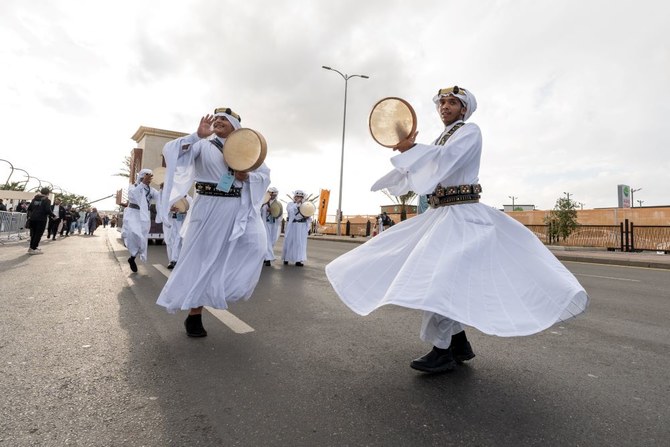
The third Qemam International Festival for Mountain Performance Arts will run until Jan. 27 across eight archaeological sites. (SPA)
2 / 24
The third Qemam International Festival for Mountain Performance Arts will run until Jan. 27 across eight archaeological sites. (SPA)
3 / 24
The third Qemam International Festival for Mountain Performance Arts will run until Jan. 27 across eight archaeological sites. (SPA)
4 / 24
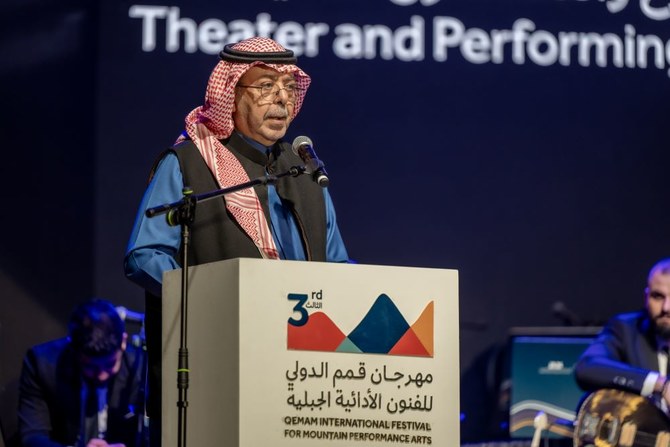
CEO of the Ministry of Culture’s Theater and Performing Arts Commission Sultan Al-Bazie. (Supplied)
5 / 24
The third Qemam International Festival for Mountain Performance Arts will run until Jan. 27 across eight archaeological sites. (Supplied)
6 / 24
The third Qemam International Festival for Mountain Performance Arts will run until Jan. 27 across eight archaeological sites. (Supplied)
7 / 24
The third Qemam International Festival for Mountain Performance Arts will run until Jan. 27 across eight archaeological sites. (Supplied)
8 / 24
The third Qemam International Festival for Mountain Performance Arts will run until Jan. 27 across eight archaeological sites. (Supplied)
9 / 24
The third Qemam International Festival for Mountain Performance Arts will run until Jan. 27 across eight archaeological sites. (Supplied)
10 / 24
The third Qemam International Festival for Mountain Performance Arts will run until Jan. 27 across eight archaeological sites. (Supplied)
11 / 24
The third Qemam International Festival for Mountain Performance Arts will run until Jan. 27 across eight archaeological sites. (Supplied)
12 / 24
The third Qemam International Festival for Mountain Performance Arts will run until Jan. 27 across eight archaeological sites. (Supplied)
13 / 24
The third Qemam International Festival for Mountain Performance Arts will run until Jan. 27 across eight archaeological sites. (Supplied)
14 / 24
The third Qemam International Festival for Mountain Performance Arts will run until Jan. 27 across eight archaeological sites. (Supplied)
15 / 24
The third Qemam International Festival for Mountain Performance Arts will run until Jan. 27 across eight archaeological sites. (Supplied)
16 / 24
The third Qemam International Festival for Mountain Performance Arts will run until Jan. 27 across eight archaeological sites. (Supplied)
17 / 24
The third Qemam International Festival for Mountain Performance Arts will run until Jan. 27 across eight archaeological sites. (Supplied)
18 / 24
The third Qemam International Festival for Mountain Performance Arts will run until Jan. 27 across eight archaeological sites. (Supplied)
19 / 24
The third Qemam International Festival for Mountain Performance Arts will run until Jan. 27 across eight archaeological sites. (Supplied)
20 / 24
The third Qemam International Festival for Mountain Performance Arts will run until Jan. 27 across eight archaeological sites. (Supplied)
21 / 24
The third Qemam International Festival for Mountain Performance Arts will run until Jan. 27 across eight archaeological sites. (Supplied)
22 / 24
The third Qemam International Festival for Mountain Performance Arts will run until Jan. 27 across eight archaeological sites. (Supplied)
23 / 24
The third Qemam International Festival for Mountain Performance Arts will run until Jan. 27 across eight archaeological sites. (Supplied)
24 / 24
The third Qemam International Festival for Mountain Performance Arts will run until Jan. 27 across eight archaeological sites. (Supplied)
Short Url
Updated 24 January 2024
Follow

Abha festival in Saudi Arabia shines spotlight on world’s mountain cultures

  • Historic sites of the Kingdom hosting local, international dance performances
  • 20 Saudi groups and 25 international groups from countries like Argentina, Spain, Uganda, Mexico and Peru paraded through the streets

JEDDAH: A festival to celebrate the cultural heritage of the world’s mountain regions is leaving a mark on the landscape of Saudi Arabia’s Asir region.

Organized by the Ministry of Culture’s Theater and Performing Arts Commission, the week-long third Qemam International Festival for Mountain Performance Arts will run until Jan. 27 across eight archaeological sites, showcasing the rich tapestry of mountain performing arts and drawing visitors from around the world.

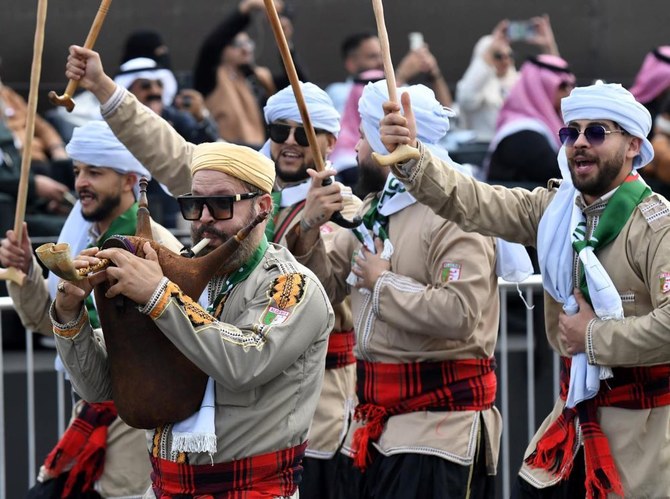
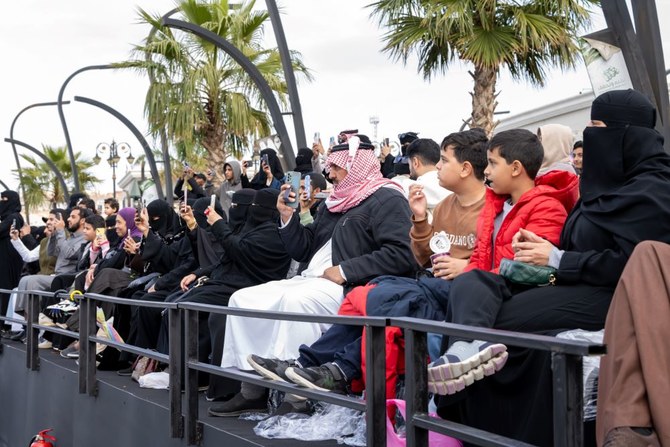
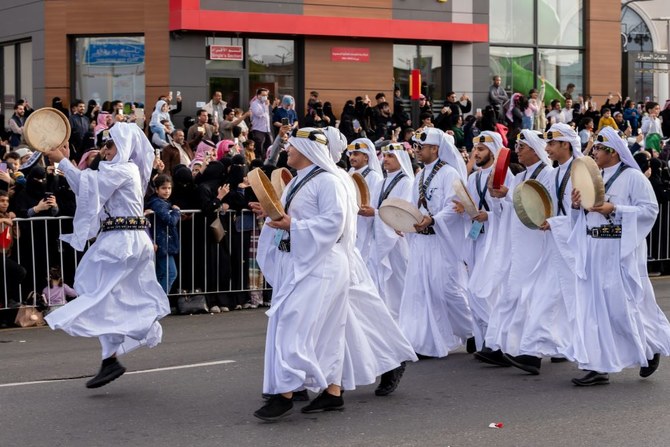
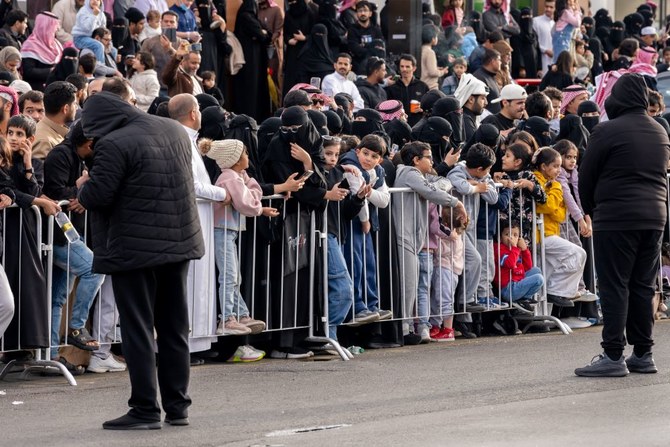
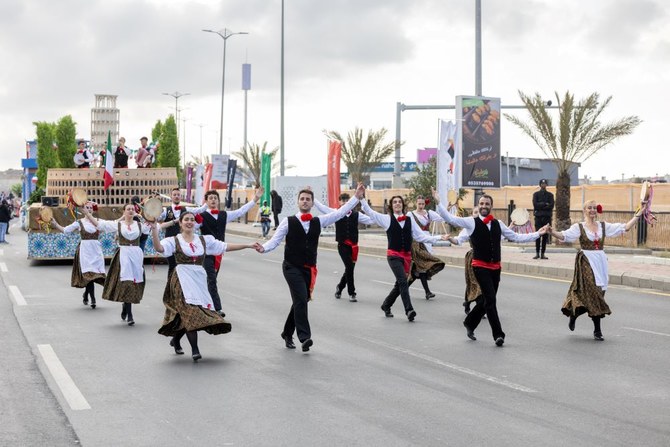
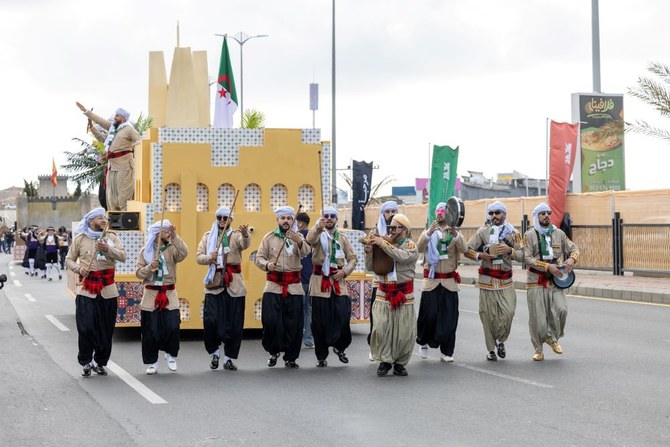
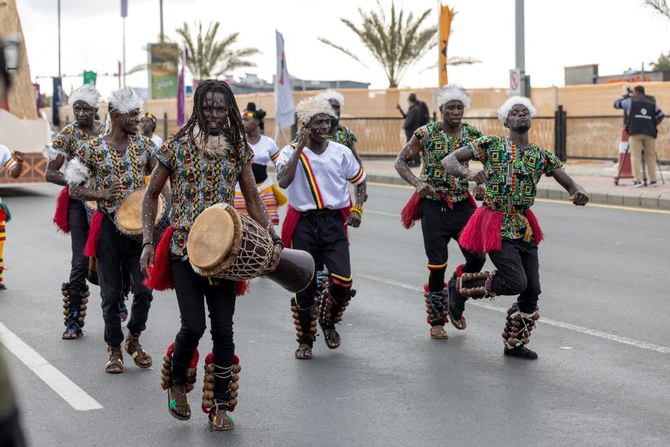
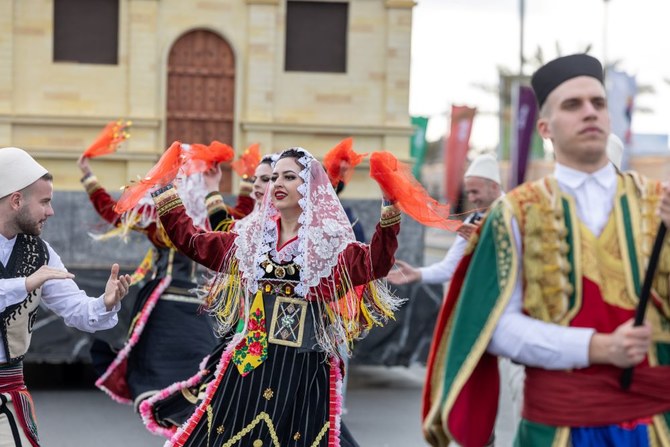
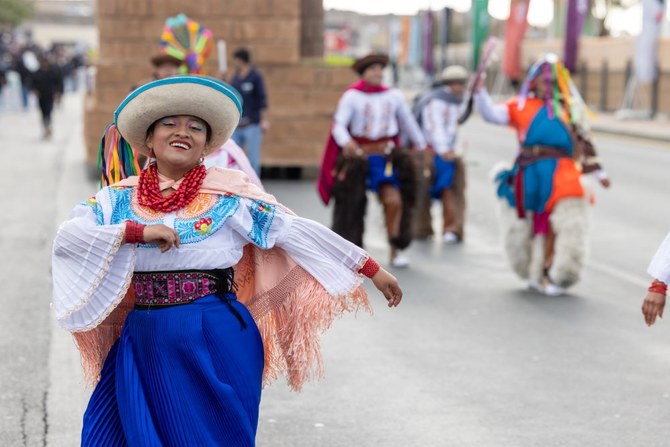
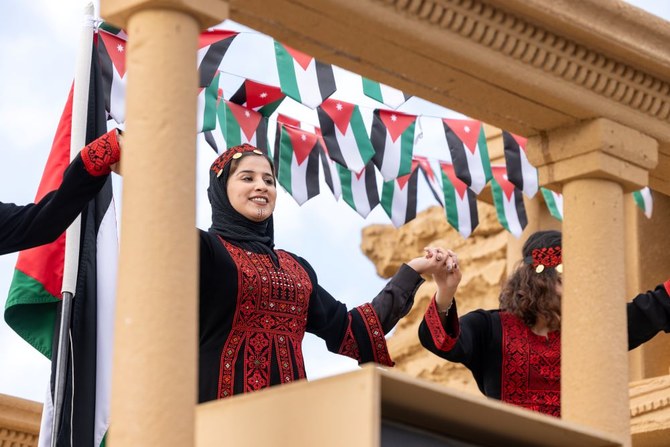
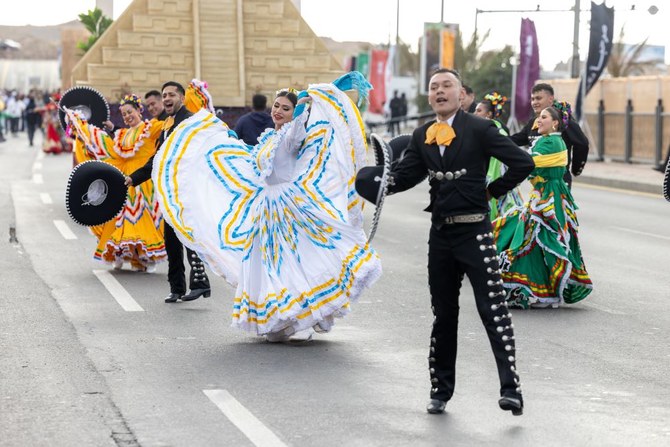
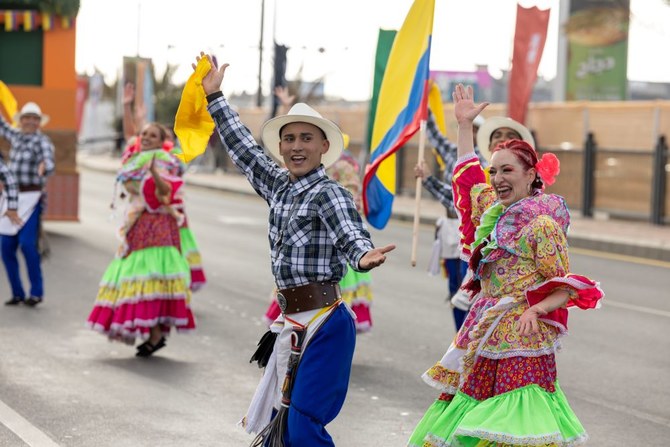
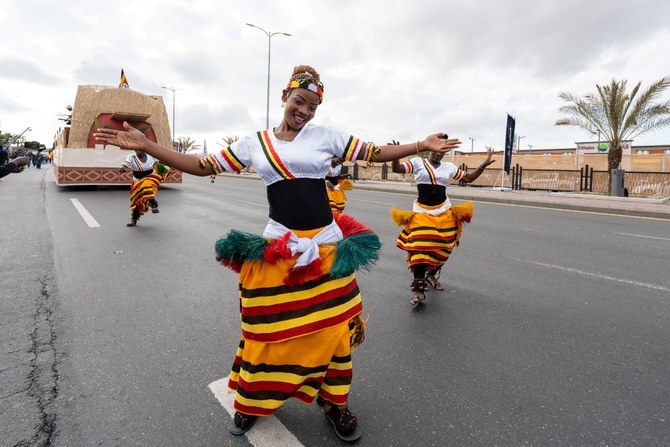
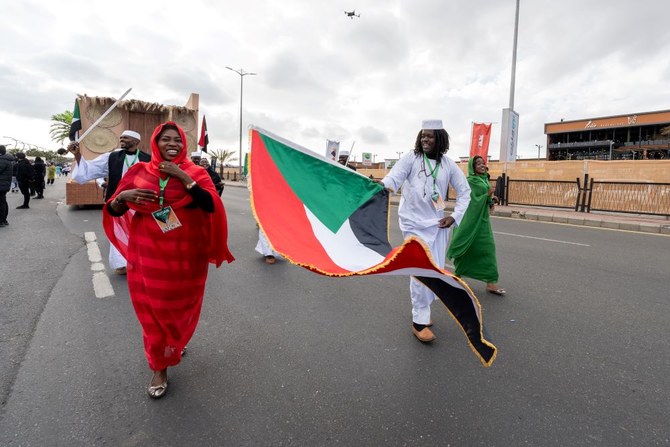
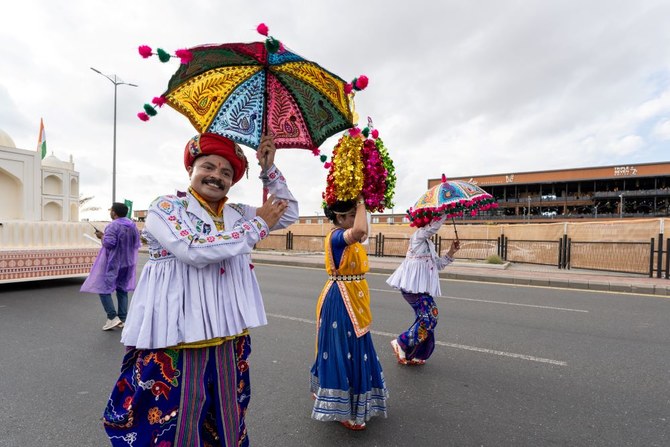
The festival’s opening day featured an outdoor carnival parade along Prince Sultan Road in Khamis Mushayt. A total of 20 Saudi groups and 25 international groups from countries like Argentina, Spain, Uganda, Mexico and Peru paraded through the streets, presenting more than 40 mountain styles in diverse and colorful costumes.

For centuries, mountainous cultures have maintained traditions in some of the world’s most isolated places, preserving distinctive linguistic and cultural heritage that is rarely seen or heard by wider society. The Saudi cultural extravaganza not only entertained audiences, but also provided a glimpse into some of the oldest traditional dances from around the world.

Following the parade, Sultan Al-Bazie, CEO of the commission, told Arab News: “At the Theater and Performing Arts Commission, we are committed to hosting high-quality cultural events. We firmly believe that the uniqueness of mountain performance arts is unique and internationally recognized.”

The festival, which in 2022 began as a local event for the Kingdom’s mountain regions — from Tabuk in the north to Jazan, Najran and Asir in the south — has evolved into an international platform, creating global cross-cultural dialogue.

The second edition of the festival involved 14 countries and featured 16 Saudi groups presenting traditional dances from across the Kingdom.

This year, in its third edition, the festival further increased the number of countries represented, covering almost all the world’s continents, the commission reported.

Abha, the first city in the Kingdom to win the Capital of Arab Tourism title in 2017, played a significant role in hosting the celebrations.

Al-Bazie said: “The main goal of this event is to draw comparisons between mountain performances around the world. We find many commonalities, whether in rhythms, performances or body movements. This cultural blend between world nations provides diversity, connecting different cultures and giving the Saudi audience in the Asir region a chance to experience performing arts from around the world.”

In the audience was well-known Bahraini YouTuber Omar Al-Farooq, also known as “Omar Tries.” He told Arab News: “Despite traveling to many countries and continents, this massive carnival parade made me realize how vast the world is with its diverse cultures and traditions. I am now excited to visit these countries and explore their arts further.”

He added: “The lively spirit of the Latin American performances was especially beautiful and engaging.

This year’s event features 13 Saudi folk performances from the Asir region, five from Al-Baha, three from Najran, one from Tabuk, one from Madinah, one from Taif and two from Jazan.

Mashari Aseery, a local father of two daughters, said: “The festival was incredible! The energy, the music, and the overall vibe were just amazing. It was such a great way to celebrate our local culture and showcase the performance arts of our ancestors.”

Another Abha local, Salma Al-Malki, who is studying fashion design, said: “I attended the festival for the first time this year, and I was blown away. The organizers did a fantastic job of bringing together a diverse range of performers and activities from around the world. The highlight for me was the fashion area, where I got to explore more about ancient fashion from across the globe.”

The opening night ended with a musical concert with Yemeni singer Fouad Abdulwahed and Lebanese singer Melhem Zein, who captivated a large audience with Lebanese songs and diverse dabke performances.

Dabke, a folklore dance popular across the Levant, and Lebanon in particular, involves performers — both men and women — forming a row, an arc or a circle. The first dancer leads the performance and guides the direction of the group, as well as displays extra motions that showcase his skill.

During the six-day festival, daily performances by 45 Saudi and international groups are taking place in eight heritage villages: Basta Al-Qabil, Shamsan Castle, Bin Adwan Heritage Village, Malik Historical Palace, Al-Mushait Palaces, Al-Abo Sarrah Palaces, the Castles of Abu Nuqata Al-Mutahmi and Bin Hamsan Village.

The villages are also hosting antique shops, live music performances, fashion displays, local food areas, art platforms, children’s activities and more.

The Qemam festival also features seminars and workshops on folkloric traditions, including the history of dabke, among other topics.

The festival has raised awareness of the theater and performing arts sector as a vital cultural field, and has also created job opportunities for talented people in the region.

The commission’s commitment to fostering international cultural exchange aligns with the goals of the National Cultural Strategy under the umbrella of Saudi Vision 2030.

The festival will conclude with a grand carnival parade and a closing musical concert.


‘One in a Million’: Syrian refugee tale wows Sundance

Updated 24 January 2026
Follow

‘One in a Million’: Syrian refugee tale wows Sundance

PARK CITY: As a million Syrians fled their country's devastating civil war in 2015, directors Itab Azzam and Jack MacInnes headed to Turkey where they would meet a young girl who encapsulated the contradictions of this enormous migration.

In Ismir, they met Isra'a, a then-11-year-old girl whose family had left Aleppo as bombs rained down on the city, and who would become the subject of their documentary "One In A Million," which premiered at the Sundance Film Festival on Friday.

For the next ten years, they followed her and her family's travels through Europe, towards Germany and a new life, where the opportunities and the challenges would almost tear her family apart.

The film is by directors Itab Azzam and Jack MacInnes. (Supplied)

There was "something about Isra'a that sort of felt to us like it encapsulated everything about what was happening there," MacInnes told an audience at the Sundance Film Festival in Park City, Utah on Friday.

"The obvious vulnerability of her situation, especially as being a child going through this, but that at the same time, she was an agent.

"She wasn't sitting back, waiting for other people to save her. She was trying to fight, make her own way there."

The documentary mixes fly-on-the-wall footage with sit-down interviews that reveal Isra'a's changing relationship with Germany, with her religion, and with her father.

It is this evolution between father and daughter that provides the emotional backbone to the film, and through which tensions play out over their new-found freedoms in Europe -- something her father struggles to adjust to.

Isra'a, who by the end of the film is a married mother living in Germany, said watching her life on film in the Park City theatre was "beautiful."

And having documentarists follow her every step of the way as she grew had its upsides.

"I felt like this was something very special," she told the audience after the screening. "My friends thought I was famous; it made making friends easier and faster."